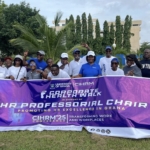
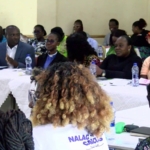
The University of Ghana Business School (UGBS) and the Chartered Institute of Human Resource Management, Ghana (CIHRM), have organised a corporate health walk as part of their awareness creation and fundraising campaign for Ghana’s first Human Resource Management (HRM) Professorial Chair.
The health walk, which brought together Chief Executive Officers, HR practitioners of CIHRM, faculty members of UGBS, and students, heightened awareness of the need to engage in moderate physical exercise to improve general well-being and productivity.
It also served as a platform to appeal to the general public for support towards raising the funds required to ensure the smooth operation of the Chair.
Speaking at the event, the Chairperson of the Fundraising Committee, Dr (Mrs) Ellen Hagan, reiterated the need for all sectors in Ghana to embrace the Chair as a catalyst for national development through cutting-edge research, innovation and human capital policy guidance.
Dr Hagan added that fundraising activities for the HRM Professorial Chair would continue throughout the year, and urged public and private sector institutions, as well as individuals, to contribute towards this laudable national agenda.
Other important activities scheduled following the corporate health walk include a presentation at the CIHRM’25 Conference, engagements with policymakers, an HR Community Brunch, engagements with Chief Executive Officers and Managing Directors, and a series of public lectures.
During the CIHRM’25 Conference, scheduled for Wednesday 18 June to Thursday 19 June 2025 at the Alisa Hotel in Accra, Dr (Mrs) Ellen Hagan will unpack the critical role of the HRM Professorial Chair in advancing national development and growth.
UGBS and CIHRM are encouraging the media, the HR community, policymakers, industry players and the general public to embrace this landmark initiative, which is poised to transform the HRM landscape in Ghana and elevate the performance of organisations and institutions across the country.
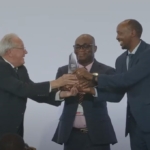
Ghanaian scientist Alexander Yaw Debrah has been awarded the 2025 Dr. Pascoal Mocumbi Prize by the European and Developing Countries Clinical Trials Partnership (EDCTP) for his contributions to global health research and capacity development in Africa.
The €50,000 prize was presented today at the Kigali Convention Centre in Rwanda. The award recognises Prof. Debrah’s work in combating Neglected Tropical Diseases (NTDs) and advancing clinical research and partnerships across Africa and Europe.
Debrah, a professor of parasitology and global health at the Kwame Nkrumah University of Science and Technology (KNUST) in Kumasi, has led several clinical trials focused on diseases such as lymphatic filariasis and river blindness. His early research helped identify genetic links to conditions such as elephantiasis and hydrocele, and supported the use of low-cost antibiotics like doxycycline for treatment.
He currently serves as Dean of the Faculty of Allied Health Sciences at KNUST and heads the Filariasis Research Group at the Kumasi Centre for Collaborative Research in Tropical Medicine (KCCR). He also directs TAKeOFF, a German-funded consortium working to eliminate filarial infections in Ghana, Tanzania, and Cameroon.
“Professor Debrah’s commitment to global health and research capacity building is exemplary,” said Marcel Tanner, EDCTP High Representative and President of the Swiss Academy of Arts and Sciences.
Debrah has attracted over €15 million in research funding from organisations including the EDCTP, the Bill & Melinda Gates Foundation, and the German Ministry of Education and Research. He has also helped establish the German-West African Centre for Global Health and Pandemic Prevention (G-WAC) at KNUST.
With over 160 peer-reviewed publications, Debrah has spoken at several high-level forums, including the United Nations General Assembly Science Summits in 2023 and 2024.
The EDCTP prize, named after Mozambique’s former prime minister and the partnership’s first high representative, honours individuals who have advanced Africa-Europe health research collaboration and the fight against poverty-related diseases.
The EDCTP is a partnership between European and African countries, supported by the European Union.
Professor Sharif Mahmud Khalid, Economic Adviser to the Vice President, has strongly defended the government’s conduct during the recent strike by the Ghana Registered Nurses and Midwives Association (GRNMA), asserting that the administration has consistently demonstrated respect for healthcare professionals and has never adopted a disrespectful stance towards them.
Prof. Khalid made these remarks during a discussion on JoyNews’ Newsfile on Saturday, June 14.
Addressing public perceptions and criticisms, especially from the Minority in Parliament, Prof. Khalid stated unequivocally, “There has not been any official government position insulting nurses or health workers. That’s correct.”
He acknowledged that in the heat of labour negotiations, “tempers may flare, strategies may be ignited,” but he firmly differentiated such dynamics from any formal disrespect from the government’s side.
Prof. Khalid appealed for a practical, economic understanding of the government’s approach, emphasising the challenging fiscal environment inherited.
“We’ve come far from a very difficult economic position in the last one year or so,” he explained.
He painted a picture of a “quite messy” economic dashboard, citing significant challenges such as the central bank posting losses, the implementation of a domestic debt exchange programme, and the impact on “blue-chip investments such as pensions”.
“We really had a very overheated economy that is yet to even cool off,” he underscored, arguing that against this backdrop, the government’s engagement with the nurses was rooted in economic reality.
He rejected labels of the government being “insensitive and callous”, stating, “I don’t think that is what it is because it is a real engagement of the reality on the ground.”
The Economic Adviser advocated for a “jaw-jaw” approach to resolving such disputes, highlighting that continued negotiation remains the only viable path.
Referring to the substantial GH¢2 billion wage bill demanded by the nurses – a figure previously cited by the Deputy Finance Minister – Prof. Khalid explained the government’s stance as a request for “some respite” and a call to negotiate the deferment of some payments, possibly to 2026, by which time economic conditions are projected to improve.
He pointed to current gains in “currency stability” and overall economic stabilisation as indicators of this potential future capacity.
Prof. Khalid also made a strong plea against politicising the strike action and weaponising terminology.
“I don’t want us to look at it from a political lens. We have to look at it from a practical economic perspective,” he urged. He condemned the deployment of “weaponising terminologies… trying to justify cases or make a government look bad,” stressing the need for all stakeholders to consider the issue from a “national perspective, a holistic perspective”.
While acknowledging the long history and struggles of labour unions and the critical nature of essential services like healthcare, Prof. Khalid’s submission aimed to frame the government’s actions as responsible management of a complex situation rather than a show of disrespect towards Ghana’s vital healthcare professionals.
General Secretary of the Ghana Registered Nurses and Midwives Association (GRNMA), Dr. David Tenkorang-Twum, has firmly dismissed allegations suggesting that the association’s recent strike was driven by political motives.
He emphasised that the GRNMA has maintained a strong apolitical stance since its inception.
He was reacting to criticisms from a section of the public about a purported affiliation with the main opposition party.
During his appearance on TV3’s The KeyPoints on Saturday, June 14, Dr. Tenkorang-Twum stated, “We are not aligned with any political party. From the time GRNMA came into existence, our focus has been on healthcare, not politics. It’s worth noting that during our formation, the Convention People’s Party (CPP) was in power, yet we have remained independent. In 2020, we took a stand under a different government, highlighting our commitment to our profession over political affiliations.”
His remarks come as a response to growing speculation regarding the motivations behind the nationwide strike action initiated by nurses and midwives earlier this month.
The GRNMA commenced its industrial action on June 2, 2025, primarily due to the government’s failure to implement the 2024 Collective Bargaining Agreement (CBA), signed a year prior under the Akufo-Addo administration.
This agreement included critical provisions such as allowances for uniforms, licence renewals, and incentives for healthcare workers assigned to underserved areas.
The protest intensified from symbolic gestures like wearing red armbands to a complete withdrawal of outpatient services from June 4 to June 8, involving over 128,000 nurses and midwives across the nation.
In response, the National Labour Commission (NLC) deemed the strike illegal and obtained a court injunction compelling the association to return to the negotiating table with the Ministry of Health.
On Friday, June 13, the GRNMA announced the suspension of the strike following intervention from Parliament’s Select Committee on Health.
In a statement authored by the association’s President, Mrs. Perpetual Ofori-Ampofo, the GRNMA expressed that the decision was made with the well-being of patients in mind.
“We do not take delight in seeing our patients suffer; however, we cannot provide quality care when our own needs are neglected,” the statement articulated.
Moreover, the GRNMA condemned what they termed “misinformation and propaganda” that clouded public perception of their actions.
They highlighted, “As trained professionals dedicated to delivering essential healthcare services to the Ghanaian public, we expect matters affecting us to be addressed with urgency and sincerity.”
Despite the temporary halt of the strike, the association reaffirmed its demand for the prompt implementation of the 2024 CBA, clarifying that pausing the strike is not indicative of weakness but rather a willingness to engage in constructive dialogue.
Looking ahead, a follow-up meeting between GRNMA representatives and Parliament’s Health Committee is set for June 26, 2025, signalling ongoing discussions aimed at resolving these pressing issues.
The Communications Director of the opposition New Patriotic Party (NPP), Richard Ahiagbah, has called for the immediate dismissal of the Health Minister, Kwabena Mintah Akandoh, over the recent nationwide strike by the Ghana Registered Nurses and Midwives Association (GRNMA).
According to him, the Minister’s behaviour was unacceptable, calling for his resignation over what he describes as poor handling of the nationwide nurses’ and midwives’ strike.
“Honourable Kwabena Mintah Akandoh, the Minister for Health, must go. He should have been gone. He must go home—leave the Ministry and go home,” Mr Ahiagbah said on Accra-based Citi TV on Saturday.
Referencing Mr Akandoh’s past role as Ranking Member on Parliament’s Health Committee, Mr Ahiagbah recalled, “Did you see the things he was doing and saying? He accused Dr. Agyemang-Manu of looking on for a strike—a local strike in Kumasi, Komfo Anokye—over administrative professional matters.”
He said the same individual who once criticised his predecessor for failing to address local unrest was now presiding over a national healthcare crisis without decisive leadership.
The NPP Communications Director accused Mr Akandoh of ignoring early warning signs from as far back as January and failing to honour assurances that the nurses’ concerns would be addressed in the 2025 Budget.
“They found all the fiscal space to allocate GH¢2.7 billion for compensation at the Jubilee House, but didn’t prioritise the health of Ghanaians,” he said.
He also lashed out at the Health Minister’s proposal to recall retired nurses to fill the gap created by the strike, describing the idea as “reckless and insensitive.”
“That kind of hardball he was playing with people’s health was repugnant. People died because of his negligence. For that reason, he must be gone,” Ahiagbah insisted.
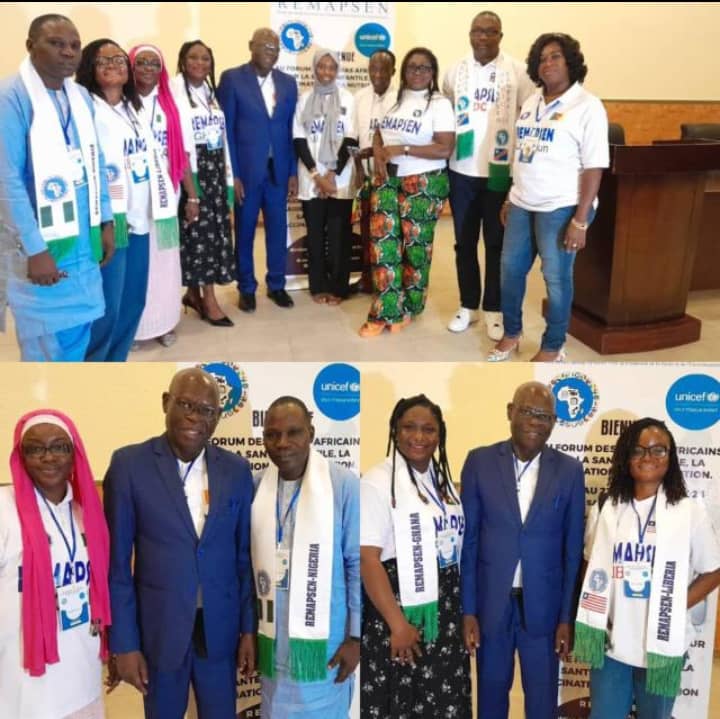
Today, June 13, 2025, marks a significant milestone for the African Network of Journalists for the Promotion of Health and the Environment (REMAPSEN) as it celebrates its fifth anniversary.
Since its founding in 2020, REMAPSEN has grown into a formidable coalition of journalists and media professionals from around 40 African countries, united in their mission to promote public awareness and media advocacy on pressing health and environmental issues.
In a commemorative message, President of REMAPSEN, Bamba Youssouf, commended the network’s members for their dedication and tireless work over the past five years.
“This is an opportunity for me to thank each member of our young organization for the work accomplished in raising awareness and advocacy in such a short time,” Youssouf stated.
Founded at the height of the COVID-19 pandemic, REMAPSEN emerged from the urgent need for reliable, science-based information on public health and the environment.
Since then, the network has been instrumental in spearheading continent-wide media campaigns on issues ranging from pandemic preparedness and vaccination awareness to climate change, pollution, and sustainable development.
Among REMAPSEN’s notable achievements are:
Extensive training programmes for African journalists on science and environmental reporting.
Partnerships with the WHO, UNEP, and local NGOs to produce investigative stories on climate resilience and disease outbreaks.
Nationwide campaigns on malaria prevention, water sanitation, and the health implications of mining and deforestation.
The launch of an online multimedia platform for sharing verified information and educational resources on health and environmental issues.
Youssouf noted that while the first five-year phase was focused on building the network’s foundation, the next stage will prioritise asserting REMAPSEN’s leadership across the continent.
“While the first five-year term of our network was dedicated to organising and implementing REMAPSEN in its member countries, the second will be dedicated to reaffirming its leadership,” he said.
According to him, “indeed, the media, still considered the fourth estate, must now assume their responsibilities in informing populations in the face of the emergence of new pandemics, such as COVID-19 in 2020.”
Looking ahead, REMAPSEN plans to launch a pan-African media monitoring unit to ensure the spread of factual, life-saving information and to combat health and environmental misinformation.
The organisation also intends to expand its support for investigative journalism initiatives tackling illegal waste dumping, air and water pollution, and the health effects of climate-induced migration.
In his closing remarks, Youssouf made a clarion call to action:
“I urge all African media outlets to strengthen their commitment to a continent where every person has a legal right to accurate and truthful information in the areas of health and the environment. Africa will be better for it.”
As REMAPSEN celebrates its fifth anniversary, the organisation remains committed to its founding vision: an Africa where empowered media professionals serve as catalysts for public health, environmental stewardship, and sustainable development.
In a world where malaria continues to claim the lives of thousands, especially children, every year, grassroots activism has become a vital force in the fight against the disease.
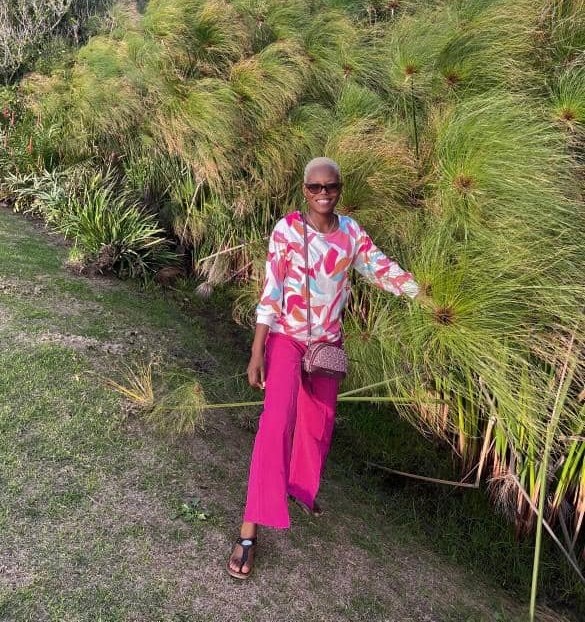
Among the growing wave of change-makers is Precious Baba, a determined malaria activist whose recent outreach has touched lives in two underserved corners of Africa: Mashambanhaka Primary School in Zimbabwe and the slums of Duala, Cameroon.
Recognising that prevention is the most effective tool against malaria, Precious Baba recently donated dozens of insecticide-treated mosquito nets to students in Mashambanhaka Primary School.
In rural Zimbabwe, where access to healthcare is often limited and homes lack proper protection against mosquitoes, such a gesture can mean the difference between life and death.
Her intervention aims to reduce malaria transmission rates among school-age children, a group highly vulnerable to infection.
Precious also distributed sanitary pads to the girls, recognizing the connection between menstrual health and school attendance.
In doing so, she addressed two pressing issues simultaneously by empowering girls to stay in school while also helping them protect themselves from malaria.
The same mission carried her to Duala, where she reached out to children living in slum communities often overlooked by public health initiatives.
In these densely populated areas with poor drainage and limited sanitation, malaria spreads rapidly. With bundles of mosquito nets in hand and a message of hope, Precious Baba met families where they live, sleep, and struggle, offering them a tool for survival.
Her work exemplifies the power of community-driven malaria prevention, bridging the gap between policy and people. Rather than wait for top-down solutions, Precious is taking action one mosquito net and one schoolchild at a time.
As malaria continues to challenge public health systems across sub-Saharan Africa, activists like Precious Baba are proving that localized, compassionate action can have a wide-reaching impact. With her feet on the ground and her heart set on change, she is not just handing out nets. She is handing out a future free from malaria.
Some Civil Society Organisations are proposing reforms in national policy strategies to include family planning and safe sex, as they argue that abstinence education in schools is failing to reduce adolescent pregnancies.
They observe that restrictive legal frameworks, insufficient funding, and gaps in reproductive health education continue to be a bane to Ghana’s efforts in clamping down on teenage pregnancies and child marriages.
The country’s average teenage pregnancy rate currently stands at 15.2%, with the Savannah and Ashanti regions leading the devastating menace plaguing the youth.
The situation is further exacerbated by Socio-cultural constraints, inconsistent policy implementation, and a lack of legal harmonization.
Teenage pregnancy continues to be on the rise in Ghana – from a national average of 14.2% in 2014, the 2022 Demographic and Health Survey reports a 1% increase in nearly a decade. The Savannah, Ashanti and North East regions top the list of teenage pregnancy rates, recording 26% and 24% respectively.
The worrying trend has been attributed to failed strategies, including the Ghana Education Service’s sole policy on preaching abstinence.
At the Ashanti regional workshop on Sexual Reproductive Health Rights in Ghana, stakeholders noted that strategies adopted to tame the growing menace are failing to yield the needed results.
Advocacy and Youth Coordinator at Marie Stopes International, Henrietta Kaakyire Atta, highlighted the importance of reproductive health education.
“There is a fuss about when young people receive information about their reproductive health, they become promiscuous. But there is age-appropriate information. There are young girls who are abused and can’t tell their parents about it. They don’t even know whether or not what they engage in is an abuse. Teaching young people about their reproductive health is not about teaching them to go and have sex,” she noted.
Ghana reaffirmed its dedication to improving Sexual Reproductive Health through contraceptive access and utilization under the 2030 Family Planning commitments.
Ashanti Regional Head of the Gender Department, Ama Nyantah Boateng is advocating for reforms in sexual education policy in schools.
“Sensitization is still a primary issue in teaching the students, even though we call for some modification of the sexual education policy. Not all the children will carry along what we teach them, but we will still preach abstinence,” she noted.
The growing menace is a potential bane to Ghana’s socioeconomic growth and national development.
Population Policy Analyst at Development Advocacy Initiative Africa, Dr. Godfred Bonnah Nkansah wants frantic effort to clamp down on the canker.
“We are significantly outside the belt of accelerated development. It’s therefore not enough to keep the full focus on job creation, but pay attention to family planning. Let the families be capacitated to have the numbers they can take care of,” he said.
In advancing sexual reproductive health and actualizing the SDGs Agenda 2030 commitments, there are calls for urgent parliamentary action to bridge the gaps and foster sustainable development.
“Parliament must listen to the calls of the citizens and address the issue so that at the end of the day it can foster national development,” Programs Manager at Parliamentary Network Africa, Gilbert Borketey Boye-Fio, advised.
The workshop, organised by the Parliamentary Network Africa in collaboration with Marie Stopes International, was aimed at empowering champions for Reproductive Health Policy influencing through education and supportive environments.
Striking nurses and midwives have officially called off their nationwide industrial action, effective immediately, after days of disagreements with their employers, which led to widespread disruption to healthcare services.
The decision, announced today, Friday, June 13, by the President of the Ghana Registered Nurses and Midwives Association (GRNMA), Mrs. Perpetual Ofori-Ampofo, follows intensive negotiations with government representatives and an impassioned plea for compassion from various stakeholders.
In a virtual news conference, she said “The engagement held with the Parliamentary Select Committee on Health and other interested parties on Thursday, 12th June 2025, was very fruitful, and has paved the way for an amicable resolution of the impasse with our employer, concerning the implementation of our collective bargaining agreement.”
“In view of point one above, the GRNMA’s industrial action initiated on 2nd June 2025, is hereby suspended pending the outcome of a follow-up meeting scheduled for 26th June 2025.”
She directed the over 120,000 nurses to resume work on Saturday, June 14th. She assured the nurses and midwives that they would not rest until the collective agreement was fully implemented.
She said that as trained and professional nurses and midwives, their concerns or demands ought to be treated with urgency and in good faith.
“We do not take delight in seeing our patients suffer; however, we cannot take good care of others when the system does not take good care of us.
She also clarified that the GRNMA is a non-partisan and professional association and trade union, and the holder of a collective bargaining certificate covering all nurses and midwives in Ghana.
“In its 65 years of existence, the association has never aligned with any party in Ghana; rather, it has worked with every government since 1960 in building a strong and more resilient health system responding to the needs of Ghanaians, while at the same time representing the interests of nurses and midwives in matters related to their welfare and general working conditions.”
She extended her appreciation to the leadership and members of the Parliamentary Committee on Health for their timely intervention in setting a clear framework for the implementation of their collective agreement. She also thanked the nursing and midwifery fraternity for adhering to the roadmap and the media for airing their concerns.
She urged Ghanaians not to engage in misinformation, disinformation and propaganda in dealing with critical national issues.
The strike, which began on June 2, 2025, and escalated to a full withdrawal of services by June 9, had severely impacted public hospitals and clinics across the country.
Patients were left stranded, emergency rooms stretched thin, and essential medical procedures postponed, leading to growing public outcry and concerns about preventable fatalities.
The GRNMA had demanded the full implementation of their 2024 Collective Agreement, which included provisions for various allowances such as the 30-month allowance, rural incentives, fuel, and uniform allowances.
The government had earlier highlighted its commitment to maintaining a 1.5% primary balance surplus as a key fiscal discipline target and maintained that the package for the nurses and midwives, which exceeds GH¢2 billion, would throw the current budget off gear.
Rather, the government pleaded for the nurses and midwives to accept an agreement which would factor their conditions of service into the next budget for implementation to kick off in 2026.
Consequently, the Deputy Minister of Finance, Thomas Nyarko Ampem, issued a direct appeal to striking nurses and midwives, urging them to return to the negotiation table.
This was backed by the Minister of Health, Kwabena Mintah Akandoh, who encouraged the nurses and midwives to return to their posts as solutions are fashioned to address the matter.
Patients and their families, who have borne the brunt of the strike, have expressed profound relief.
The GRNMA cautioned that while the strike is off, they will closely monitor the government’s adherence to the agreed roadmap.
With nurses and midwives expected to return to their posts fully by tomorrow morning, healthcare services across Ghana are anticipated to gradually return to normal, offering a much-needed respite to the nation’s fragile health system.