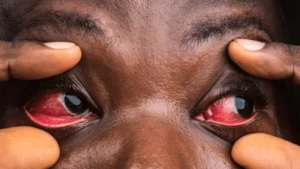
How Klire Cream Is Quietly Saving Ghanaian Families from Common Skin Issues
When it comes to skincare, most families in Ghana don’t think much beyond lotions or shea butter. But with the...
At Rokmer Pharma Ltd, we believe that health is not just a service, but a responsibility. As a Ghanaian pharmaceutical...

By Michael Kofi Kenetey
The Medical Director of the Eastern Regional Hospital, Koforidua, ERHK, Dr. Arko Akoto Ampaw, says non-communicable diseases continue to lead the cause of deaths at the facility.
He has therefore advised Ghanaians to live a healthy lifestyle to help reduce the high rate of non-communicable diseases, which is claiming many lives in the country. Dr. Ampaw gave the advice during the 2024 Annual Performance Review Meeting in Koforidua, the Eastern Regional capital.
The hospital last year received 298,272 attendances in the outpatient department, with 255,332 representing 86 percent being insured and 42,941 representing 14 percent being non-insured.
The facility inpatient also recorded 23,805 admissions, 23,390 were discharged, and 2,016 deaths were recorded. The bed occupancy rate of the hospital stands at 93.3 percent while the death rate stands at 7.9 percent.
On the breakdown of the causes of death, non-communicable diseases such as cerebrovascular accident (CVA) or stroke claimed 180 lives, heart failure claimed one hundred and two lives, one hundred people succumbed to prematurity, renal disease claimed 96, and neoplasm claimed 95 lives.
In an interview with GBC News, the Medical Director of the Eastern Regional Hospital, Koforidua, Dr. Arko Akoto Ampaw, hinted that most of the non-communicable diseases leading as the most common causes of death are as a result of an unhealthy lifestyle.
He therefore advised Ghanaians to lead a healthy lifestyle by eating healthy food, regular health screening, and exercise.
Dr. Ampaw noted that the management and staff of the hospital have embarked on measures to help prevent avoidable deaths in obstetrics through coaching and mentoring.
The Clinical Director of the Eastern Regional Hospital, Koforidua, Dr. Amponsah Manu, has encouraged the media to collaborate effectively with the hospital and urged media practitioners to seek clarification from the hospital when they receive any complaint about the hospital.

The 2024 Annual Performance Review Meeting of the Eastern Regional Hospital, Koforidua, brought together management and Heads of Departments of the hospital to discuss and update the media on the performance of the facility in the year under review.
<p>The post Non-Communicable Diseases leading cause of deaths in Eastern Region first appeared on Ghana Health Journal.</p>

By Joyce Kantam Kolamong
In a medical display of compassion, the Tamale Teaching Hospital (TTH) has successfully implanted pacemakers in 9 patients, giving them a second chance at life. The procedure, which was made possible through a collaboration with Mount Carmel Hospital in the United States, is a significant milestone in the hospital’s efforts to provide quality healthcare to its patients.
The pacemaker implantation procedure involves inserting a small device called a pacemaker into the body to help regulate the heartbeat. The device consists of two main parts: a pulse generator and leads. The pulse generator contains the battery and electronic circuitry, while the leads connect the pulse generator to the heart.
The pacemaker implantation procedure typically takes about 1-2 hours, and it costs more than 5000 US dollars
Speaking to GBCNEWS on the last day of the exercise, a Cardiologist at TTH, Dr. Abdul Subul Yakubu, who led the team, said the patients who underwent the procedure were suffering from a condition known as complete heart block, which causes the heart to beat at a slow rate. “These patients would have otherwise been unable to afford the device on their own,” Dr. Yakubu explained. “Thanks to our cooperation with Dr. Addo and his team from Mount Carmel Hospital, we were able to supply the pacemakers to them for free.”
Dr. Yakubu emphasized the importance of the procedure, noting that the patients who underwent the implantation would have otherwise been at risk of serious complications, including death. “These patients would have otherwise been unable to afford the device on their own,” he said. “We have given them a fresh start, an opportunity that they would otherwise not have had.”

The procedure was made possible through a team effort involving local staff and experts from the United States. Dr. Yakubu expressed his gratitude to the team, including Dr. Addo and his team from Mount Carmel Hospital, for their support and expertise.
According to Dr. Yakubu, while pacemaker implantation is a life-saving procedure, patients can still develop complications after the device has been implanted. He emphasized that managing these potential complications is critical to ensuring the patient’s long-term health and well-being.
“To minimize the risk of complications, patients receive specific instructions after pacemaker implantation. These instructions are provided in printed format”.
Pacemakers are designed to provide long-term support for individuals with irregular heartbeats. The device’s longevity depends on various factors, including usage and individual factors. On average, a pacemaker can last for at least 10 years. However, the actual lifespan may vary depending on how frequently the device is used.
Lifelong Dependence

Dr. Yakubu indicated that Individuals with pacemakers will require the device for the rest of their lives adding that regular check-ups and monitoring ensure the device functions optimally and identify potential issues before they become major concerns.
When asked about the sustainability of the programme, Dr. Yakubu noted that while the procedure was sponsored, the hospital aims to make the treatment modality accessible to its patients in the long run. “A lot of investment has to go into it, into training local staff and infrastructure,” he said.
This year’s exercise marked a significant improvement from the previous year, with 9 successful implants, up from 3 in 2023, and the hospital aims to continue increasing its capacity to help more patients in need
The successful implantation of pacemakers in 9 patients is a significant achievement for TTH, and a testament to the hospital’s commitment to providing quality healthcare to its patients. As Dr. Yakubu noted, “We have given them a second chance at life.”
<p>The post Second chance at life: Tamale Teaching Hospital successfully implants pacemakers in 9 patients first appeared on Ghana Health Journal.</p>

Men with better sperm quality may live longer lives, according to a new study.
Researchers analysed data from nearly 80,000 Danish men with a follow-up of up to 50 years.
The men had had their semen quality assessed in the laboratory due to couple infertility.
The analysis looked at semen volume, sperm concentration, and the proportion of motile sperm – meaning sperm that moved efficiently – and had a normal shape.
Those with a higher number of motile sperm had a life expectancy that was two to three years longer than men with the lowest number of motile sperm, according to the findings published in the journal Human Reproduction.
“In absolute terms, men with a total motile count of more than 120 million lived 2.7 years longer than men with a total motile count of between zero and five million,” Dr Lærke Priskorn, a senior researcher at Copenhagen University Hospital in Denmark and the study’s lead author, said in a statement.
“The lower the semen quality, the lower the life expectancy. This association was not explained by any diseases in the ten years before semen quality assessment or the men’s educational level,” she added.

One hypothesis to explain the link is that semen quality could work as an indicator of men’s overall health.
Previous research cited by the team found that men with a lower sperm concentration were also hospitalised seven years earlier on average, “underlining that men with impaired semen quality as a group not only can expect to die earlier but also to live fewer healthy years”.
“The current findings corroborate and add to the limited albeit growing body of research showing that semen quality is an important marker of current health and likely predictive of future health across the lifespan,” Dr Germaine Buck Louis, dean of the College of Health at George Mason University in the US, told Euronews Health in an email.
READ ALSO
The typical vital signs measuring the body’s basic functions are temperature, heart rate, respiratory rate, blood pressure, and oxygen saturation.
“Greater clinical awareness is evolving and has prompted some authors to call for semen quality being considered the 6th vital sign,” the expert, who was not involved in the study, added.
The study does not identify the underlying causes of the difference in life expectancy, but Louis said that “environmental exposures may be responsible, possibly through oxidative stress pathways, as they affect both reproductive health and health, more globally”.
“Without knowing the exact causes of the infertility and the cell functions affected, it is difficult to develop medical interventions or new drugs to treat the problem(s),” Dolores Lamb, co-director of the research learning centre at Children’s Mercy Kansas City, a hospital in the US, told Euronews Health.
“The common link between infertility and the increased health risks of men with infertility is currently under active research investigation,” Lamb added.

<p>The post Men with higher quality sperm may have longer lifespan, new study finds first appeared on Ghana Health Journal.</p>

By: Henrietta Afful
A new study released by the World Health Organization (WHO) reveals that haemorrhage (severe bleeding) and hypertensive disorders such as preeclampsia are the leading causes of maternal deaths worldwide. In 2020, these conditions were responsible for approximately 80,000 and 50,000 fatalities, respectively.
According to the findings, many women still lack access to essential lifesaving treatments and effective care during and after pregnancy and childbirth.
Published in The Lancet Global Health, the study marks WHO’s first global update on the causes of maternal deaths since the adoption of the United Nations’ Sustainable Development Goals in 2015.
In addition to highlighting the main direct obstetric causes, the study reveals that other health conditions, including infectious and chronic diseases such as HIV/AIDS, malaria, anaemia, and diabetes, contribute to nearly a quarter (23%) of pregnancy- and childbirth-related deaths.

These conditions, frequently undiagnosed or left untreated until complications become severe, heighten risks and complicate pregnancies for millions of women globally.
“Understanding why pregnant women and mothers are dying is critical for tackling the world’s lingering maternal mortality crisis and ensuring women have the best possible chances of surviving childbirth,” the Director of Sexual and Reproductive Health and Research at WHO as well as the UN’s Special Programme on Human Reproduction (HRP), Dr Pascale Allotey said.
“This is also a massive equity issue globally – women everywhere need high quality, evidence-based health care before, during and after delivery, as well as efforts to prevent and treat other underlying conditions that jeopardize their health” she added.
Other direct causes include sepsis and infections; pulmonary embolism; complications from spontaneous and induced abortions – including miscarriage, ectopic pregnancies, and issues relating to unsafe abortions; and, anesthetic complications and injuries that occur during childbirth.
<p>The post Many pregnancy-related complications going undetected and untreated – WHO first appeared on Ghana Health Journal.</p>

By Josephine Kekeli Amuzu
Senior Nursing Officer of Child Health at Korle Bu, Mrs Juliet Osei Waziri, has raised concerns over the rising cases of kidney disease among children. She linked them to unregulated medication use and poor healthcare practices.
Speaking on the GTV breakfast show on March 11, 2025, Mrs Juliet Osei Waziri stated that in recent years parents have increasingly turned to unprescribed treatments for their children’s ailments, which often leads to severe complications, including kidney failure.
She lamented how this was not a problem in the past. “Instead of seeking medical help, some parents listen to friends who suggest trying different medications and remedies when they see changes in their children, but some of these medications have harmful effects on children’s kidneys,” she noted.
For her part, the General Secretary of the Paediatric Society of Ghana, Dr. Anastasia Prosorova, highlighted that kidney diseases in children can vary by age group. For newborns and infants, a child health specialist said, there are congenital issues that developed during pregnancy and are often the cause.
“These children may be born with structural problems that affect their kidneys. Sometimes, their abdomens appear larger than usual, or they may have other physical differences, which we categorise as syndromes,” Dr. Prosorova explained.
Despite these medical concerns, many parents still resort to herbal treatments, hoping for a cure.
She stated that she does not condemn the use of herbal medicine. However, she warned that some herbal remedies contain harmful substances that can further damage the kidneys, especially in children. “We do see cases where herbal treatments are used, but often, by the time the child arrives at the hospital, the condition has worsened,” Dr. Prosorova stated.
As part of this year’s World Kidney Day awareness campaign, they urged parents to prioritise hospital visits for any signs of illness in their children. Early medical intervention can prevent complications and improve treatment outcomes.
Parents are advised to watch for warning signs such as swelling, changes in urine patterns, and prolonged fatigue.
<p>The post Experts warn of rising kidney disease cases in children due to unregulated medication first appeared on Ghana Health Journal.</p>

The global burden of Parkinson’s disease is expected to more than double in the coming decades as people live longer and some countries experience a population boom, a new study suggests.
The number of people worldwide with the neurodegenerative condition will reach 25.2 million by 2050, up from 11.9 million in 2021, according to the projections from researchers at Chinese and Canadian universities, which were published in the BMJ.
Independent experts said the findings underscore the urgency of finding new treatments and shoring up social support for people with Parkinson’s.
“It just shows that it absolutely needs to be addressed now, because there is no way that any of the global health services can cope with that level of demand from one specific condition,” Amelia Hursey, strategic director at the advocacy group Parkinson’s Europe, told Euronews Health.
The prevalence of Parkinson’s could reach 267 cases per 100,000 people in 2050, up 76 per cent in three decades, the study found.
About 10.9 million people in East Asia will have Parkinson’s in 2050, a greater toll than any other region. South Asia will follow with an estimated 6.8 million cases.
Meanwhile, western parts of sub-Saharan Africa will see the fastest growth in Parkinson’s cases in the coming decades (292 per cent), driven largely by population growth but also ageing.
Hursey, who was not involved with the study, added that as countries become more developed, rates of physical activity tend to fall. Exercise appears to offer protection against Parkinson’s and other neurodegenerative conditions.
“What you’re potentially seeing is, as people become more sedentary in their work, in their world, you’re actually ending up with a less healthy brain,” she said.
While lower- and middle-income countries are expected to see the sharpest uptick in Parkinson’s burden, increases are expected in every part of the world by 2050.
Cases are expected to rise by 50 per cent in Western Europe, for example, and by 28 per cent in Central and Eastern Europe.
The researchers said the geographical divides could be due to differences in socioeconomic status, changes to how populations are structured, lifestyles, and toxic environments due to industrialisation and urbanisation.
For example, some studies have pointed to air pollution as a risk factor for Parkinson’s.
Research on other environmental pollutants – such as on certain pesticides and cleaning chemicals as well as microplastics – suggests they may raise Parkinson’s risks, but much remains unknown about the drivers of the disease.
Even so, the study results indicate that “the likelihood of increased [Parkinson’s] numbers is significant in the world that we live in now, if we don’t change anything about the … environment as it stands,” Hursey said.
David Dexter, research director at Parkinson’s UK, told Euronews Health that investments are needed in research, medical care, and support services for people with Parkinson’s and their caregivers.
Today, he said, “people with Parkinson’s are not getting the healthcare and services they need to live well”.
SOURCE: EURONEWS
<p>The post Parkinson’s cases could double by 2050, reaching 25 million worldwide first appeared on Ghana Health Journal.</p>

By Rejoice Henrietta Otoo Arthur
The government has taken a major step to address period poverty by allocating GH¢292.4 million to begin the distribution of free sanitary pads to female students in primary and secondary schools.
This announcement was made by Finance Minister Dr. Cassiel Ato Forson while presenting the 2025 national budget.
“We have allocated an amount of 292.4 million Ghana cedis to commence the distribution of free sanitary pads to female students in primary and secondary schools,” the minister stated.
For years, the high cost of sanitary pads has been a barrier for many girls, leading to school absenteeism and health risks. Under the previous tax policy, sanitary pads were classified as “Miscellaneous Manufactured Articles” under the Harmonized System Code 9619001000, attracting multiple taxes, including a 20% import duty, 12.5% Value Added Tax (VAT), and other statutory levies.
This resulted in a 32.5% tax on imported sanitary products, pushing the price of a pack of pads to between GH¢20 and GH¢40. These high costs have made sanitary pads unaffordable for many low-income households. Menstruation is a natural biological process, yet the imposition of taxes on sanitary products has reinforced gender inequalities, keeping many girls out of school and limiting opportunities for young women.
The lack of access to sanitary pads has also led some girls to resort to unhygienic alternatives, posing serious health risks. With this new policy, the government aims to reduce the financial burden on families and ensure that no girl misses school because of menstruation.
The initiative is part of broader social protection efforts to bridge the inequality gap in education and economic empowerment for women and girls.
The distribution of free sanitary pads is expected to improve school attendance, enhance menstrual hygiene, and promote gender equality. This marks a significant shift in government policy, prioritizing the well-being and dignity of girls across Ghana.
<p>The post Government allocates GH¢292.4m to provide free sanitary pads for students first appeared on Ghana Health Journal.</p>

By Joyce Kantam Kolamong
A Cardiologist at Tamale Teaching Hospital (TTH), Dr. Abdul-Subulr Yakubu, has expressed concern over the rising cases of hypertension, which topped the Outpatient Department (OPD) attendance list in 2024.
According to statistics, hypertension accounted for 6,218 cases, followed closely by diabetes mellitus with 4,474 cases. Kidney diseases, malaria, and stroke rounded out the top five causes of OPD attendance.
Dr. Yakubu emphasized that hypertension is a significant public health concern, often referred to as a “silent killer” due to its asymptomatic nature in the early stages. “Hypertension is a big problem, and we have been echoing this for a very long time,” Dr. Yakubu said. “Statistics show that almost a third of the adult population is hypertensive in Ghana.”
The cardiologist stressed that the only way to diagnose hypertension is through regular blood pressure checks, as symptoms often do not appear until the condition has progressed.
“People think that if you have hypertension, you have to feel sick,” Dr. Yakubu explained. “No, the only way you know is if you check your BP.”
Dr. Yakubu attributed the high prevalence of hypertension to a combination of genetic, dietary, and environmental factors, including a sedentary lifestyle, unhealthy diet, stress, and high salt intake.
While hypertension is relatively easy to diagnose and treat, Dr. Yakubu emphasized the need for community awareness and education to encourage people to get tested and seek treatment.
<p>The post Hypertension: The silent killer topping OPD cases at Tamale Teaching Hospital first appeared on Ghana Health Journal.</p>