Rokmer Pharma Ltd

terms and conditions for using Rokmer Pharma’s website

Blog Right Sidebar

terms and conditions for using Rokmer Pharma’s website

UHAS hosts cancer care stakeholder engagement with American Cancer Society Support  

UHAS hosts cancer care stakeholder engagement with American Cancer Society Support  

The University of Health and Allied Sciences (UHAS) has undertaken a stakeholder engagement and cancer care improvement workshop at the University’s main campus, Sokode-Lokoe, in Ho.   

The event was organised with the support of the American Cancer Society Global Academy, in collaboration with the Ho Teaching Hospital (HTH) Technical Working Group, as part of the Global Healthcare Provider Support Grant initiative.  

The workshop brought together medical professionals, administrators, pharmacists, nurses and researchers to discuss practical strategies to enhance cancer care and strengthen multidisciplinary collaboration within the Ho Teaching Hospital.  

Professor Lydia Aziato, Vice Chancellor of UHAS, in her remarks, encouraged participants to engage partners and collaborate actively for research works, emphasising that the future of academia was tied to impactful research and meaningful collaborations.   

She advocated continuous innovation, team efforts and knowledge sharing among healthcare practitioners to improve patient care outcomes.   

“We make history together; we make impact together. So long as I remain the Vice Chancellor, we will continue to facilitate collaborations across departments to serve our patients better,” she said.  

The Director of Medical Affairs at HTH, Dr. Emmanuel Senyo Kasu, gave a comprehensive overview of cancer management at the facility and mentioned that many people in the Volta Region remain unaware of cancer and its symptoms, which contributes to late diagnosis and limited treatment outcomes.   

He stressed the importance of awareness creation and early screening as part of effective management of cancers.  

Speaking on the crucial role of data, Director of Research, Policy, Planning, Monitoring and Evaluation at the hospital, Mr. Simon Dzokoto, discussed how cancer registries help in tracking incidence, treatments and outcomes. He underscored the registries value in enabling better planning, policy-making and resource allocation.  

Dr. Koku Amegan-Aho, Project Lead and Head of the Department of Paediatrics and Child Health at UHAS School of Medicine, provided an update on the American Cancer Society grant and outlined key interventions under the project.   

He called for comprehensive education on chemotherapy safety, adding that baseline assessments had already started.   

He said, as part of ongoing efforts, a dedicated session on chemotherapy safety was scheduled for September, 2025.   

He added that HTH had acquired a safety cabinet and planned to roll out educational posters, e-learning materials and training videos for staff.   

He also said plans were underway to launch a specialized mobile application to guide pharmacists in drug selection and safe administration protocols.  

On his part, the Quality Manager at HTH, Mr. Samuel Ahiah, emphasized the need to treat patients with dignity and equity.   

He called for respectful and clear communication, advocating patients’ involvement in all decision-making processes regarding their care.    

Mr. Frederick Nyaho, a Palliative Care Nurse Specialist, who made a presentation on ‘Challenges of Pain Management in Cancer Care,’ said patients often struggled to describe their pain accurately and many hold misconceptions about the use of opioids (pain relievers).   

He said these challenges accounted for the suffering of excruciating pain by patients after chemotherapy sessions.   

He called for increased education for both patients and healthcare providers.  

A Pharmacist at HTH, Dr. James Appiah Adu Yeboah, made a presentation on the Chemosafe Initiative, underscoring the importance of appropriate Personal Protective Equipment (PPE) when handling chemotherapy drugs.   

He said the safety of healthcare providers was equally as important as protecting patients.  

Dr. Nelson Afram, a Senior Surgeon at HTH, who co-moderated a panel discussion during the stakeholder engagement, was officially introduced as the Chairperson for the newly established Multidisciplinary Tumor Board at the Ho Teaching Hospital.   

The Board is expected to enhance coordinated cancer care by bringing together experts from various specialties to develop comprehensive treatment plans for patients.  

The workshop marked another step in UHAS’ commitment to fostering research-driven healthcare delivery through strong institutional partnerships and multidisciplinary collaborations.  

Rogogent Eye / Ear Drop

Rogogent Eye / Ear Drop | Usage, Dosage & Side Effects

Rogogent Eye/Ear Drop is a medicine you can use in both your eyes and ears when you have infections caused...

Rogophen Eye Drop

Rogophen Eye Drop | Usage, Dosage & Side Effect

👁️ What Is Rogophen Eye Drop? Rogophen Eye Drop by Rokmer Pharma is a medicated solution used to relieve common...

Rogophen Ear Drop

Rogophen Ear Drop | Usage, Dosage & Side Effect

🩺 Product Overview Rogophen Ear Drop is a medicated solution specifically formulated to treat bacterial infections in the ear, such...

KLIRE-ODIOM

Klire-Odiom | Usage, Dosage & Side Effect

KLIRE-ODIOM is a fast-acting medicine that helps stop diarrhea quickly. If you’re having loose stools or rushing to the toilet...

Klire Calcium

Klire Calcium | Usage, Dosage & Side Effect

Klire Calcium by Rokmer Pharma is designed to help maintain healthy bones and teeth by providing the body with essential...

terms and conditions for using Rokmer Pharma’s website

18,000 babies are born annually with sickle cell disease in Ghana – Dr Kwarley Asare

18,000 babies are born annually with sickle cell disease in Ghana – Dr Kwarley Asare

Ghana is grappling with a growing public health burden as nearly 18,000 babies are born with sickle cell disease (SCD) each year—representing 2% of all births—making it one of the leading inherited disorders in the country.

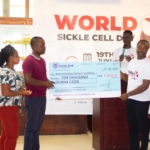
Speaking at this year’s World Sickle Cell Day celebration at the Ghana Institute of Clinical Genetics (GICG), Dr Eugenia Vicky Naa Kwarley Asare, a Senior Specialist Haematologist at Korle Bu Teaching Hospital, warned that the alarming statistics are a stark reminder of the urgent need for national action, investment in healthcare, and widespread public education.

“One in three Ghanaians carries either the HbS or HbC gene,” Dr Asare revealed. “These numbers are not just statistics — they represent lives, families, and futures that must be protected.”
Sickle cell disease is a chronic blood disorder caused by inherited mutations in haemoglobin genes.

In its most severe form—Sickle Cell Anaemia—patients suffer debilitating pain, organ damage, and a heightened risk of early mortality. Despite this, access to quality care remains uneven across the country.

Dr Asare’s call for greater support came as the GICG marked 50 years of providing specialist care, research, and education in sickle cell management. Established in 1974 by the late Prof. Felix Konotey-Ahulu, the institute has become the national referral centre for adolescents and adults living with SCD, with over 27,000 patients registered and more than 10,000 patient visits annually.

“The disease burden is enormous, yet the support systems remain fragile,” Dr Asare said. “Our goal is to ensure that no patient is left behind.”

The GICG’s role has expanded over the years to include specialised services such as hydroxyurea clinics, leg ulcer treatment, emergency care, and management of age-related complications, including renal failure. However, Dr Asare acknowledged that more robust decentralisation is needed to improve nationwide access to care.

Despite major strides in clinical research and partnerships with local and international institutions, sickle cell disease continues to be under-prioritised in public health policy. Experts believe many cases remain undiagnosed, particularly in rural areas.

Dr Asare and her colleagues are advocating for early screening, improved drug access, and community education to address the stigma and myths surrounding the disease. They also highlighted the urgent need to strengthen newborn screening programmes and provide sustained support for affected families.

“World Sickle Cell Day is more than a day of reflection—it’s a call to act boldly, to commit resources, and to bring hope to every child born with this condition,” Dr Asare urged. “The time to scale up is now.”

With sub-Saharan Africa accounting for 80% of global SCD births, Ghana’s experience underscores a continental challenge. Stakeholders are now calling on government, civil society, and the private sector to collaborate in building resilient systems that offer quality and equitable care to all Ghanaians living with sickle cell disease.

Read Also: World Sickle Cell Day: Dr Asare urges collective action as GICG marks 50 years of sickle cell care

terms and conditions for using Rokmer Pharma’s website

World Sickle Cell Day: Ghana Institute of Clinical Genetics urges collective action as it marks 50 years of sickle cell care

World Sickle Cell Day: Ghana Institute of Clinical Genetics urges collective action as it marks 50 years of sickle cell care

The Director of the Ghana Institute of Clinical Genetics (GICG), Dr. Amma Benneh-Akwasi Kuma, has issued a clarion call for collective national and global action to support individuals living with sickle cell disease, as Ghana marked both World Sickle Cell Day and 50 years of dedicated care at the GICG.

Speaking at a commemorative event held at the institute within Korle-Bu Teaching Hospital, Dr Kuma highlighted the pressing burden of sickle cell disease in Ghana and across sub-Saharan Africa, emphasising the urgent need for awareness, investment, and compassion.

“Today, the world pauses to recognise and salute the courage of over 8 million people living with sickle cell disease — and the resilience of the caregivers who walk beside them every day,” she said. “It is not just a day for awareness — it is a call to action.”

Ghana records around 18,000 new cases of sickle cell disease each year, with approximately 2% of newborns diagnosed and over half of them affected by the most severe form, Sickle Cell Anaemia. One in every three Ghanaians carries the HbS and/or HbC gene. Dr Kuma stressed that these figures are not mere statistics but a human reality that calls for sustained national attention and support.

World Sickle Cell Day: Ghana Institute of Clinical Genetics urges collective action as it marks 50 years of sickle cell care

This year’s observance was particularly symbolic, coinciding with the 50th anniversary of the GICG. Dr Kuma paid glowing tribute to the institute’s founder, the late Professor Felix Konotey-Ahulu, a pioneer in sickle cell care in Africa, who passed away just last month.

“Fifty years ago, a visionary, the late Professor Felix Konotey-Ahulu, founded this institute with one dream — that people with sickle cell disease in Ghana and across Africa could live with dignity, receive expert care, and experience hope,” she said.

Over the past five decades, the GICG has served more than 27,000 patients, contributed to groundbreaking research, and trained generations of healthcare professionals, earning its place as a beacon of excellence and compassion.

A minute’s silence was observed in honour of Professor Konotey-Ahulu, whose legacy, Dr Kuma noted, lives on “in every patient we serve, every life we save, every step forward we take.”

Dr Kuma closed her address with a strong appeal to all stakeholders to use the day not only to celebrate but to recommit to the cause.

“Let us raise our voices, shine the light on sickle cell disease, and work together to ensure that those living with it are not left behind,” she urged. “Together, we can create a future of care, compassion, and cure.”

More on Sickle Cell Disease

Sickle cell disease (SCD) is a chronic hemolytic disorder caused by a point mutation at position six of the beta-globin gene. In SCD, individuals inherit two abnormal haemoglobin genes, one of which must be haemoglobin S. Due to the inheritance of an abnormal haemoglobin, individuals with SCD—ranging from newborns to adults—face an increased risk of various complications and require multidisciplinary care.

Since the 1930s, a diverse group of individuals has initiated and advanced pediatric and adult SCD care at KBTH. Initially, care for adolescents and adults with SCD was provided in the medical block at KBTH, despite facing challenges.

The late Prof. Felix I.D. Konotey-Ahulu recognized these challenges and fought hard for individuals with genetic disorders to have their own clinic.

About GICG

In 1974, the Ghana Institute of Clinical Genetics (GICG) was established as a subvented organisation under the Ministry of Health, with the late Prof. Felix I.D. Konotey-Ahulu appointed as the first Director, and the late Dr. Michael Baddoo serving as the Director of Medical Services. When the GICG was initially founded, it received support from the VALCO Fund and the Ministry of Health, while the World Health Organization (WHO) and the International Atomic Energy Agency (IAEA) provided generous research funding, enabling the GICG to focus on service, education, and research.

In 1976, Brigadier Odartey-Wellington, the Commissioner of Health, officially commissioned the GICG, marking a significant milestone in the advancement of clinical genetics in Ghana.

After its establishment, the GICG primarily operated on an outpatient basis. Patients presenting with acute complications were admitted to the second floor of the medical block.

In the 1990s, daycare and emergency services were introduced, with outpatient and daycare services in an open area of the current outpatient department. The clinic had only a few beds and benches with mattresses to accommodate patients. Despite being understaffed and facing a high patient load, we persevered.

In the 2000s, various renovations were carried out by NGOs, institutions (both foreign and local), and SCD patient support groups. These renovations included a reception area, a general outpatient department, a new roof, wards with reclining beds for patients, and laboratory equipment.

To support its mission of providing better health management to all individuals living with SCD, GICG receives referrals from across Ghana, primarily from the southern region. Initially, GICG had a pediatric unit within the Department of Child Health at KBTH, along with an adolescent and adult unit.

All individuals diagnosed with SCD, from children to adults, were registered in the GICG registry. In the early 2010s, the pediatric SCD clinic separated from the adolescent and adult SCD clinic at GICG and became one of the specialized clinics under the Department of Child Health at KBTH.

Currently, GICG provides clinical services for adolescents (≥age 13 years) and adults, which include daily (Monday to Friday) general outpatient clinics, special clinics for disease-modifying drugs such as hydroxyurea, chronic leg ulcer treatment, and care for geriatric and renal complications. Daycare/emergency services are also available on weekdays, alongside general laboratory, public health, and pharmacy services managed by the Korle Bu Polyclinic Pharmacy. The institute has over 27,000 registered patients, with approximately 3,000 patients and 10,000 patient visits annually. The core functions of the Institute include patient care, patient/public education, and clinical research.

The Past and Present Directors of the Ghana Institute of Clinical Genetics include
NameYear(s)
Prof. Felix I.D. Konotey-Ahulu1974 – 1979
Dr. Akurang Dankwa1979 – 1980
Prof. Alexander Bruce-Tagoe1980 – 1984
Prof. Rev. George Ankrah-Badu1984 – 1988, 1990 -1994
Prof. Joseph Kpakpo Acquaye1988 – 1990, 1994 – 2002
Prof. Ivy Ekem2002 – 2014
Prof. Edeghonghon O. Olayemi2014 – 2017
Prof. Yvonne Akotoa Dei-Adomakoh2017 – 2022
Dr Amma Anima Benneh-Akwasi Kuma2022 – present

Other doctors who have sacrificed for the care of individuals with SCD include the late Dr. Gabriel G. Ampomah Twumasi and Dr. Fredericka Sey.

The past and current staff and patients of GICG have also played an instrumental role in caring for our patients and in groundbreaking global clinical trials for SCD, placing the institute on the world map for SCD.

terms and conditions for using Rokmer Pharma’s website

FoSCel hosts national forum on Sickle Cell at UEW: Calls for unity, awareness and policy action

FoSCel hosts national forum on Sickle Cell at UEW: Calls for unity, awareness and policy action

The Focus on Sickle Cell Foundation (FoSCel) has held a national forum uniting stakeholders from across health, education, and civil society in a call to address Sickle Cell Disease (SCD) in Ghana.

Organised to mark World Sickle Cell Day, the event held at the University of Education, Winneba (UEW), and themed “Know Your Genotype, Secure the Future”, brought together students, health professionals, traditional leaders, government representatives, and NGOs for a national dialogue on one of Ghana’s most pressing yet under-discussed health challenges.

FoSCel hosts national forum on Sickle Cell at UEW: Calls for unity, awareness and policy action

Founder of FoSCel, journalist and advocate Amos Andoh (Akokoa Mpaninsem), shared his own experience of living with Sickle Cell Disease, saying “This is more than a project for me – it is a mission born of pain but driven by purpose.”

He stressed the urgent need for education, revealing that a significant portion of the Ghanaian population remains unaware of basic facts about the disease, including genotype compatibility and transmission.

FoSCel hosts national forum on Sickle Cell at UEW: Calls for unity, awareness and policy action

In his keynote address, guest speaker Dr Anyemedu Asare Fredovich, an orthopaedic surgeon and former Acting Medical Director of the Trauma and Specialist Hospital in Winneba, described the global death toll from Sickle Cell as “a daily aviation disaster we are not talking about.”

Dr Fredovich revealed startling national statistics, noting that 2% of all babies born in Ghana each year — about 15,000 to 20,000 infants — have Sickle Cell Disease, while 15% to 30% of the population are genetic carriers.

FoSCel hosts national forum on Sickle Cell at UEW: Calls for unity, awareness and policy action

He warned that a lack of public awareness around genotype compatibility continues to drive the crisis.

“We’re losing lives unnecessarily because people simply do not know their genotype or what it means for their future families,” he said, commending FoSCel for stepping into a leadership role and expressing hope that the foundation becomes the “linchpin” of a more coordinated, long-term national response.

FoSCel hosts national forum on Sickle Cell at UEW: Calls for unity, awareness and policy action

The forum featured panel discussions on the psychological, social, and economic impact of Sickle Cell Disease, with contributions from the Ghana Health Service, the Ministry of Health, the university faculty, and traditional councils.

The sessions explored treatment barriers, stigma, and strategies to improve support systems for affected families.

FoSCel hosts national forum on Sickle Cell at UEW: Calls for unity, awareness and policy action

Student voices were particularly prominent, with youth leaders pledging to intensify peer education campaigns, ensuring their networks embrace early genotype testing and informed reproductive choices.

“This generation can break the cycle, but we must be informed first,” one student leader remarked during an open forum session.

FoSCel hosts national forum on Sickle Cell at UEW: Calls for unity, awareness and policy action

A symbolic candle-lighting ceremony was held in memory of lives lost to SCD, capping off a day of reflection, advocacy, and renewed commitment.

FoSCel announced it would expand its national outreach campaign, with upcoming forums scheduled at major universities including the University of Ghana, KNUST, UCC, and UDS.