Rokmer Pharma Ltd

terms and conditions for using Rokmer Pharma’s website

Blog Right Sidebar

terms and conditions for using Rokmer Pharma’s website

Health Minister to register over 16,000 residents under NHIS in Juaboso District

Health Minister to register over 16,000 residents under NHIS in Juaboso District

Kwabena Mintah Ankando, the Member of Parliament for Sefwi Juaboso Constituency, is to register more than 16,000 residents in the constituency with the National Health Insurance Scheme ( NHIS) as part of efforts to improve the socio-economic and health needs of the constituents.

Mr Ankando, who is also the Minister for Health, told the  Ghana News Agency in an interview that the registration exercise scheduled for July 14  to August 8,  would target mainly the aged, children, and less privileged, irrespective of their political,  ethnic, and religious backgrounds.

  “ The exercise, especially, would cover the less privileged who can not afford to register with the scheme or renew their cards to enable them to access healthcare services for their ailments, “.

The Health Minister noted that the NHIS had greatly benefited many individuals by providing free healthcare,  but that there were still people in the constituency who had not registered or were unable to renew their expired cards.

The Minister emphasized that the NHIS under President John Dramani Mahama’s government was recently reviewed, allowing for more medical conditions to be covered by the scheme.

He said it was prudent for people to register to benefit from the scheme.

He indicated that the scheduled NHIS  registration and renewal exercise was in fulfillment of a campaign promise he made to his constituents.

He said aside from the registration and renewal of NHIS cards,  he was working closely with the District Chief Executive ( DCE) to roll out more development projects and also to engage more youth in various productive economic ventures to help reduce youth unemployment and social vices.

terms and conditions for using Rokmer Pharma’s website

Dr. Sharon Karbo: A Ghanaian physician leading the charge against cancer and chronic disease

Dr. Sharon Karbo: A Ghanaian physician leading the charge against cancer and chronic disease

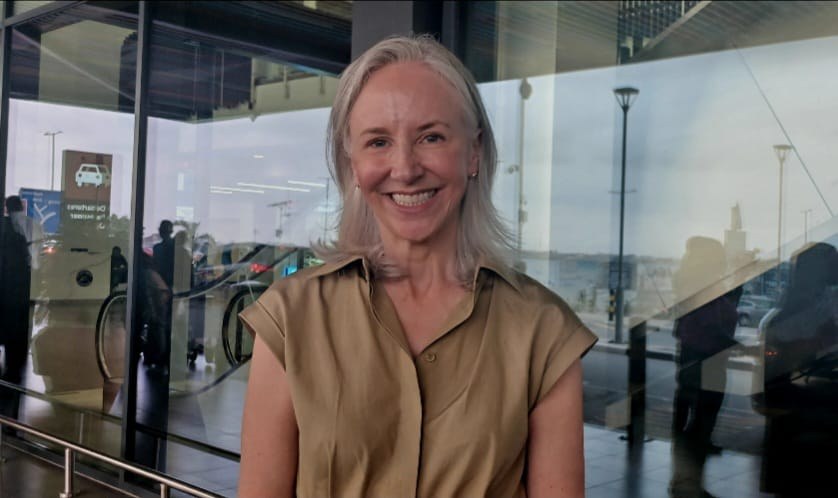
At the crossroads of public health innovation and compassionate care stands Dr. Sharon Karbo, a physician, researcher, and health strategist whose work is quietly reshaping health systems in Ghana and gaining global attention.

Whether in the oncology wards of Accra, the underserved communities of northern Ghana, or at the United Nations, her mission is clear: to make health systems work for everyone, especially the forgotten and the underserved.

For many in Bolgatanga and parts of northern Ghana, healthcare once felt like a distant privilege. That changed when Dr. Karbo led research into the prevalence and management of hepatitis B a chronic and often overlooked condition endemic to the region.

Recognising its devastating long-term impact, she launched advocacy campaigns to promote early childhood vaccination and expand public health education. Her work helped bring awareness to a silent epidemic and introduced actionable solutions to curb its spread.

As a senior medical officer at Ghana’s National Center for Radiotherapy and Oncology, Dr. Karbo provided care to more than 1,000 cancer patients annually. Her impact, however, extended beyond clinical numbers.

She became a national voice for equity in cancer treatment, spearheading reforms in internal hospital financing that made treatment accessible for low-income families and helped reduce dropout rates among patients facing financial hardship. Her work restored hope and dignity to some of Ghana’s most vulnerable oncology patients.

As the youngest physician appointed to the Ghana Medical Association’s Building and Development Committee, a national body responsible for shaping the country’s healthcare infrastructure, Dr. Karbo brought a fresh, strategic lens to system-wide challenges.

In this prestigious role, she co-developed visionary plans for regional physician hubs aimed at addressing longstanding service delivery gaps in rural areas. Her strategic input introduced sustainable financing models and emphasised equitable resource allocation.

By injecting innovative thinking into traditionally conservative systems, Dr. Karbo distinguished herself as a next-generation leader transforming national healthcare strategy.

But even beyond the wards and boardrooms, Dr. Karbo is redefining community health leadership in Ghana through her nonprofit, On-Field Life Savers (OFIS).

As founder and executive director, she has transformed OFIS into one of the country’s most dynamic public health advocacy groups tackling the rising burden of non-communicable diseases (NCDs).

Under her leadership, OFIS has launched scalable initiatives that equip everyday citizens students, traders, fishermen, and athletes to become active agents of health within their communities.

Through her vision, OFIS has:

  • Trained over 600 lay community members to identify and refer hypertension and diabetes cases;
  • Established eight Hypertension and Diabetes Advocates (HADA) Hubs to provide community-based screening and education;
  • Donated screening equipment such as sphygmomanometers and glucometers to underserved areas;
  • Trained over 1,000 schoolchildren and 400 adults in CPR and emergency first aid.

She has also cultivated partnerships with local groups including market associations, fishing cooperatives, football academies, and health NGOs ensuring health knowledge becomes a permanent fixture of community life.

What sets Dr. Karbo apart is not just the scale of her work, but the self-sustaining model she created, which continues to thrive without external funding demonstrating her rare combination of leadership, strategy, and resource mobilization.

Dr. Karbo recently graduated from the highly competitive dual master’s program in Public Health and Business Administration at Johns Hopkins University, one of the world’s most prestigious institutions.

There, she was competitively selected into the Hopkins Business of Health Initiative (HBHI) a highly selective, interdisciplinary program that unites scholars from the Bloomberg School of Public Health, Carey Business School, School of Nursing, and School of Medicine.

As part of this expert community, Dr. Karbo contributes to high-level discourse on achieving a healthier, more equitable America through affordable, high-value healthcare systems, with a focus on how business and policy incentives can transform national health outcomes.

In recognition of her growing influence, Dr. Karbo was invited to participate in the 79th United Nations General Assembly side event on Financing Women and Youth representing the Johns Hopkins Carey Business School in global discussions on equitable health financing, gender equity, and sustainable development.

Her presence spotlighted Africa’s healthcare needs and solutions on a global platform, reinforcing her role as a powerful advocate for health justice.

From moderating international healthcare panels to leading research on equitable cancer care, Dr. Karbo’s focus remains the same: making health systems work better for those who need them most.

Whether it’s her telehealth policy work in Latin America or her public health research on cardiovascular disease and cancer, she continually seeks ways to bridge global innovation with local relevance ensuring no one is left behind in the pursuit of health equity.

What makes Dr. Karbo’s trajectory especially compelling isn’t just her impressive awards and affiliations though they are notable. She was honored with the Relentless Advancement Award, given to individuals who challenge the status quo, persevere through adversity, and uplift entire communities through purpose-driven leadership.

Whether working at the community level or shaping policy at the global stage, she consistently asks: How can this work improve lives back home?

She’s not just representing Ghana on the global stage she’s redefining it. From oncology units to policy panels, from community screenings to United Nations summits, Dr. Sharon Karbo is building the kind of future where health equity isn’t a privilege, but a right. Her impact is rooted in compassion, shaped by experience, and powered by a bold vision: that Ghana and all of Africa deserve health systems that work for everyone.

And she’s not waiting for change. She’s leading it.

terms and conditions for using Rokmer Pharma’s website

HEFRA embarks on assessment tour in Volta region to enforce health facility standards

HEFRA embarks on assessment tour in Volta region to enforce health facility standards

The Health Facilities Regulatory Agency (HEFRA) has commenced a regional assessment tour in the Volta Region as part of its nationwide effort to monitor and enforce compliance with regulatory standards across health facilities in the country.

Led by the Acting Registrar, Dr. Winfred Korletey Baah, the HEFRA delegation paid a courtesy call on the Volta Regional Minister, James Gunu, at his office in Ho.

HEFRA embarks on assessment tour in Volta region to enforce health facility standards

The visit forms part of the agency’s broader agenda to engage key regional stakeholders and evaluate the operational effectiveness of HEFRA’s decentralised structures.

During the engagement, Dr. Baah explained that the tour seeks to ensure that both public and private health facilities within the region are licensed, properly supervised, and adhere to the minimum standards of care set out by the agency.

He emphasised that the agency’s mission is to safeguard public health by promoting safety, professionalism, and quality assurance in healthcare delivery.

The Regional Minister commended HEFRA for its critical role in protecting the health and well-being of Ghanaians and pledged his office’s full support to the agency’s mandate.

HEFRA embarks on assessment tour in Volta region to enforce health facility standards

“I commended them for their efforts and reaffirmed my commitment to supporting HEFRA’s work. Health is a crucial sector, and it is important that we uphold the highest standards to guarantee quality care for our people.”

Mr. Gunu added that his administration is committed to supporting all relevant institutions that are working to enhance public service delivery, particularly in the health sector.

The visit also served as a platform for dialogue on emerging challenges in health regulation, including unlicensed operations, inadequate infrastructure, and the need for ongoing staff training. HEFRA is expected to continue its inspection exercises across the region in the coming days, with a view to compiling a comprehensive report on the state of health facility compliance in the Volta Region.

HEFRA embarks on assessment tour in Volta region to enforce health facility standards

The agency has reiterated its call to health facility operators to regularise their operations and cooperate fully with regulatory processes, stressing that quality health service delivery must be non-negotiable for the advancement of national development goals.

terms and conditions for using Rokmer Pharma’s website

Ho Teaching Hospital charts path to medical excellence and tourism under new leadership

Ho Teaching Hospital charts path to medical excellence and tourism under new leadership

The Ho Teaching Hospital is entering a new chapter. Its new CEO, Dr. Hintermann K. K. Mbroh, and new Board Chair, Dr. Delanyo Yao Tsidi Dovlo, have laid out a bold plan to raise the hospital to top-tier status in Ghana and West Africa.

At a staff durbar and facility tour, the two leaders shared a vision focused on quality care, accountability, infrastructure, and medical tourism. They also highlighted progress made and challenges that remain.

Dr. Dovlo, a seasoned public health expert and former WHO official, set the tone with a strong message.

“One of the urgent areas we must address is the quality of care,” he said. “Yes, we’ve seen innovations and improvements. But these must lead to actual patient satisfaction. That must be the core of our service.”

He stressed the need for accountability across the hospital.

Ho Teaching Hospital charts path to medical excellence and tourism under new leadership

“We must clarify responsibilities at all levels,” he said. “We must hold each other accountable—not just management or the CEO, but the Board as well.”

The hospital, now over 20 years old, faces urgent infrastructure needs. Dr. Dovlo listed key gaps: more beds, a steady oxygen supply, backup generators, and better medical tools.

“We know money is tight,” he added. “So we’ll focus on areas with the highest impact. We must ask: what can we do now to move things forward fastest?”

For Dr. Mbroh, this was his first major public address since taking office. He made clear the hospital’s goal—becoming a centre for medical excellence and a hub for medical tourism.

“Our vision remains firm,” he said. “We want Ho Teaching Hospital to be a premier health facility. Even before medical tourism became a national focus, we had already begun the journey.”

He noted that the previous board had set a strong foundation for medical tourism. His job now, he said, is to realign and implement that vision.

Ho Teaching Hospital charts path to medical excellence and tourism under new leadership

“We must build the right systems,” he said. “We must create the right environment and improve services for both local and international patients.”

Both leaders stressed the need to strengthen ties with the public.

“We want to build a hospital that the people of the Volta Region—and all of Ghana—can proudly call their own,” Dr. Dovlo said. “It’s not just about buildings. It’s about people leaving our hospital feeling cared for. That’s the real measure of success.”

He urged all stakeholders to come on board. That includes management, clinical staff, support staff, and the community.

“If our people are not happy with the care we provide,” he said, “then we’ve missed the point of our existence.”

He introduced the new Governing Board—made up of professionals in health, education, finance, governance, and law—and said their experience will guide the hospital into a new era.

Ho Teaching Hospital charts path to medical excellence and tourism under new leadership

“These are the people who will help us restore pride in this hospital,” he said. “With their support, I believe we can turn this place into a national symbol of excellence.”

Dr. Dovlo reflected on the hospital’s 26-year journey and its digital transition four years ago. He said this is a turning point.

“Yes, there have been gains. But there’s also been stagnation. Now is the time to move forward. We want others to look at Ho and ask: how did they do it?”

He ended with a rallying call.

“This is our moment. Let’s rise together. Let’s build a hospital that’s not just functional, but phenomenal. One that attracts patients across borders. One that heals, trains, and inspires.”

Dr. Mbroh agreed.

“We are not just managing a hospital,” he said. “We are building a legacy. Let’s make Ho Teaching Hospital a place where hope meets healing—and service meets excellence.”

terms and conditions for using Rokmer Pharma’s website

Medical facilities in Ahafo Region hail NHIA for prompt payment of claims

Medical facilities in Ahafo Region hail NHIA for prompt payment of claims

Medical Directors of health facilities in the Ahafo Region have commended the leadership of the National Health Insurance Authority (NHIA) for the prompt payment of claims in 2025.

According to them, the NHIA’s timely disbursement of claims has significantly improved the day-to-day administration of both public and private health facilities across the region.

Dr Tsibo-Takyi, Medical Director of the St. John of God Catholic Hospital in Duayaw-Nkwanta, noted that although NHIS claims alone are not enough to sustain healthcare operations, their prompt payment is greatly appreciated.

The Medical Directors made these remarks on Monday at Hwediem during a stakeholder engagement meeting between the NHIA, credentialed facilities, and the Ghana Health Service in the Ahafo Region.

The meeting served as a platform to reflect, review, and renew the collective commitment to delivering quality and accessible healthcare to residents under the National Health Insurance Scheme (NHIS).

Medical facilities in Ahafo Region hail NHIA for prompt payment of claims
George Mawuli, the Acting Ahafo Regional Director, NHIA

It was attended by the Regional Director of Health Services, District Directors of Health, Medical Superintendents of hospitals, and representatives from mission hospitals in the region.

Dr James Ankomah, Medical Director of Goaso Municipal Hospital, called on the NHIA to increase tariffs under the Scheme, stressing that the current payments to facilities are woefully inadequate.

In his address, the Acting Ahafo Regional Director of the NHIA, George Mawuli, revealed that payments to health facilities had been made up to May 2025, with only a few institutions having exceptional cases pending.

He expressed optimism that prompt payment of claims would translate into quality service delivery for all residents seeking healthcare in the region.

However, Mr Mawuli also raised concerns about some facilities continuing to charge illegal fees or impose co-payments on clients, describing the practice as unethical and a breach of contractual agreements with the NHIA.

“We cannot allow these practices to continue,” he stated. “They undermine the credibility of the NHIS and erode public trust.”

He therefore urged all service providers to immediately cease unauthorised charges and strictly adhere to NHIS tariffs and policies.

To enhance transparency and client education, Mr Mawuli announced the introduction of the “Pulpit System”—a new initiative in which NHIS staff will be stationed at various credentialed facilities daily to educate clients about their rights, responsibilities, and benefits under the Scheme.

He explained that the initiative will also serve as a feedback mechanism and facilitate real-time resolution of issues at the facility level. “We count on your maximum cooperation to make this a success,” he added.

As part of its operational calendar, the NHIA is also entering a new cycle of credentialing and contract renewals. Mr Mawuli urged all providers to ensure that their documentation is up to date and submitted promptly.

He emphasised the NHIA’s commitment to providing a smooth and transparent process and called for a similar level of professionalism and urgency from all healthcare facilities.

Mr Mawuli concluded by highlighting the shared responsibility of ensuring the NHIS’s success in the Ahafo Region. “Let’s work together in mutual respect and accountability to build a system that our clients can trust and rely on,” he said.

terms and conditions for using Rokmer Pharma’s website

Scented candles linked to cancer, respiratory diseases – Toxicologist

Scented candles linked to cancer, respiratory diseases – Toxicologist

A toxicologist, Dr Regina Ama Oppong Wiredu, has warned that some scented candles may release harmful chemicals when burnt, especially in enclosed spaces. She says the chemicals are likely to pose long-term health risks such as cancer and respiratory issues.

Dr Wiredu, who works with SYNLABB Ghana in Accra, said this in an interview with The Mirror on Friday, June 13, 2025.

In recent years, the use of scented candles has gained popularity among the youth.

hey use them not only to create a calming atmosphere but to add a touch of style to their living spaces.

From bedrooms and study corners to cafés and beauty studios, they have become a key part of the aesthetic often showcased on social media platforms such as Instagram and TikTok.

Dr Wiredu explained that “many commercial scented candles are made from paraffin wax, which is a byproduct of petroleum. When burned, they can release Volatile Organic Compounds (VOCs) such as benzene, a known carcinogen and toluene, which may cause other serious health effects.

These chemicals, she said, could linger in the air, especially in small rooms with poor ventilation, and over time, breathing in such toxins could irritate the lungs and affect indoor air quality.

“While occasional use is unlikely to cause immediate harm, people who light scented candles daily, particularly in unventilated spaces, are at a higher risk of long-term exposure,” she noted.

Dr Wiredu noted that although there is no direct evidence that scented candles alone caused cancer, the concern lies in cumulative exposure to multiple indoor air pollutants.

Cancer doesn’t happen overnight. It builds over years, sometimes decades, due to repeated exposure to harmful substances. When you combine emissions from candles with other indoor pollutants like air fresheners, dust, cleaning sprays or cigarette smoke, the risk increases,” she added.

What’s in a candle?

Citing a 2009 study by South Carolina State University in the United States, she said it was found that burning paraffin wax candles could release harmful chemicals into the air, potentially linked to cancer and asthma.

More recent studies suggest that while the levels may be low, regular exposure could still be problematic for certain groups, especially children, pregnant women, the elderly and people with pre-existing respiratory conditions such as asthma. 

Fragrance vs health

Apart from the wax itself, the fragrance used in candles is another concern.

Dr Wiredu explained that many candles were scented with synthetic fragrance oils, which could emit phthalates, chemicals known to disrupt hormones.

“Phthalates are used to help scents last longer, but they have been linked to hormonal imbalances and reproductive health issues. Inhaling these chemicals repeatedly is not something we should take lightly, especially for children and women of childbearing age,” she said. 

Safer candle choices

According to Dr Wiredu, not all candles are bad. She noted that natural wax alternatives like soy, beeswax and coconut wax burn cleaner and are generally safer.

“These options are biodegradable and don’t release as many toxins into the air. Even better, look for candles that use natural essential oils instead of artificial fragrances,” she advised.

She also encouraged consumers to pay attention to labels. 

“If a candle doesn’t list what type of wax or fragrance it uses, that’s usually a red flag. Transparency is key when it comes to your health.”

Tips for safer use

Even if someone prefers to keep using their favourite scented candles, Dr Wiredu said some practical tips such as always burning candles in a well-ventilated room, limiting burn time to under two hours, trimming the wick to a quarter inch before each use to minimise smoke, avoiding candles with dark soot or strong artificial smells and never sleeping with candles burning could help reduce health risks.

“Candles can still be part of your relaxation routine, but moderation and awareness are important,” she said.

Alternatives to candles

For people looking to create an ambience without health concerns, Dr Wiredu recommended natural alternatives like reed diffusers with essential oils, indoor plants that purify the air or open windows and fans to improve airflow.

Low public awareness

Addressing issues of public awareness, Dr Wiredu said despite growing global awareness of indoor air pollution, public education in Ghana and across many African countries remained limited.

“Many people associate pollution with factories and cars, but they forget about what’s happening inside their own homes. We need more conversations around indoor air quality and how it affects long-term health,” she said.

She added that while regulations for food and water safety existed, there were few local guidelines for everyday household products like candles and air fresheners.

“It’s important that consumers push for safer products and that health authorities consider stronger regulations to protect the public,” she urged.

“You don’t need to throw out all your candles. Just be informed about what you’re breathing in. Your lungs and your future self will thank you,” she said.

terms and conditions for using Rokmer Pharma’s website

There are no cases of Covid-19 in Hohoe – Volta Regional Hospital

There are no cases of Covid-19 in Hohoe - Volta Regional Hospital

Authorities at the Volta Regional Hospital in Hohoe have debunked reports of three cases of Covid-19 in Hohoe.

According to a Joy News source, the figures being circulated were taken from data in 2021, during the peak period of the COVID-19 pandemic in the country.

Assurance was given that health officials have heightened surveillance and are ready to identify and act swiftly should any case be identified.

They have, therefore, entreated the public to ignore a newscard with the description “six children and 86 hospital staff have tested positive for COVID-19 in Hohoe.”

There are no cases of Covid-19 in Hohoe - Volta Regional Hospital

Meanwhile, the Health Minister, Kwabena Mintah Akandoh, has confirmed a recent spike in COVID-19 cases, with infections currently concentrated at the University of Ghana campus.

He said the cases are primarily driven by the Omicron variant. Addressing Parliament on Tuesday, July 1, Mr Akandoh disclosed that out of 316 suspected cases, 107 have been confirmed.

However, he assured the public that there have been no hospitalizations or deaths linked to the new infections.

terms and conditions for using Rokmer Pharma’s website

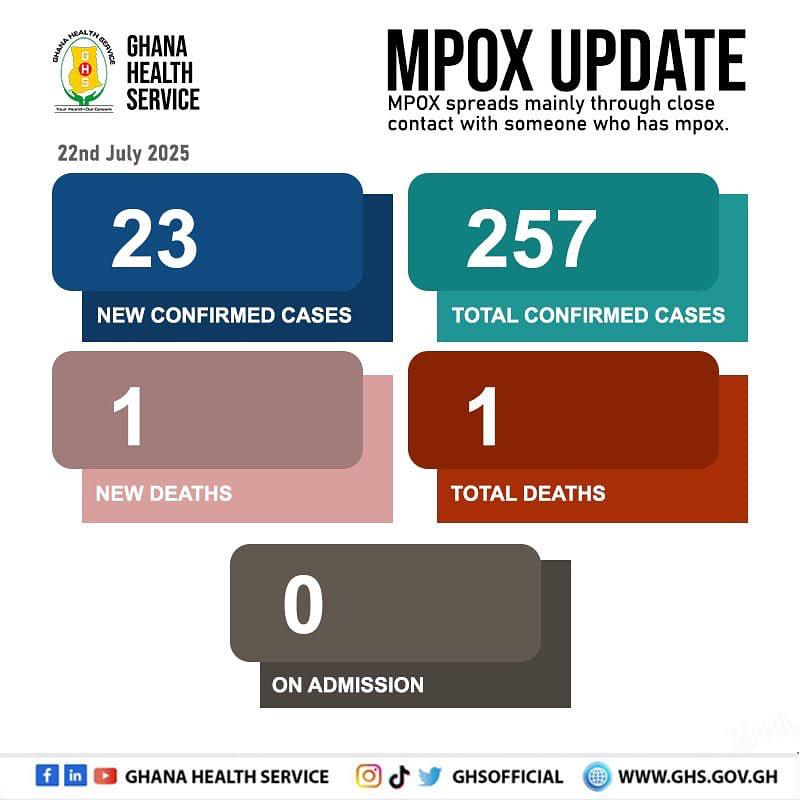
Ghana records 30 more Mpox cases; total now 163

Ghana records 30 more Mpox cases; total now 163

Ghana has recorded 30 new confirmed Mpox cases as of 30th June 2025, bringing the nationwide total to 163, according to the latest update from the Ghana Health Service (GHS).

This rise follows 14 new cases reported on June 25, indicating a steady increase in infections over the past week.

Despite this upward trend, health authorities emphasise that the situation remains under careful control, with no new hospital admissions or fatalities reported.

Mpox, formerly known as monkeypox, spreads mainly through close contact with infected individuals.

The GHS continues to urge the public to adhere strictly to preventive measures, including avoiding close contact with anyone showing a rash, washing hands regularly and thoroughly, and seeking immediate medical attention if symptoms develop.

Health officials stress the importance of vigilance and timely reporting to contain the outbreak effectively.

Reaffirming its commitment to managing the situation, the GHS is closely monitoring developments and implementing necessary interventions to slow transmission.

With total infections now at 163, authorities call on all citizens to remain alert and cooperate fully with safety protocols designed to protect public health.

terms and conditions for using Rokmer Pharma’s website

Government urged to act on pharmacists shortage  

Government urged to act on pharmacists shortage  

The Community Practice Pharmacists Association (CPPA) has officially endorsed the Early Career Pharmaceutical Group’s (ECPG) #HirePharmacistsNow campaign, calling on the government to urgently address pharmacist shortages in the public health sector. 

In a statement signed by Dr. Emmanuel Kwaku Ireland, CPPA Chairman, the Association said Ghana’s failure to recruit public sector pharmacists for the past five years has severely impacted primary healthcare, particularly in rural and underserved areas. 

With over 4,300 early-career pharmacists available for service, only 1,300 are currently employed across more than 10,000 health facilities, the CPPA noted. 

“This chronic under‐resourcing hinders medication safety, chronic‐disease care, and patient outcomes,” the statement read. 

The Association observed that the shortage has led patients to increasingly rely on informal and unregulated drug outlets, exacerbating health risks.  

“Each empty post represents a missed opportunity to reinforce primary care, prevent medication errors, and combat antimicrobial resistance. 

“Our pharmacists are trained, credentialed, and ready, but the system leaves them idle while communities suffer,” it said. 

CPPA advocated for the immediate recruitment of at least 500 pharmacists to improve health outcomes and ease pressure on overstretched practitioners.  

“Doing so would strengthen universal health coverage, shore up the national pharmaceutical services, and build resilience against the growing burden of non‐communicable diseases,” it said. 

The Association also emphasised equitable deployment to rural and peri‐urban communities most in need. 

The endorsement follows ECPG’s participation in a CDD-Ghana capacity-building programme on civic and health policy engagement, and the subsequent launch of the #HirePharmacistsNow campaign—a national advocacy effort across digital, traditional media, and stakeholder platforms. 

“Our request is simple and urgent: fill the posts. Strengthen our system. Protect our people. #HirePharmacistsNow,” the CPPA said.