Rokmer Pharma Ltd

admin

terms and conditions for using Rokmer Pharma’s website

A Smokeless Future for Ghana: Why World Vape Day 2025 marks a turning point in Tobacco harm reduction
A Smokeless Future for Ghana: Why World Vape Day 2025 marks a turning point in Tobacco harm reduction

This year’s World Vape Day marks a significant milestone, two decades since the emergence of vaping technology as a transformative tool in global tobacco harm reduction efforts. Modern vaping devices were first developed in China in 2003 as a safer alternative to traditional smoking, delivering nicotine through vapour rather than combustion. By 2005, these products began entering markets in Europe and the United States, quickly gaining popularity among smokers seeking less harmful alternatives.

The scientific evidence supporting smokeless products as effective harm reduction tools is strong. Decades of research have demonstrated that the primary health hazard of smoking lies in the toxic substances produced during combustion. Products such as vapour devices, heated tobacco products, and nicotine pouches eliminate combustion entirely, reducing exposure to harmful chemicals by an estimated 90% to 99% compared to conventional cigarettes.

Ghana is at a pivotal point in its public health journey. The country needs forward-thinking, science-based policies to effectively address tobacco use and reduce health burdens. Recognising and regulating existing vaping products on the market is an essential step. Ghana requires an amendment to its Public Health Act (PHA) to explicitly acknowledge vaping devices and other low-risk nicotine products, establishing a clear legal framework that ensures safety, quality standards, and appropriate access.

It is vital to emphasise that this approach is not about encouraging nicotine use among non-smokers or youth. Instead, it offers adult smokers a significantly less harmful alternative, empowering informed choices and supporting health improvement. Accessible, well-regulated THR products, coupled with accurate, evidence-based information, can become valuable tools in Ghana’s public health toolkit. This is not an abandonment of traditional tobacco control measures; rather, it is a strategic evolution designed to meet people where they are, with science-backed solutions.

Countries that have embraced modern regulatory approaches are already witnessing positive outcomes. Sweden’s long-standing use of oral tobacco, like snus, has contributed to the country having the lowest smoking rates in the European Union and some of the lowest lung cancer and smoking-related death rates. Similarly, the United Kingdom, New Zealand, and the United States have seen reductions in smoking prevalence and tobacco-related harm through balanced regulation and public education, recognising the importance of providing smokers with reduced-risk alternatives.

For Ghana, the opportunity exists to implement a comprehensive, evidence-based regulatory framework that allows for the lawful recognition and oversight of vaping products. Such regulation can help curb illicit trade, ensure product safety, and prevent underage access. It is crucial that enforcement measures are robust and that consumer protection remains a priority.

Public education is equally important. Clear, unbiased information about the relative risks of smoking versus using vaping or other smokeless products helps adults make informed, healthier decisions. Building trust and open dialogue among scientists, policymakers, public health officials, and industry stakeholders will ensure Ghana’s policies are tailored to its social realities and health needs.

On this Vape Day, Ghana can demonstrate leadership by advancing policies that recognise the role of regulated vaping products in reducing harm. The scientific consensus confirms that providing adult smokers with access to safer alternatives can significantly reduce the health impacts of tobacco use. This moment is an opportunity to set a path that prioritises health, evidence, and innovation, shaping a future in which fewer Ghanaians suffer from tobacco-related diseases.

Let this be the moment Ghana chooses a health-focused, science-based path forward.

The author, Dr John Tengey, is a Ghanaian medical professional and public health expert with extensive experience in clinical practice, epidemiology, and health advocacy.

terms and conditions for using Rokmer Pharma’s website

GHOSPA appeals for financial clearance to engage pharmacist house officers

GHOSPA appeals for financial clearance to engage pharmacist house officers

The Government and Hospital Pharmacists Association (GHOSPA) has issued an urgent call to the Ministry of Finance to immediately grant financial clearance for the deployment of 599 pharmacist house officers, warning that failure to do so could spark a national crisis in pharmaceutical care.

This appeal follows the imminent exit of 333 house officers at the end of May, a situation GHOSPA says will create a dangerous gap in the delivery of essential pharmaceutical services across the country’s healthcare facilities.

“The 599 qualified pharmacist house officers awaiting posting have completed their training and are ready to fill these critical roles. However, their deployment is unjustifiably stalled due to pending financial clearance,” GHOSPA said in a press release issued on 28 May.

The association painted a dire picture of what could happen if the Ministry fails to act. “The simultaneous exit of 333 house officers without immediate replacement will overwhelm remaining pharmacists who are already understaffed, leading to medication errors, delayed treatments, and compromised patient safety,” it warned.

GHOSPA also noted that the failure to post new pharmacists would severely disrupt around-the-clock pharmaceutical services, including antimicrobial stewardship, chronic disease management, and emergency care, ultimately putting patient lives at risk.

The association is calling on the Ministry of Finance to act without delay. It urged the government to: expedite and grant financial clearance immediately to prevent a collapse in pharmaceutical services; prioritise healthcare workforce sustainability by ensuring seamless transitions between outgoing and incoming house officers; and engage with the Ministry of Health, Pharmacy Council, and GHOSPA to resolve this and future delays proactively.

“The consequences of inaction are dire,” GHOSPA warned, adding that further delays would “increase workload and burnout for already stretched pharmacists” and “undermine Ghana’s healthcare system, eroding public trust and worsening health outcomes.”

GHOSPA reminded the government that pharmacists are not simply dispensers of medication but vital healthcare providers whose absence would seriously affect hospital operations.

“We cannot afford bureaucratic delays when lives are at stake. By granting clearance, the government will safeguard the continuity of high-quality pharmaceutical services and affirm its commitment to the health and well-being of all Ghanaian citizens,” the statement stressed.

The association concluded by urging the media, civil society, and the public to rally behind its call. “GHOSPA calls on the Ministry of Finance to act NOW to avert this looming crisis. We also urge the media, civil society, and the public to join us in demanding an urgent resolution to this pressing issue.”

terms and conditions for using Rokmer Pharma’s website

‘No form of tobacco is safe for consumption, shisha isn’t safe’ – FDA warns

'No form of tobacco is safe for consumption, shisha isn't safe' - FDA warns

The Food and Drugs Authority (FDA) has indicated that no form of tobacco is safe for human consumption, be it a vaporizer, shisha, or gum among others

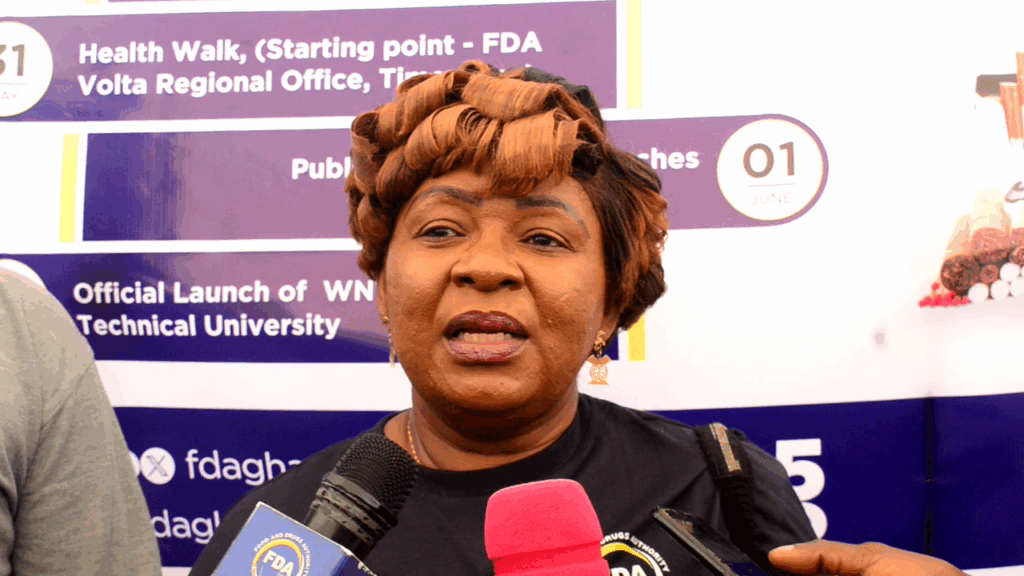
According to the Director of the Tobacco and Substances of Abuse Division of the FDA, Dr Mrs Olivia Agyekuma Boateng, all tobacco products contain nicotine, an addictive agent, and other chemicals that are harmful to the human body.

'No form of tobacco is safe for consumption, shisha isn't safe' - FDA warns

“There is no safe form of tobacco, whether you sniff it, inhale it, chew it, if they are gum, they are all not safe”, she stressed when addressing the media on the sideline of a medical outreach, which forms part of activities to commemorate this year’s World No Tobacco Day.

She, therefore advised the citizenry, especially the youth to ignore the coy of the industry to present tobacco in different forms, labeling them as safe for human consumption.

She debunked an argument that smoking shisha isn’t harmful to the human body due to the mechanism the pot is designed with.

'No form of tobacco is safe for consumption, shisha isn't safe' - FDA warns

“For shisha, they say the hooker bottle has water and so the smoke they inhale passes over water so the toxic will stay in the shisha device. That is not true, the chemicals are what you would inhale.

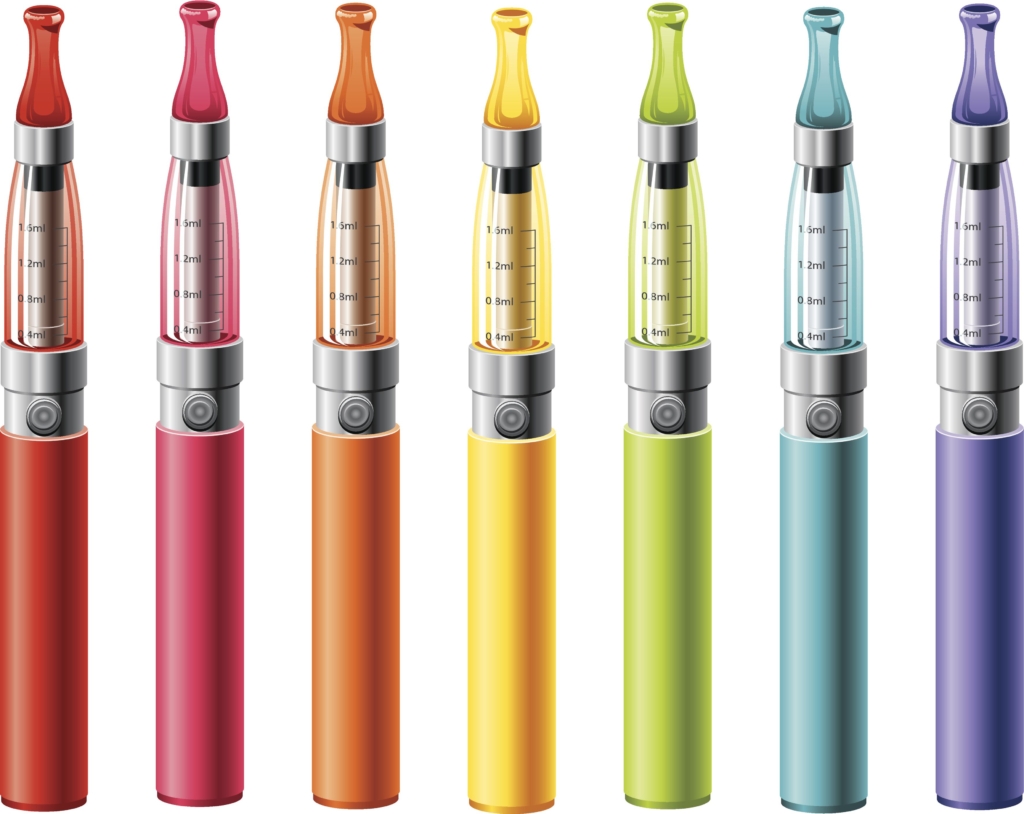
“And the electronic nicotine delivery system also contains nicotine and other unsafe chemicals, so it affects every part of your body. It causes cancers, infertility, causes impotence, and causes a whole lot of cardiovascular diseases”, she said.

She added that the youth had now switched from using regular tobacco to vaporisers due to this industry myth to project their products as safe, and also due to the enhanced education on regular tobacco by regulatory bodies.

'No form of tobacco is safe for consumption, shisha isn't safe' - FDA warns

“We are talking to the youth because we have realized that regular tobacco is no longer the trendy thing. What is trending are the vapes. They are vaping, they are doing the shishas, and we are telling them that these are not reduced forms [of tobacco]. There is no safe form of tobacco”, she said.

She further indicated that “nicotine is very addictive, once you start you get hooked on it. Tobacco is actually a gateway to using hard drugs so we expect that parents should be interested in what their children are reading or doing. They should be on the social media platforms just like the children are”, she said.

She called for a multi-sectoral approach towards reducing tobacco prevalence in the country to ensure a healthy citizenry.

'No form of tobacco is safe for consumption, shisha isn't safe' - FDA warns

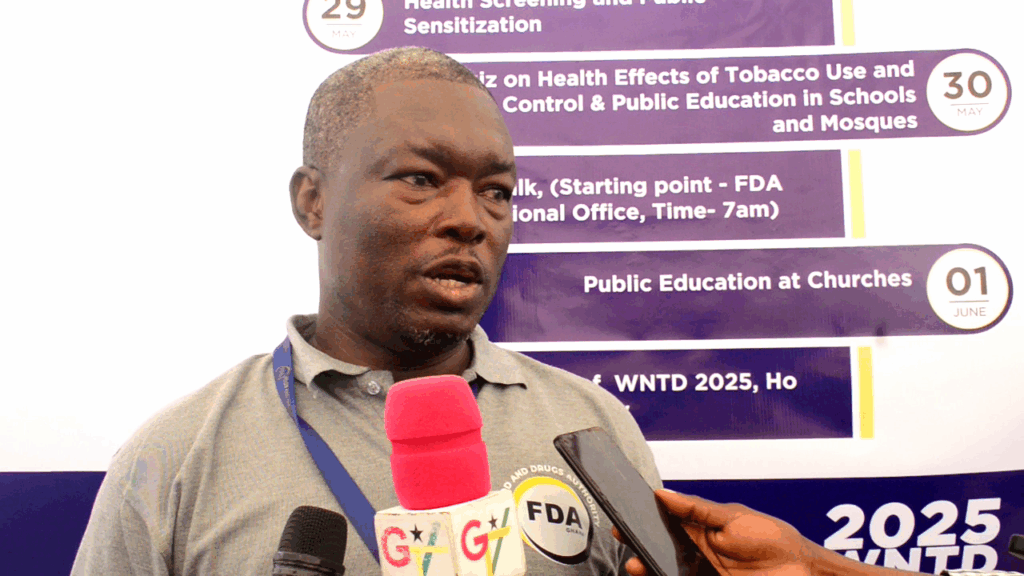
The Volta Regional Director of the FDA, Gordon Akurugu stressed that his outfit’s commitment to drumming home harmful effects of tobacco has led to reduced consumption in the country.

“We will continue until everybody identifies that smoking isn’t good”, he said.

He added that they would continue to keep heightened surveillance at the Ghana-Togo borders considering its porous nature, hoping to clamp down on smugglers.

“Now, we are working 24 hours; our 24 hours started before the government policy. In the sense that the importers realised that about 6-8 pm, we are no longer there [border], so they stay on no man’s land and come in when we are not there.

“So now our management has given us more staff, and we are working 24/7 on the borders. So even if you come at midnight, there will be a team that will intercept the products, and that is working very well for us in the region”, he said.

terms and conditions for using Rokmer Pharma’s website

St. Thomas Eye Hospital honoured as Best Eye Hospital at 9th Ghana CEO Summit

St. Thomas Eye Hospital honoured as Best Eye Hospital at 9th Ghana CEO Summit

St. Thomas Eye Hospital has been recognised as the Best Eye Hospital at the 9th Ghana CEO Summit, held on May 26 at the Kempinski Hotel Gold Coast City in Accra.

This accolade underscores the hospital’s commitment to excellence in eye care and its significant contributions to Ghana’s healthcare sector.

Under the leadership of Dr. Michael Ekuoba Gyasi, Medical Director and CEO, St. Thomas Eye Hospital has become a beacon of innovation and compassion in ophthalmology.

Established in 2010 as the North Western Eye Centre and rebranded in 2014, the hospital has pioneered advanced surgical procedures, including phacoemulsification cataract surgery and micro-incisional vitrectomy, setting new standards in eye care within Ghana.

Dr. Gyasi’s vision extends beyond clinical excellence. He has been instrumental in forging international partnerships with organizations such as Unite for Sight, Charity Vision International, Bright Sight Mission and the New England Medical Centre at Tufts University, facilitating annual advanced vitreoretinal surgical services for patients unable to afford such procedures.

His advocacy also led to a significant donation of ultramodern eye equipment from the Church of Jesus Christ of Latter-day Saints, enhancing the hospital’s diagnostic and surgical capabilities.

The hospital’s commitment to social responsibility is evident through its outreach programs, which have provided over 10,000 free sight restoration surgeries and screened more than 200,000 individuals for various eye diseases, ensuring that no one goes blind due to poverty .

The Ghana CEO Summit serves as a premier platform for business leaders, policymakers, and industry experts to engage in high-impact discussions aimed at driving economic transformation.

This year’s summit, themed “Leading Ghana’s Economic Reset: Transforming Business and Governance for a Sustainable, Futuristic Economy,” highlighted the critical role of leadership and innovation in shaping Ghana’s future.

The recognition of St. Thomas Eye Hospital at such a significant event not only celebrates its past achievements but also sets a benchmark for excellence in Ghana’s healthcare sector.

As the nation continues to prioritise quality healthcare delivery, institutions like St. Thomas Eye Hospital exemplify the impact of dedication, innovation, and community engagement.

terms and conditions for using Rokmer Pharma’s website

Ghana embraces digital technology to transform dental healthcare

Ghana embraces digital technology to transform dental healthcare

The Ministry of Health, in collaboration with dental health practitioners across the country, has announced a groundbreaking initiative to integrate digital technology into dental healthcare delivery in Ghana.

The announcement was made during the Ghana International Dental Scientific Conference held on Wednesday, May 28, under the theme “Current Trends in Dental Science.”

The initiative aims to enhance the quality of dental care by incorporating cutting-edge tools such as Artificial Intelligence (AI), 3D imaging, and other advanced digital technologies.

These innovations are expected to significantly improve diagnosis, treatment, and access to oral health services across the country.

Speaking on behalf of the Minister of Health at the conference, Dr. Ernest Konadu Asiedu emphasised the transformative potential of digital dentistry.

“The rise of digital technology including digital impressions, 3D printing, and tele-dentistry is enhancing precision and expanding access to care,” he stated.

Dr. Asiedu further revealed that the digital dental initiative will not be limited to urban centers.

Plans are underway to extend the program to schools and rural communities, ensuring that quality oral healthcare becomes accessible to all Ghanaians regardless of location.

This move marks a significant step forward in modernizing Ghana’s healthcare system and is expected to position the country as a leader in digital dental innovation in the region.

terms and conditions for using Rokmer Pharma’s website

About 100,000 trained health workers unemployed – Health Ministry

File photo

Concerns have been raised by the Ministry of Health over the increasing number of unemployed health workers, with part of the blame being placed on the unregulated expansion of private health training institutions.

The concern was raised following a call by the Parliamentary Committee on Sanitation and Water Resources for the Ministry of Finance to release funds to enable the immediate posting of over 2,000 Environmental Health Officer graduates who have remained unposted since 2021. Their deployment is seen as crucial in addressing the country’s deteriorating sanitation situation.

It has also been observed that numerous trained health professionals, spanning various specialisations, have similarly remained unposted since 2021.

Speaking on the Citi Breakfast Show on Thursday, 29th May 2025, the Ministry’s spokesperson, Mr Tony Goodman, noted that large numbers of students are continually being admitted by private institutions without alignment to the actual staffing needs of the health sector.

It was emphasised that health professionals are trained by the Ministry based on identified regional and national requirements, a demand-driven model that is reportedly not adhered to by many private institutions.

As a result, the current backlog of nearly 100,000 unemployed health workers has been attributed, in part, to this misalignment, with some individuals said to have remained without employment for as long as five years.

According to Mr Goodman, “It would be suicidal if everyone were to be recruited within a single year. Close to 100,000 individuals are at home, having not been employed for up to five years. It is, therefore, not feasible to recruit all of them within one year.”

He explained that numerous private training institutions, driven by the need to sustain operations and ensure profitability, have admitted large cohorts of students, graduated them, and then expected the Ministry of Health to absorb them.

terms and conditions for using Rokmer Pharma’s website

Menstrual Hygiene Day: NADeF Donates 50,000 Pads to 4,000 Girls

Menstrual Hygiene Day

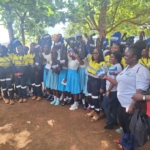
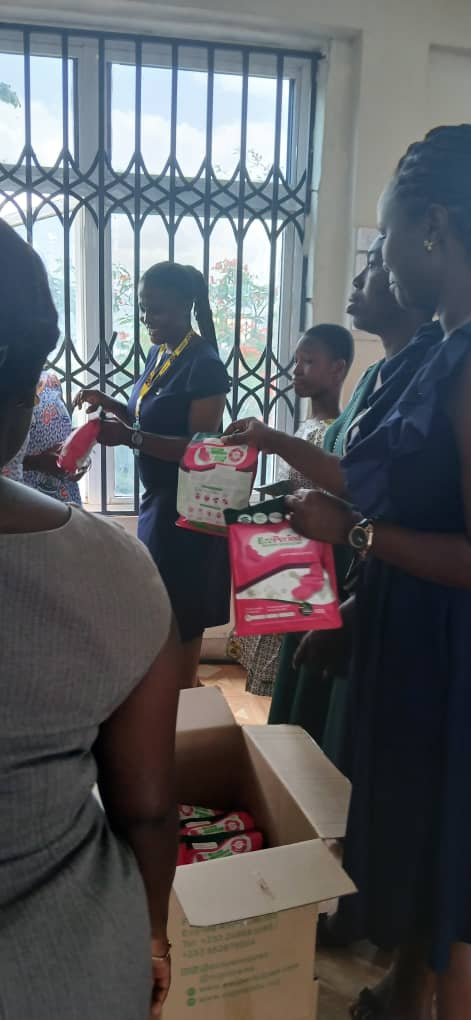
Newmont Ahafo Development Foundation (NADeF), as part of activities to commemorate the 2025 World Menstrual Hygiene Day, has distributed 50,000 sanitary pads to 4,000 girls in 10 communities within the catchment area of the operations of Newmont Gold Limited.

With funding support from the World Gold Council, basic school girls in Kenyasi 1 and 2, Ntotroso, Gyedu, Wamahinso, Adrobaa, Afirisikpakrom, Yamfo, Susuanso, and Terchire received three sets of sanitary pads each and a sanitary bag.

Staff of NADeF, a body mandated to manage resources earmarked by Newmont Gold Limited for the development of its affected communities, and workers of Newmont also educated the girls on maintaining proper hygiene during menstruation.

The pupils in schools, including Kwakyekrom D/A Basic, Ntotroso Methodist Basic, and Islamic Basic schools, were sensitised on topics such as keeping personal hygiene and dealing with myths, as well as the physical and emotional changes surrounding menstruation.

Menstrual Hygiene Day: NADeF Donates 50,000 Pads to 4,000 Girls

Observed every May 28, Menstrual Hygiene Day 2025 urges global action to end stigma and ensure access to safe, affordable menstrual care for women and girls.

The theme for 2025, “Together for a Period-Friendly World”, advocates for collective action to ensure menstruation does not limit access to education, health, or opportunities. It emphasises breaking the stigma and taboos surrounding menstruation.

Elizabeth Opoku Darko, the Executive Secretary of NADeF, said her organisation is aware that most girls drop out of school due to poor management of their periods, myths surrounding menstruation, and the lack of sanitary pads.

She added that in the foundation’s routine visits to the communities, it has been realised that girls’ enrolment keeps dropping from basic four to Junior High School three due to poor management of menstruation and issues surrounding it.

The Executive Secretary bemoaned how most parents could not afford sanitary pads, leaving the girls at home throughout the seven days of menstruation, saying, “The donation of pads will keep the girls clean, confident, and hopeful.”

READ ALSO: CJ removal saga: ‘The consequences of our actions lie ahead of us,’ says Oppong Nkrumah

Elizabeth Opoku Darko reiterated that menstruation is a part of the experience of girls and women and not a taboo, urging for stakeholder collaboration between parents, teachers, and male partners to ensure a healthy and period-friendly world.

The Newmont Ahafo Development Foundation (NADeF) was established in May 2008 through a Foundation Agreement to help communities affected by the mine achieve prosperity and self-reliance.

Elizabeth Opoku Darko stated that with integrity, respect, stewardship, participation, inclusiveness, and transparency, we empower our communities through grants, knowledge-sharing, partnerships, and capacity-building to achieve sustainable development.

A student, Blessing Oduro, on behalf of the beneficiaries, expressed gratitude to the management of NADeF and Newmont Ahafo for their timely education and donation regarding menstruation.

She said that we have been taught to bathe twice daily, change our pads every five hours, and be confident in school and other social gatherings during menstruation, noting that “we will use the skills and knowledge acquired prudently.”

terms and conditions for using Rokmer Pharma’s website

“Pathogens know no borders” – Dr Amuasi on the WHO Pandemic Agreement promise

“Pathogens know no borders” – Dr Amuasi on the WHO Pandemic Agreement promise

After the first COVID-19 vaccines landed in Ghana under the COVAX initiative, it was hailed as a breakthrough. But for Dr. John Amuasi, a global health expert, it was also a sobering reflection of global inequity.

“It took so much effort and was a clear reflection of how, without constraints being placed, countries would always seek their own interests ahead of global interests,” said Dr. Amuasi, the lead for the Global Health and infectious diseases Research group hosted at both the Kumasi Centre for Collaborative Research (KCCR) at KNUST and the Bernhard Nocht Institute of Tropical Medicine in Hamburg, Germany.

“Pathogens know no borders and don’t carry passports, but when there’s trouble, the world somehow forgets this.”

That hard truth now underpins a global turning point: the adoption of the WHO Pandemic Agreement, a landmark accord ratified at the 78th World Health Assembly in Geneva.

The agreement aims to reshape how the world prepares for and responds to pandemics, placing equity, solidarity, and scientific cooperation at the core.

READ ALSO: Ofosu-Dorte warns of potential dollar dumping as cedi strengthens

As one of Africa’s most vocal advocates for research-driven public health policies, Dr. Amuasi sees the agreement as a global framework and a call to action for all, including the institutions he works with.

“We would need to carefully study the agreement and use it to inform research prioritisation and strategy,” he noted, “so in the event of a pandemic, we’re ready to hit the ground running with important research contributions.”

He added that Ghana must invest in clinical trial infrastructure. “Building our capacity for phase I, II and III clinical trials is critical… particularly for generating data in a timely fashion to guide vaccine, drug, and diagnostic development, deployment, and monitoring.”

The agreement also outlines mechanisms to ensure timely access to life-saving health products. Under the WHO’s new Pandemic Access and Benefit-Sharing (PABS) system, participating manufacturers must commit to making 20% of their real-time production of vaccines, diagnostics, and therapeutics available to the WHO, 10% as donations, and the remainder at affordable prices.

This, Dr Amuasi argues, is where countries like Ghana can lead by example.

“To ensure equity becomes a reality… Ghana would need to take the lead and support the process of getting as many countries as possible to ratify the Agreement as quickly as possible. This is arguably the most critical next step.”

WHO Director-General Dr. Tedros Adhanom Ghebreyesus hailed the agreement as a breakthrough in multilateral cooperation: “The world is safer today thanks to the leadership, collaboration, and commitment of our Member States,” he said.

He called the agreement a “victory for public health, science, and multilateral action”, asserting that it would protect societies and economies from suffering losses akin to those endured during the COVID-19 pandemic.

Importantly, the agreement reinforces national sovereignty. The text states unequivocally that WHO will not have the authority to mandate or impose public health measures such as travel bans, lockdowns, or vaccine mandates on any country.

“Nothing in the WHO Pandemic Agreement shall be interpreted as… mandating or otherwise imposing any requirements that Parties take specific actions,” the text reads, ensuring that national policies remain firmly in domestic hands.

Still, the accord represents a significant evolution in global health governance. Dr Teodoro Herbosa, President of the 78th World Health Assembly, described it as a “once-in-a-lifetime opportunity to build on lessons learnt… and ensure people worldwide are better protected.”

“Now that the Agreement has been brought to life,” he urged, “we must all act with the same urgency to implement its critical elements.”

The resolution now calls upon all states and regional organisations to ratify the agreement “at the earliest opportunity” and urges immediate steps to begin implementing its provisions even before it enters into force.

For Dr. Amuasi and many in the global health community, this diplomatic achievement is a moral imperative. The world cannot afford to forget the chaos, inequity, and lost time on account of the last pandemic.

“This Agreement,” he said, “is a chance to get it right before the next crisis hits.”

terms and conditions for using Rokmer Pharma’s website

4 nursing and midwifery unions distance themselves from GRNMA strike

4 nursing and midwifery unions distance themselves from GRNMA strike

Four major nursing and midwifery unions in Ghana have disassociated themselves from the Ghana Registered Nurses and Midwives Association’s (GRNMA) planned industrial action set to begin on June 2, 2025.

In a joint statement issued on Wednesday, May 28, the Union of Professional Nurses and Midwives Ghana (UPNMG), the Professional Association of Psychiatric Nurses Ghana (PAPNG), the National Association of Registered Midwives Ghana (NARM-GH), and the Ghana Registered Midwives Association (GRMA) expressed concern over GRNMA’s unilateral decision to declare a strike.

The unions said the decision contradicts a unanimous resolution reached at a joint meeting held just a day earlier, on May 27, where all parties agreed to hold off on any industrial action pending further consultation with their members and a scheduled meeting with the Minister of Finance regarding the implementation of the Collective Agreement (CA) on their Conditions of Service (COS).

“We are, therefore, deeply concerned by the unilateral decision of GRNMA to proceed with an intended industrial action… in direct contradiction to the collective resolution,” the statement read.

The four unions reaffirmed their commitment to the Collective Agreement negotiations but stressed that progress must be made through structured dialogue and coordinated action, rather than individual moves that could weaken the collective bargaining power of healthcare professionals.

“Unilateral actions risk weakening our collective stance and may undermine the welfare of the very professionals we seek to represent,” the unions cautioned.

They clarified that they are not part of the declared strike and urged all their members to remain at post and continue delivering essential health services while talks with key stakeholders, including the Ministry of Health and the Fair Wages and Salaries Commission, continue.

The unions also called on GRNMA to reconsider its decision and honour the agreement reached during their joint deliberations.

“This is a critical moment for responsible leadership, unity of purpose, and strategic solidarity in Ghana’s nursing and midwifery landscape,” they concluded.

terms and conditions for using Rokmer Pharma’s website

Amansie Rural Bank donates GH¢22,000 worth of menstrual products to mark Menstrual Hygiene Day

Amansie Rural Bank donates GH¢22,000 worth of menstrual products to mark Menstrual Hygiene Day

To mark this year’s Menstrual Hygiene Day, Amansie Rural Bank PLC has donated menstrual hygiene products valued at GH¢22,000 to selected basic schools across the three Amansie districts in the Ashanti Region.

The donation forms part of the bank’s commitment to promoting menstrual health and supporting adolescent girls, particularly in rural areas, to stay in school and manage their periods with dignity.

This year’s donation benefited schools in the Amansie South, Amansie Central, and Amansie West districts, providing much-needed sanitary products to young girls who often lack access to proper menstrual hygiene resources.

Amansie Rural Bank donates GH¢22,000 worth of menstrual products to mark Menstrual Hygiene Day

In 2024, the bank partnered with Luv FM, a subsidiary of the Multimedia Group in Kumasi, to deliver a similar intervention in the Amansie South district.

That initiative saw the distribution of 1,130 Eco-Me reusable pads, 600 period panties, 10 boxes of disposable sanitary pads, 100 bathing pails, and a box of soap. A pad bank was also established to provide ongoing support for underprivileged teenage girls in the district.

Speaking to the media, Mr. Frank Owusu, Head of Finance at Amansie Rural Bank PLC, said the gesture is the bank’s way of giving back to the communities they serve.

Amansie Rural Bank donates GH¢22,000 worth of menstrual products to mark Menstrual Hygiene Day

“We believe no girl should miss school because of her period. This is our small way of helping break the silence, stigma, and barriers around menstrual health,” he stated.

Mr. Owusu also emphasized the role of financial institutions and private sector players in championing girl-child development and health initiatives, especially in deprived communities.

Menstrual Hygiene Day, celebrated globally on May 28, is aimed at breaking taboos and raising awareness about the importance of good menstrual hygiene management. The theme for this year’s observance is “Together for a #PeriodFriendlyWorld.”