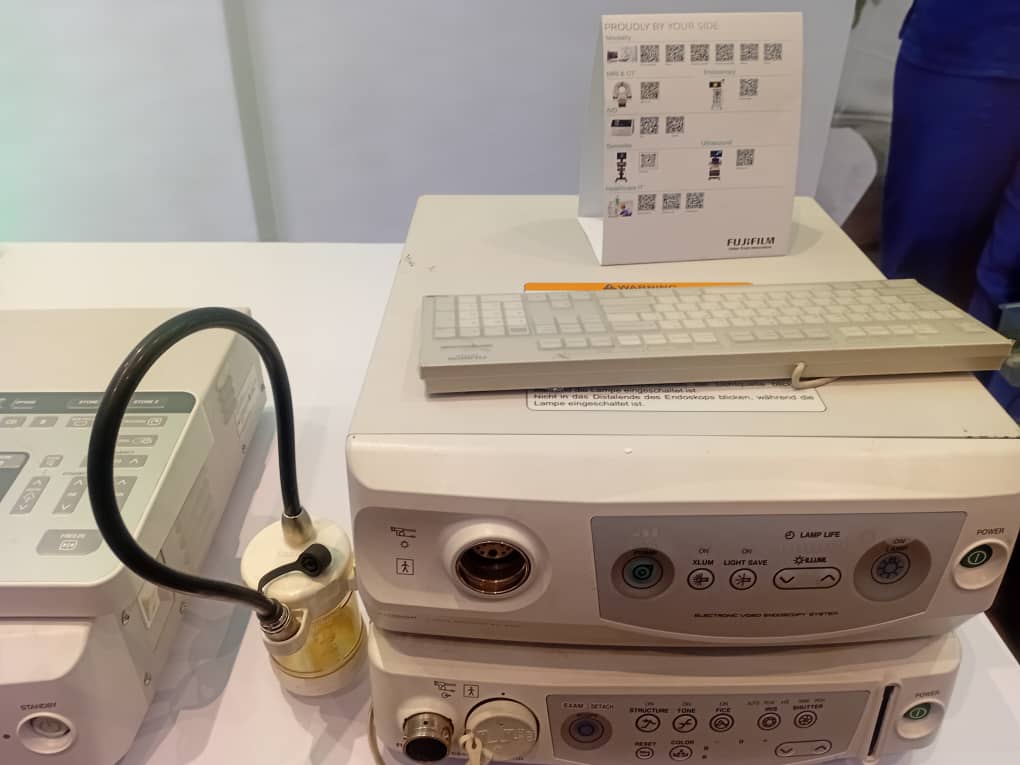
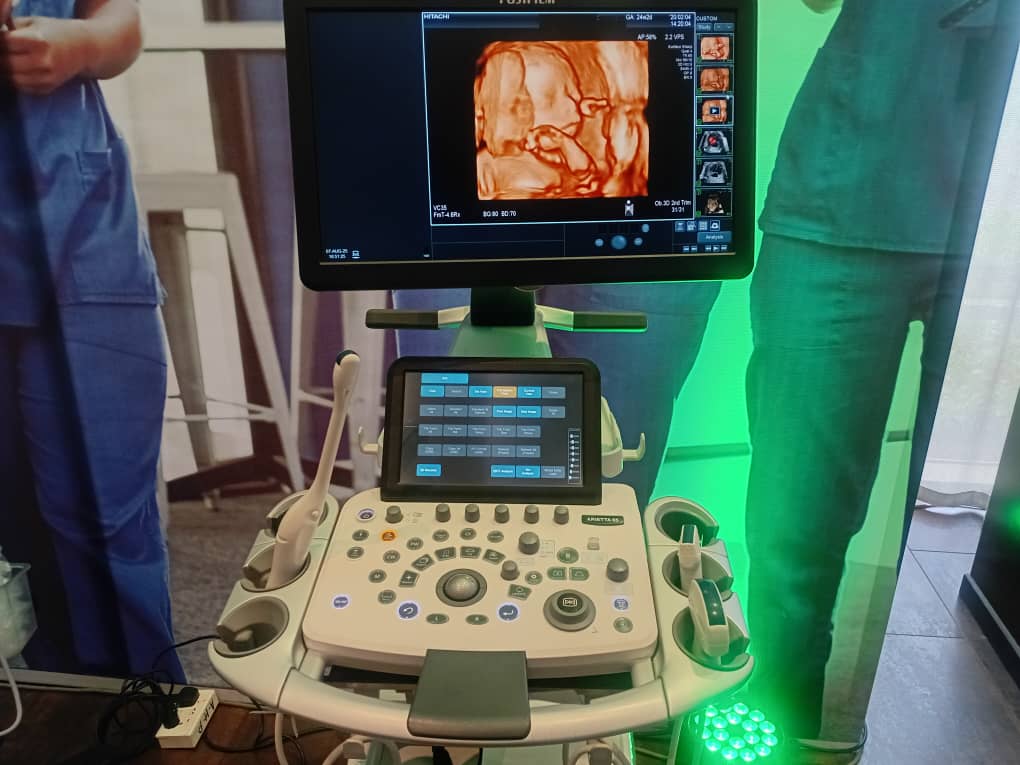
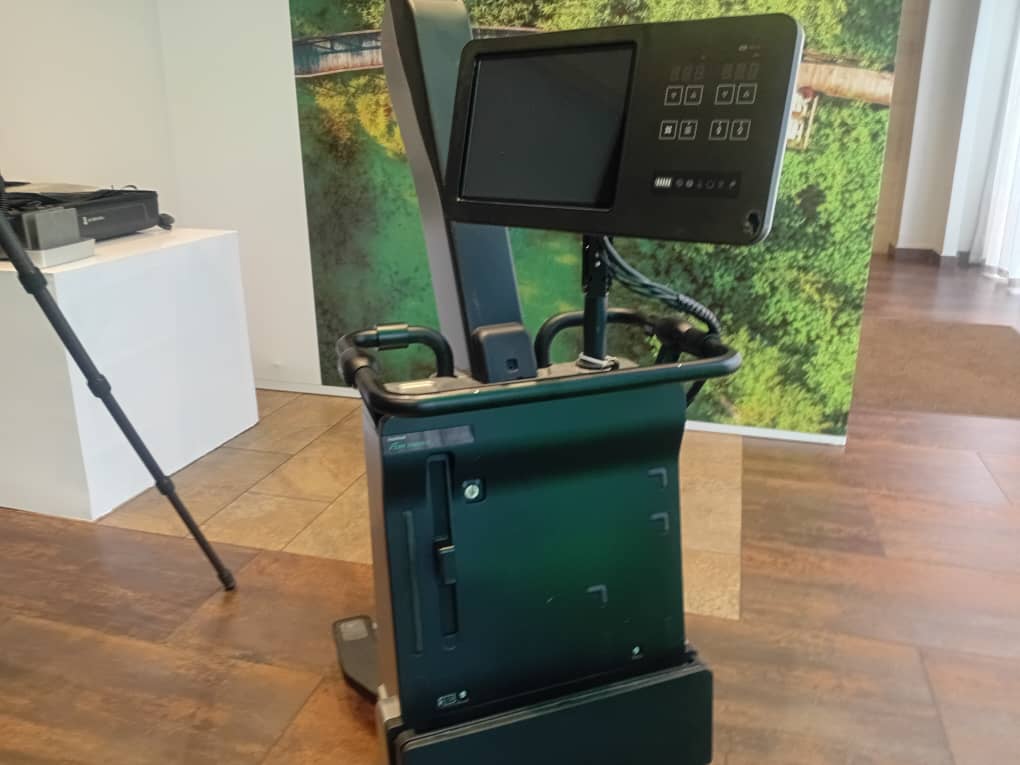
The Presbyterian Hospital, Agogo (PreHA) has enhanced its eye care services with the acquisition of a state-of-the-art Optical Coherence Tomography (OCT) machine.
The new device, which provides high-resolution imaging of the eye’s internal structures, is expected to significantly improve diagnosis and treatment outcomes at the hospital’s Eye Clinic.
The hospital’s leadership, led by General Manager Rev. Ezekiel Amadu Daribi, announced the addition, describing it as a milestone in the facility’s commitment to delivering top-tier ophthalmic care.
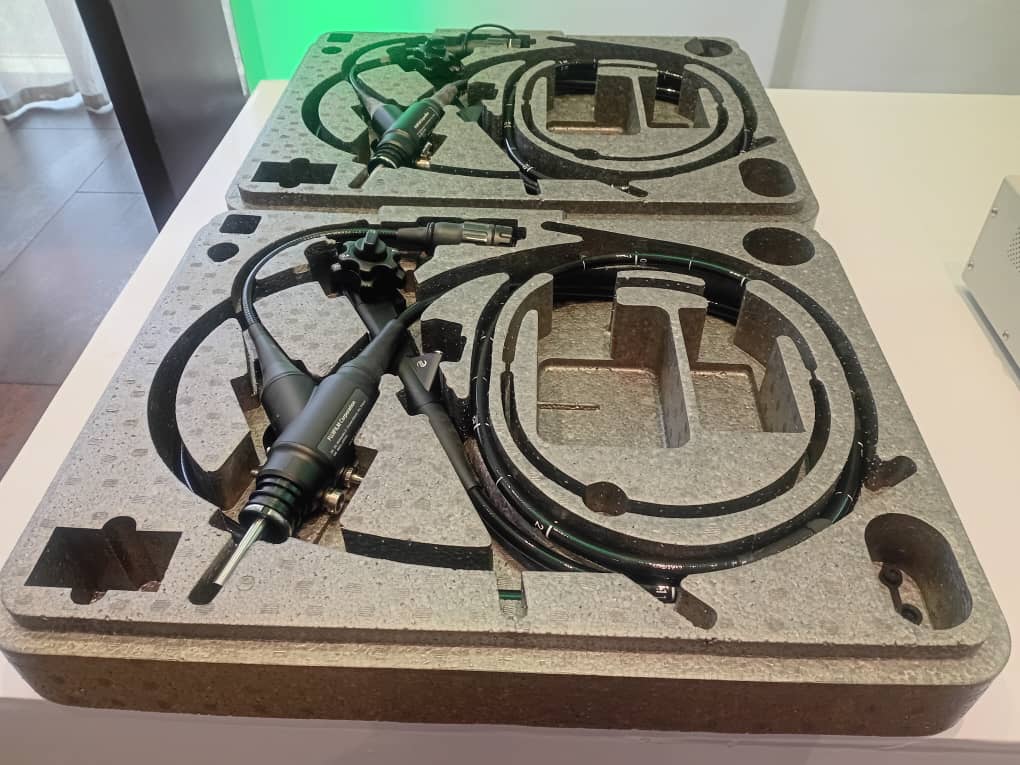
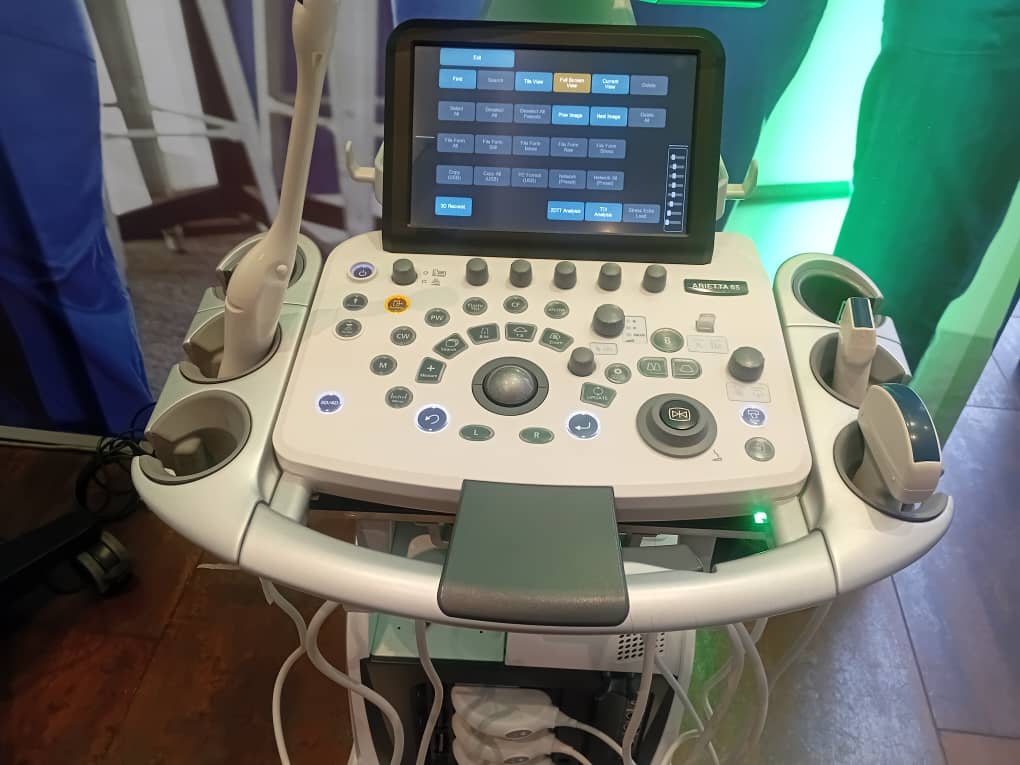
The OCT machine adds to an expanding range of advanced diagnostic tools already available at the clinic, including a recently acquired fundus camera, AB scan, non-contact tonometer, and an automatic lens edger.
The remarkable intervention was fully funded through the hospital’s internally generated funds, reflecting strong financial management and a clear prioritization of patient-centered care.
According to Rev. Daribi, the move is in line with the hospital’s vision to transform the Eye Clinic into a center of excellence that meets international standards.
The leadership of the hospital has expressed gratitude to God for the continued progress and is confident that the new equipment will enable specialists to work more efficiently and accurately.
The intervention offers hope to patients suffering from various eye conditions.
Trainees from the country’s Schools of Hygiene have strongly refuted recent public statements by the Minister of Health and Finance, rejecting as “inaccurate and misleading” claims that all trainees, including Hygiene students, have been paid their allowances up to June 2025.
In a press release issued by the Coalition of Hygiene Trainees, the group declared that no payments have been made to their members since January 2023, amounting to an unprecedented 30-month period of allowance arrears.
The coalition is now calling for an immediate retraction and clarification of the Ministers’ remarks, which they say misrepresent the realities faced by less than 4,000 affected trainees across the country.
“The assertion is inaccurate, misleading, and must be retracted in the interest of transparency and fairness to the down-spirited Hygiene trainees,” the statement read.
“Contrary to the claims made, trainees have not received a single allowance since January 2023, which is a staggering two-and-a-half-year period of financial aid abandonment,” it added.
These Hygiene trainees, who are being trained in critical areas of environmental health and sanitation, contend that their exclusion from government disbursements reveals systemic neglect and a lack of appreciation for their role in public health.
They stress that while nursing trainees may have received allowances, the assumption that all trainees have been paid is “a gross misrepresentation of the facts.”
“Our roles are equally important,” the release noted. “Nursing trainees become nurses in hospitals, while we become Environmental Health Officers at Assemblies, inspectors at ports, and more. Yet, we continue to be sidelined.”
The coalition further highlighted the devastating impact of the delay in allowance disbursement on trainees’ well-being.
The prolonged financial hardship has led to increased dropout rates, mental health challenges, and, in some tragic instances, the loss of life among students who could no longer bear the strain.
“This situation is a stain on the nation’s commitment to equitable education and health workforce development,” the group lamented. “It is deeply disheartening that students who served on the frontlines during the COVID-19 pandemic—providing services in sanitation, health education, and even the burial of the dead—are now being subjected to neglect and silence.”
The Coalition of Hygiene Trainees is therefore demanding the following:
An immediate public correction of the false claims regarding the payment of allowances to all trainees.
A clear and time-bound roadmap for the disbursement of all outstanding arrears owed to Hygiene trainees.
While reaffirming their commitment to peaceful advocacy, the group made it clear they would not remain silent in the face of what they described as “falsehoods detrimental to the mental health” of their members.
“Our schools are already underfunded. Trainees are struggling to survive, but we will not accept misrepresentations at the expense of our dignity and future.”
Asantehene Otumfuo Osei Tutu II has commended the Dompiahene of Asante Akyem Agogo, and Founder of the Brogya Foundation, Nana Bediako Brogya Sarpong, for his immense contribution to the promotion of healthcare and child welfare in the country, particularly in the Agogo Township and surrounding communities.
In a heartwarming gesture during the just-ended Awukudae celebration at Manhyia Palace in Kumasi, the revered monarch showered his blessings on the Dompiahene of Agogo in recognition of his dedication to social work and community development through his charity organization—the Brogya Foundation.
The occasion marked a proud moment for the people of Agogo and underscored the impact of community-based leadership driven by compassion and service to the development of Asanteman and the nation as a whole.
Through his Brogya Foundation, the Dompiahene of Agogo has impacted lives of children, women and the youth of his community and beyond—a feat that has won him several awards and accolades both locally and abroad.
Brogya Foundation has emerged as a transformative force in the lives of hundreds in Asante Akyem Agogo and surrounding areas, with remarkable initiatives including the free reconstructive surgery program conducted in collaboration with the world-renowned plastic surgeon Dr. Michael K. Obeng and his U.S.-based RESTORE Foundation.
This joint effort brought hope to many who had long suffered from physical deformities, injuries, or congenital abnormalities.
In recognizing his good works and offering his support, Otumfuo Osei Tutu II described Nana Brogya Sarpong as a beacon among progressive traditional leaders and encouraged other chiefs to draw inspiration from his model of leadership.
By aligning cultural influence with strategic partnerships and philanthropy, Nana Bediako Brogya Sarpong is not only restoring hope to individuals but also restoring the public’s faith in the power of traditional institutions to drive lasting change.
Nana Bediako Brogya Sarpong was accompanied by his wife Mrs. Sheila Brogya Sarpong (nee Sheila Ofori) and the queen mother of Asante Akyem Agogo, Nana Afrakoma Serwah Kusi Obuadum.
Ghana’s healthcare system cannot achieve true universal health coverage without prioritizing quality alongside facility expansion and workforce growth, Deputy Executive Director of the Christian Health Association of Ghana (CHAG), Dr. James Duah, has said.
Deputy Executive Director of the Christian Health Association of Ghana (CHAG), Dr. James Duah.
Speaking at the opening of the Quality Healthcare Improvement short course under the Africa Health Collaborative-KNUST in partnership with the Mastercard Foundation, he noted that “while building facilities and training more doctors and nurses expands coverage, there can be no coverage without quality.”
Twenty health personnel across the country are receiving training in quality healthcare improvement under the Africa Health Collaborative.
The quality healthcare improvement short course, delivered in partnership with the Kwame Nkrumah University of Science and Technology (KNUST) and the University of Toronto, aims to equip participants with the knowledge and tools to address the growing demand for primary healthcare and strengthen service delivery at the facility level.
The course is spearheaded by the Health Employment Pillar of the Collaborative, led by Dr. Kofi Akohene Mensah.
International Liaison Officer for the Collaborative, Dr. Princess Ruhama Acheampong.
At the opening ceremony, International Liaison Officer for the Collaborative, Dr. Princess Ruhama Acheampong, emphasized the broader vision of the initiative.
“This is about advancing healthcare in Africa,” she said. “Even from our small communities, we can contribute meaningfully to improving health systems across the continent.”
Leader from the University of Toronto team, Dr. Margarita Lam Antoniades.
Leader from the University of Toronto team, Dr. Margarita Lam Antoniades reiterated the commitment to system-wide change through collaboration.
“We are very committed to strengthening the primary healthcare system in a way that strengthens the whole health system,” she said. “This course is designed not just for learning, but for active participation and practical problem-solving.”
The facilitators encouraged participants to build networks, refine their project ideas, and cultivate a “quality improvement mindset” that will guide their work beyond the course.
Dr. Jennifer Wilson of the University of Toronto’s Department of Family and Community Medicine highlighted the strong partnership between Ghanaian and Canadian institutions.
“This work is grounded in the needs identified by Ghanaian stakeholders. There are no outside agendas, this is what Ghana says Ghana needs,” she noted, adding that the collaboration has already reached over 350 participants across Ghana and is gaining international recognition.
Bole District Health Director, Hajia Fuseina Sulemana.
The Bole District Health Director, Hajia Fuseina Sulemana, commended the program’s impact on rural healthcare delivery.
“People travel long distances to Leata Hospital because of the quality of care,” she said. “We are grateful to host this training in the Savannah Region and hope more staff from our facilities will benefit in the future.”
The Komfo Anokye Teaching Hospital has received support to reduce the high risk of blindness due to retinopathy of prematurity (ROP), a condition worsened by limited early screening and inadequate neonatal monitoring.
With only 20 monitors for over 100 babies, and just four breathing devices in an 18-bed preterm ward, premature infants could be left undiagnosed during admission, risking permanent visual impairment or blindness.
The Africa Eye Imaging Centre and the Zero Blind Babies have handed over essential equipment to ease the burden and prevent avoidable disabilities.
In many health facilities, neonatal care is hindered by lack of infrastructure and equipment.
At the Neonatal Intensive Care unit (NICU) of the Komfo Anokye Teaching Hospital, these challenges present a dilemma of how many possible cases of retinal blindness have been left off the hook.
Retinopathy of prematurity (ROP) is an eye disease that affects premature babies, usually from abnormal blood vessels to grow in the retina, which can lead to blindness.
Neonatologist and second head in charge of the NICU at KATH, Dr. Naana Wireko Brobbey, explained the ordeal, needing urgent investment.
“Premature infants are prone to blindness. There are high possibilities that we missed quite a number of premature infants who are even blind or have visual impairments now. Unfortunately, as of now, we have less than 20 monitors.
“So, if you have over a hundred babies on admission, you have to use your discretion to choose which ones need the monitoring the most. A Sick baby means immediate monitoring. With an 18-bed acute preterm ward capacity, there are only four devices to provide breathing support,” she said.
Presently, the KATH NICU has received 20 neonatal oximeter probes, 20 lifebox pulse oximeters, 10 Vayu bubble CPAP and 15 Pumani Bubble CPAP worth US$66,450.
The equipment provided through the benevolence of Africa Eye Imaging Centre, an NGO that prevents retinal blindness using telemedicine, in collaboration with Zero Blind Babies, will assist with monitoring and protection of the babies’ eyes and overall health.
“It’s been a great opportunity. So far, we have screened a thousand babies and almost 30 of them have been treated under the free treatment program. So, these twenty monitors come in handy. And it will make a difference in the practice and outcomes of care for premature infants. Having many of these breathing devices will save more lives,” Dr. Naana said.
Africa Eye Imaging Centre partnered with KATH in 2024 to pilot the first ROP screening program of its kind in sub-Saharan Africa, using a portable retinal imaging camera worth $30,000.
More than 3,000 eye screenings have been conducted for preterm babies across the Ashanti Region, with over 25 babies successfully treated.
CEO of Africa Eye Imaging Centre and a consultant ophthalmologist at KATH, Dr. Akwasi Agyeman Ahmed, says the donation is an advanced intervention to ensure holistic prevention and treatment for child blindness.
“Retinopathy is found in babies born weeks before. Such babies born early, in the eye, the retina are not well developed. So, their eyes need to be regularly checked so they don’t get blind.
“So, for the past year, we have been screening all the preterm babies, born in the Ashanti region. So our donation is a step further to handle the essentials, in line with saving the lives of more babies,” he stated.
Ghana has officially joined over 140 countries globally that have introduced the Human Papillomavirus (HPV) vaccine into their routine immunisation programme.
The move is seen as a critical step in the country’s efforts to eliminate cervical cancer and safeguard the health of adolescent girls.
Ahead of the rollout, a stakeholder engagement has been held in Kumasi to raise awareness about cervical cancer burden and HPV vaccine introduction in Ghana and discuss the role of partners in the education sector for a successful vaccine introduction.
The event brought together Regional Directors of Education and School Health Education Programme (SHEP) Coordinators, to update their knowledge on cervical cancer and the HPV vaccination campaign.
Cervical cancer, the fourth most common cancer in women globally, claims the lives of over 300,000 women each year, with sub-Saharan Africa bearing the heaviest burden.
In Africa, more than 70% of cervical cancer cases are diagnosed at late stages, leading to poor treatment outcomes and devastating impacts on families and health systems.
Dr. Fiona Braka, World Health Organisation (WHO) Country Representative, said Ghana’s commitment with the global goal to eliminate cervical cancer as a public health threat aligned with the Sustainable Development Goal 3.4.
She highlighted the WHO’s “90-70-90” targets, which aim for 90 per cent of girls to be fully vaccinated against HPV by age 15, 70 per cent of women to be screened at ages 35 and 45, and 90 per cent of women with cervical disease to receive appropriate treatment by 2030.
The vaccine will be administered to girls aged 9–14, primarily through school-based delivery systems.
Dr. Braka praised the existing School Health Programme in Ghana, which has previously delivered impactful interventions such as Girls’ Iron-Folate Supplementation (GIFTS) and mass drug administration for neglected tropical diseases.
She said the introduction of the HPV vaccine presented a unique opportunity to further strengthen school-based health services.
She also appealed to media practitioners to play their part by disseminating accurate, science-based information and countering misinformation that could hinder vaccine acceptance.
“Your role is indispensable. Share human-centered stories that highlight the impact of HPV vaccination and give health experts platforms to educate the public,” she said.
Dr. Fred Adomako-Boateng, the Ashanti Regional Director of Health Services, said partners in the education sector were powerful agents of community influence and trust.
He said the participants were united by a shared goal to protect the health and future of adolescent girls in the country.
The introduction of the HPV vaccine, he said, would offer a unique opportunity to protect girls before they are exposed to the virus that causes the disease.
“The Ghana Health Service has scheduled to vaccinate all girls aged 9-17 years against cervical cancer and give them a head start towards a healthier cervical cancer free adulthood,” he added.
The rehabilitation of the Komfo Anokye Teaching Hospital (KATH) has stalled for the past three months, in a raging conflict between the hospital’s CEO and the HEAL KATH project committee.
The project was initiated by the Asantehene, Otumfuo Osei Tutu II, to refurbish dilapidated traditional wards of the over 70-year-old facility serving as a referral centre for 12 regions of the country.
In March this year, the Asantehene inspected the first phase of the project, with an anticipated completion of the second phase in the subsequent months.
But this may be far-fetched as there seems to be a rift between the project committee and the new leadership of the hospital.
Recounting an incident he regarded as ‘disrespectful’, Chairperson of the Heal KATH Project Committee, Samuel Adu Boakye, alleged the new Chief Executive Officer, Dr. (Med) Paa Kwesi Baidoo, maintained an indifferent and forceful posture towards him and the committee in requesting reports on the progress of the project.
It follows recommendations by the Asantehene for the committee to hold discussions with the new leadership of the hospital to collaborate assiduously to expedite the project’s completion.
“Two days before Asantehene’s suggestion, I had received a call within the first week of the CEO’s appointment that he needs a report on the project and therefore, we need to bring these reports. So, I told the person that the board members of the committee are no ordinary people. If anything at all, he [CEO] should write officially, then we pay a courtesy call on him and then brief him. So, we know our next steps,” Mr. Adu Boakye told David Akuetteh on Luv FM.
Heal KATH Chairperson, Samuel Adu Boakye
The Chairperson says he subsequently received a call from the new CEO insisting that he submit the reports.
But, according to him, the project is not under the direct purview of the hospital’s management and would only require that the CEO writes to the committee for official deliberations.
However, Mr. Adu Boakye alleges the CEO hung up the call on him.
“Two days after, I got a call from the new CEO [angrily] asking why I haven’t made the report available to him. And I explained to him the Heal KATH project is not one under the hospital. We set it up in a way that, in the event that there was a change of government, the work could go on without any disruptions. And we made it clear-which Otumfuo is aware of.
“Unfortunately, I got lambasted and the CEO hung up on me,” he noted.
Subsequently, Mr. Adu Boakye revealed he received a letter detailing that he submits audited accounts, bank statements, bank balances, members of the committee, debtors and other essentials to the hospital.
The committee, under the authority of the Hiahene, Nana Prof. Oheneba Boachie-Adjei Owoahene II, replied the letter asking the CEO to exercise restraint and not create a seeming friction between the committee and the new KATH leadership.
“We have received periodic reports from the committee and we are in the process of organizing a comprehensive update for his Majesty to review prior to forwarding any report to the presidency. We know how dearly this project to the Asantehene and equally to the presidency, I would advise that you exercise patience as we complete the report for his Majesty to approve before submitting to the presidency,” Mr. Adu Boakye read from the letter.
The letter continued that: “I have also asked the Chairman to convene a meeting of HeKAP advisory board early next week which would include you for preliminary review of the report. While I understand your eagerness to know more about the Heal KATH and the progress we have made, let us not create any friction or misunderstanding between new and old leadership”.
Progress of Heal KATH
The Heal KATH project was originally planned to be completed in two years of its commencement, but had to be extended following economic fluctuations and reduced inflows of financial aid from the public.
During the Asantehene’s inspection in March 2025, over four million of the targeted 10 million dollars has been raised in six months for the project’s execution.
The project which commenced in November 2023 has since seen the first phase 95% completed.
The first phase, comprising two floors of Block A, has been fully renovated and furnished, with only the installation of an oxygen bedhead remaining for full operation.
Architect and Consultant for the project, Kojo Darko-Asante says the committee is ready to provide an audited account on the progress of the project thus far.
“We have nothing to hide. I have never been paid a penny. We are doing this because of Otumfuo. We, as board members of the project, have occasioned a full audit report into what we’ve done so far. We will account for every cedi,” he noted.
The Health Komfo Anokye project is one of the monumental projects being undertaken to mark the 25 years of the Asantehene’s exemplary leadership as occupant of the Golden Stool.
Research Fellow at CDD-Ghana, Dr. Kwame Sarpong Asiedu, says the passage of the Ghana Medical Trust Fund aka MahamaCares Bill has fulfilled a major demand from key stakeholders: the creation of a ring-fenced fund.
Speaking on JoyNews’ PM Express on Tuesday, July 29, the medical doctor recalled testing the bill’s content against outcomes from the JoyNews Stakeholder Dialogue on Non-Communicable Diseases (NCDs)
“When the bill was passed by Parliament, the first thing I did was to marry the bill against the outcomes of the stakeholder dialogue that Multimedia held,” he said.
“Because you had the patients on, you had government on, you had the health professionals on, and you had advocacy groups like me on.”
For him, the bill checks all the boxes that mattered. “It satisfies all the requirements that the stakeholder consultation was looking for,” he stated, before listing four critical elements.
“Why do I say that we wanted a ring-fenced funding?” he asked. “Now the government has said 20% of NHIS, so we exactly know where the money is coming from.”
He explained that ring-fencing meant the money must be protected from direct government interference. “It means it has to go to an entity that technically is out of the reach of government.”
He praised the creation of a trust fund as a direct response to that demand.
“So a trust fund has been set. That’s another thing that Dialogue asked for. So that has been done.”
He noted that management on behalf of patients was another demand. “A board has been set up. That has been done.”
He added that sustainability was a major concern, and the bill addresses that.
“There is an index to say 20% of NHIS,” he pointed out. “Even though I have a problem with the funding model, and we’ll come to that.
“But I’m just going by what the dialogue [said], sustainability, so you know that whatever it is, when the NHIS funding is agreed and approved by Parliament, 20% of that goes to management of chronic diseases.”
Dr Asiedu concluded by highlighting how seriously he took the match between policy and citizen input.
“I assessed the manifestos based on what the dialogue expected,” he recalled.
“I met Titus downstairs with the doctor, and I was laughing at them, and I said, you people have put proposals, but you didn’t test the proposals against what the dialogue said.”
Research Fellow at the Centre for Democratic Development (CDD-Ghana), Dr. Kwame Sarpong Asiedu, says the Ghana Medical Trust Fund Bill passed by Parliament aligns almost entirely with the recommendations from the JoyNews Stakeholder Dialogue on Non-Communicable Diseases (NCDs).
Speaking on PM Express on Tuesday, July 29, the medical doctor described the passage of the bill—also known as the MahamaCares Bill—as a clear outcome of the deliberative process held by JoyNews.
“I assessed the manifestos based on what the dialogue expected,” he said, recalling how he challenged colleagues involved in drafting policy proposals to measure them against the outcomes of the NCD dialogue.
“And I remember that day, while working out—Titus is my friend—I met Titus downstairs with the doctor, and I was laughing at them, and I said, ‘You people have put proposals, but you didn’t test the proposals against what the dialogue said.’”
For Dr. Asiedu, the alignment became evident the moment the bill was passed.
“The first thing I did was to marry the bill against the outcomes of the stakeholder dialogue that multimedia held,” he noted.
He said the dialogue had involved patients, government officials, health professionals, and advocacy groups like his, and that their collective demands had been captured.
He pointed to four specific demands that were met.
“We wanted a ring-fenced funding. Now the government has said 20% of NHIS, so we exactly know where the money is coming from.” To him, that level of clarity was crucial.
“And when you talk about a ring fence, it means it has to go to an entity that technically is out of the reach of government. So a trust fund has been set. That’s another thing that Dialogue asked for. So that has been done.”
He said the management structure was also consistent with demands from the forum. “It had to be managed on behalf of the patient. So a board has been set up. That has been done.”
The final point, he said, was sustainability.
“There is an index to say 20% of NHIS, even though I have a problem with the funding model—and we’ll come to that. But I’m just going by what the dialogue: sustainability.
“So you know that whatever it is, when the NHIS funding is agreed and approved by parliament, 20% of that goes to management of chronic diseases.”
That was the impassioned plea from Prof Titus Beyuo, Board Chairman of the Korle-Bu Teaching Hospital, as he defended the decision to treat the Ghana Medical Trust Fund bill as a matter of urgency in Parliament.
Speaking on JoyNews’ PM Express on Tuesday, July 29, the Lambussie MP said lives were literally hanging in the balance, so passing what is also called the MahamaCares bill was the way to go.
“If providing health care for people who need dialysis, who need some cancer care, who are in some critical stage is not urgent, I don’t know what else is urgent.”
For Prof Beyuo, the matter is beyond debate. The need for immediate support to vulnerable patients cannot be postponed.
“No life can wait,” he stressed, justifying the urgency clause that saw the House fast-track the bill’s consideration.
The medical doctor insisted the House was right to act swiftly, because “there is no time.”
He reminded Ghanaians of the words of a former president, Nana Akufo-Add,o who said during the Covid-19 pandemic that: “They can revive the economy, but they cannot bring back lives.”
For him, those words capture the gravity of the moment.
“There’s no better way to emphasise the urgency of this.”
The emotional weight of the situation was clear as he reflected on the suffering of real people.
“For those people suffering today, they wish this had been passed yesterday.”
To him, the delay already feels like a betrayal of those in need.
“For someone who is on social media appealing for fun today, for a constituent who is looking for money today, they wish this had been passed a month ago,” he said. “So there’s no time to waste.”