Rokmer Pharma Ltd

Category: Ghana Health News

terms and conditions for using Rokmer Pharma’s website

Health Accounting Staff Association agitates over delayed negotiations

Health Accounting Staff Association agitates over delayed negotiations

Members of the Health Accounting Staff Association of Ghana (HASAG) are agitating to embark on an industrial action over their long-stalled negotiations of their conditions of service

According to the association, the negotiations have stalled for over eight months due to the Fair Wages and Salaries Commission’s failure to respond to multiple requests from HASAG to resume negotiations that were first initiated in November 2023.

The leadership of the association is therefore demanding the Fair Wages and Salaries Commission (FWSC) to engage HASAG on Monday June 23, 2025, to resume and conclude negotiations, without which the association would activate its options, including embarking on an industrial action

According to HASAG, the key sticking point remains the financial components of the agreement, which were postponed for later discussion during the Standing Negotiating Committee (SNC) meetings last year.

Per Article 13(i) and (ii) of the SNC Rules, such negotiations are mandated to conclude within two months of commencement, with a possible two-week extension if unresolved issues remain. However, HASAG asserts that this timeline has long been breached, despite numerous letters and formal appeals to the Commission.

In its recent letter to FWSC, dated June 18, 2025, HASAG expressed deep frustration with the FWSC’s apparent reluctance to set a firm date for final talks.

“This continued delay runs counter to the principles of good faith negotiations,” said the letter signed by HASAG’s National President, Emmanuel Dennis Kofi Amoah, warning that the unresolved issues are causing “strong agitations and unrest” among its members.

In making the demand for the urgent meeting on Monday, the letter indicted that failure by the FWSC to meet this deadline would leave the Association with no choice but to pursue “lawful steps” under the Labour Act, 2003 (Act 651), potentially including industrial action.

The Association has also accused the FWSC of deliberate sabotage, claiming the delay is a calculated attempt to “frustrate and dismember” the union. HASAG noted with concern that some members have already defected to the Health Services Workers’ Union (HSWU), which began its negotiations later after that of HASAG, but has since concluded negotiations and enjoying the financial benefits.

The Association consequently reported the delay and the Commission’s unresponsiveness to the National Labour Commission last month after FWSC allegedly ignored several formal requests. In its latest communication, HASAG called on the Commission and relevant ministries, including Finance, Health, and Employment, to intervene urgently to avert disruption in the public health financial management sector.
terms and conditions for using Rokmer Pharma’s website

Government urged to extend validation for payment of trainee nurses and midwives’ allowances

Government urged to extend validation for payment of trainee nurses and midwives' allowances

The Union of Trainee Nurses and Midwives, Ghana (UTNMG) has pleaded with the government through the Ministry of Health to extend the validation exercise for the payments of health trainee allowances.

The Union explains that the June 20, 2025 deadline for the exercise was too limited hence trainees would not be able to acquire and provide all the required documents and details.

The recent directive requires trainees to provide SSNIT numbers, bank account numbers and Ghana Card details within the timeframe.

“The Union of Trainee Nurses and Midwives, Ghana (UTNMG) humbly appeals to the government, through the Ministry of Health, to reconsider the validation exercise for trainee allowances”, stated a communique signed by National UTNMG President, Agbeti Immortal and UTNMG General Secretary, Alavi Robert.

The Union argued that the majority of the beneficiaries of the trainee allowances do not have the requested details, especially the SSNIT number and hence need more time to apply and acquire it to tender for the registration.

“The old system only required E-switch accounts. Many students lack the required documents such as Ghana Card, SSNT number and Bank account”, it stated.

The leadership of the trainee nurses and midwives also appealed to the government to include the 2024 batch of trainees in the verification exercise. They are currently owed 15 months’ allowance.

“This 2024 batch is currently undertaking their mandated national service on an empty stomach till the end of their 52 weeks of service to the nation. This condition of service is non-negotiable.”

“Because the amount owed them by the government is colossal, the short-notice exercise will have severe consequences on our members, particularly during this vacation period, exacerbating the financial hardships they are facing already”, lamented the Union.

The Union also “urges the government to reconsider the January 2026 declaration on trainee allowance payments, considering the rising cost of living (GH¢1,800.00 for two square meals daily).

“This precarious situation will only subject us to financial hemorrhage and nosebleeds with no respite.

“We believe that with empathy and understanding, the government can find a solution that supports our members. We look forward to a favourable response”, it said.

terms and conditions for using Rokmer Pharma’s website

18,000 babies are born annually with sickle cell disease in Ghana – Dr Kwarley Asare

18,000 babies are born annually with sickle cell disease in Ghana – Dr Kwarley Asare

Ghana is grappling with a growing public health burden as nearly 18,000 babies are born with sickle cell disease (SCD) each year—representing 2% of all births—making it one of the leading inherited disorders in the country.

Speaking at this year’s World Sickle Cell Day celebration at the Ghana Institute of Clinical Genetics (GICG), Dr Eugenia Vicky Naa Kwarley Asare, a Senior Specialist Haematologist at Korle Bu Teaching Hospital, warned that the alarming statistics are a stark reminder of the urgent need for national action, investment in healthcare, and widespread public education.

“One in three Ghanaians carries either the HbS or HbC gene,” Dr Asare revealed. “These numbers are not just statistics — they represent lives, families, and futures that must be protected.”
Sickle cell disease is a chronic blood disorder caused by inherited mutations in haemoglobin genes.

In its most severe form—Sickle Cell Anaemia—patients suffer debilitating pain, organ damage, and a heightened risk of early mortality. Despite this, access to quality care remains uneven across the country.

Dr Asare’s call for greater support came as the GICG marked 50 years of providing specialist care, research, and education in sickle cell management. Established in 1974 by the late Prof. Felix Konotey-Ahulu, the institute has become the national referral centre for adolescents and adults living with SCD, with over 27,000 patients registered and more than 10,000 patient visits annually.

“The disease burden is enormous, yet the support systems remain fragile,” Dr Asare said. “Our goal is to ensure that no patient is left behind.”

The GICG’s role has expanded over the years to include specialised services such as hydroxyurea clinics, leg ulcer treatment, emergency care, and management of age-related complications, including renal failure. However, Dr Asare acknowledged that more robust decentralisation is needed to improve nationwide access to care.

Despite major strides in clinical research and partnerships with local and international institutions, sickle cell disease continues to be under-prioritised in public health policy. Experts believe many cases remain undiagnosed, particularly in rural areas.

Dr Asare and her colleagues are advocating for early screening, improved drug access, and community education to address the stigma and myths surrounding the disease. They also highlighted the urgent need to strengthen newborn screening programmes and provide sustained support for affected families.

“World Sickle Cell Day is more than a day of reflection—it’s a call to act boldly, to commit resources, and to bring hope to every child born with this condition,” Dr Asare urged. “The time to scale up is now.”

With sub-Saharan Africa accounting for 80% of global SCD births, Ghana’s experience underscores a continental challenge. Stakeholders are now calling on government, civil society, and the private sector to collaborate in building resilient systems that offer quality and equitable care to all Ghanaians living with sickle cell disease.

Read Also: World Sickle Cell Day: Dr Asare urges collective action as GICG marks 50 years of sickle cell care

terms and conditions for using Rokmer Pharma’s website

Alarming study finds greater suicide risk among screen-addicted teens

Screen addition

Teenagers who show signs of being addicted to social media, mobile phones or video games are at greater risk of suicidal behaviour and emotional problems, according to research.

A study, which tracked more than 4,000 adolescents for four years, found that nearly one in three reported increasingly addictive use of social media or mobile phones.

Those whose use followed an increasingly addictive trajectory had roughly double the risk of suicidal behaviour at the end of the study.

The findings do not prove that screen use was the cause of mental health problems. But they highlight that compulsive use, which appears to be very common, is a significant risk factor that parents and healthcare services should be alert to.

Dr Yunyu Xiao, an assistant professor of population health sciences at Weill Cornell Medicine and first author of the study, said: “For parents and educators, the discussion around mobile phones and social media has focused on limiting or banning use, but our results indicate more complex factors are involved.
“Testing interventions that work against other types of addiction may be one way to approach this type of social media and mobile phone use.”

The findings come amid escalating mental health problems in young people and as governments are grappling with how to enforce safeguards around smartphones and social media.

Against this backdrop, scientists have faced a near-impossible challenge to try to pin down evidence of how rapidly evolving and highly personalised screen use might be linked to young people’s mental health.

The latest study tracked almost 4,300 adolescents aged nine to 10 when they started the study.

Rather than simply measuring screen time, the scientists assessed participants for “addictive use”, such as whether technology was interfering with activities like schoolwork and exercise and whether people experienced craving or feelings of distress when screens were withdrawn.

Machine learning was used to cluster participants into groups based on their screen use trajectories.

For mobile phones, about half of the children reported high addictive use from the start of the study that remained high through early adolescence, and a quarter developed increasing addictive use as they aged.

For social media, 41% of children had high or increasing addictive use.

For social media and mobile phones, the high and increasing addictive use trajectories were associated with a two to three times greater risk of suicidal behaviours and suicidal ideation compared with the low addictive use trajectory.

More than 40% of the youths had a high addictive use trajectory for video games.

These adolescents were significantly more likely to report suicidal thoughts or behaviours, as well as symptoms of anxiety, depression, aggression or rule-breaking.

By contrast, the total amount of time spent on social media, mobile phones and video games was not associated with future suicide-related or mental health outcomes. What mattered most was whether their use showed signs of compulsion, distress or loss of control.

Xiao said: “There are many factors that would induce addictive feelings, such as the designs of the social media or video games, some kids may also experience bullying and a more adverse childhood that they find using phones more comfortable, but later they cannot stop using it.”

The findings, published in the journal JAMA, raise further questions over how parents should manage children’s screen use.

“We do not know if just taking away access will help, unless it is taking away access 24/7, because we know from studies of addiction management that partial access can quickly reinforce the addiction,” Xiao said.

Prof Amy Orben, who leads the Digital Mental Health Group at the University of Cambridge, said the study could not prove that technology use caused mental health problems.

An alternative explanation would be that poor self-control could be the root cause of problematic screen use and mental health outcomes.

“Yet the study importantly highlights that why and how young people use technologies and how they feel technologies affect their lives may matter more to their mental health than the time spent online,” she added.

“As those reporting such issues are not a small proportion of the population, supporting them should be taken seriously.”

terms and conditions for using Rokmer Pharma’s website

U.S. government donates 10 liquid oxygen plants to GHS

One of the oxygen plants at the LEKMA Hospital, Teshie, Accra

The United States government, in collaboration with its implementing partner Jhpiego, has donated 10 modern liquid oxygen plants to the Ghana Health Service.

The initiative brings newfound hope to newborns, mothers, and patients suffering from respiratory complications, marking a pivotal advancement in the nation’s healthcare landscape.

The commissioning of these oxygen plants, the ceremony of which was held at the LEKMA Hospital at Teshie near Accra, addresses an urgent need for an improved medical oxygen ecosystem in Ghana, which previously faced serious challenges in providing adequate respiratory support.

The rest of the plants are to be established in selected health facilities across the regions.

With this critical support, healthcare providers can ensure that patients receive timely and necessary oxygen treatment, ultimately saving lives.

Speaking at the commissioning ceremony, Rolf Olson, the Chargé d’Affaires at the U.S. Embassy, emphasised the ongoing commitment of the United States to enhance healthcare self-reliance in Ghana.

He reflected on previous support during the COVID-19 pandemic, highlighting collaboration across various sectors to strengthen the healthcare system and improve outcomes for patients.

Dr. Ebo Hammond, the Director of Health Administration and Support Services at the Ghana Health Service, shared insights on the impact of this strategic intervention, and noted that the placement of oxygen tanks and Pressure Swing Absorption (PSA) plants has significantly reduced the distance that medical personnel need to travel for oxygen supplies—from an average of 1,750 kilometers to just over 750 kilometers.

This reduction not only streamlines operations but also enhances the availability of oxygen, which is crucial for patient care.

Dr. Hammond commended the U.S. government for its commitment to training healthcare personnel, emphasising that such initiatives are instrumental in building capacity within the Ghanaian healthcare system.

terms and conditions for using Rokmer Pharma’s website

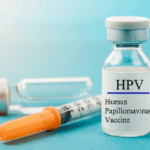
Ghana receives shipment of Human Papillomavirus (HPV) vaccines

Ghana receives shipment of Human Papillomavirus (HPV) vaccines

The government has taken delivery of the first consignment of Human papillomavirus (HPV) vaccines aimed at preventing cervical cancer.

The initial batch of 441,860 doses marks the start of a nationwide rollout designed to reduce the incidence of one of the most common and preventable cancers affecting women.

In a statement issued in Accra on Tuesday, 18 June, UNICEF Ghana the lead agency responsible for procuring and shipping the vaccines announced that over the coming weeks, it will deliver more than 2.5 million doses of the HPV vaccine to Ghana.

According to the statement, the delivery will support a five-day national immunisation campaign scheduled for September 2025. The campaign, to be led by the Ghana Health Service, aims to protect girls and women from cervical cancer—a preventable yet widespread disease.

Following the campaign, the vaccine will be offered free of charge as part of the routine immunisation programme for girls turning nine years old, reinforcing Ghana’s commitment to public health.

Cervical cancer is the most common cancer caused by a viral infection of the female reproductive tract. Despite being among the most easily preventable cancers in women, efforts to control it are hindered by limited knowledge about the disease, poor access to preventive services such as vaccination, and the affordability of such services.

The statement described the inclusion of the HPV vaccine in the national Expanded Programme on Immunisation (EPI) as “a significant step in the right direction.”

It noted that the HPV vaccine is safe and effective in preventing cervical cancer and is already included in the national routine immunisation schedules of over 140 countries. Making the vaccine accessible to all girls ensures they are protected long before they are at risk, reducing the long-term health burden.

“Preventing cervical cancer allows girls to grow into healthy women, mothers, and leaders who can contribute meaningfully to society,” the statement added.

“This initiative marks a significant advancement in promoting public health in Ghana, ensuring that future generations of women are safeguarded against cervical cancer.”

About UNICEF

UNICEF is the world’s leading child rights organisation, working in over 190 countries and territories to reach every child, everywhere. It believes in the power of every child and is committed to protecting and promoting their rights, including the right to health and survival.

terms and conditions for using Rokmer Pharma’s website

What to know about the COVID variant that may cause ‘razor blade’ sore throats

What to know about the COVID variant that may cause ‘razor blade’ sore throats

The COVID-19 variant that may be driving a recent rise in cases in some parts of the world has earned a new nickname: “razor blade throat” COVID.

That’s because the variant — NB.1.8.1. or “Nimbus” — may cause painful sore throats. The symptom has been identified by doctors in the United Kingdom, India and elsewhere, according to media outlets in those countries. 

Other COVID-19 symptoms of any variant include fever, chills, cough, shortness of breath or loss of taste or smell.

Experts say there isn’t major cause for concern with the Nimbus variant, but here ‘s what else you need to know about it. 

Here’s where the variant causing ‘razor blade throat’ is spreading

The rise in cases late last month is primarily in eastern Mediterranean, Southeast Asia and western Pacific regions, the World Health Organization said May 28. The new variant had reached nearly 11% of sequenced samples reported globally in mid-May.

Airport screening in the United States detected the new variant in travelers arriving from those regions to destinations in California, Washington state, Virginia and New York.

You aren’t likely to get sicker from this variant than others

Not so far, anyway.

The WHO said some western Pacific countries have reported increases in COVID cases and hospitalizations, but there’s nothing so far to suggest that the disease associated with the new variant is more severe compared to other variants.

COVID-19 vaccines are effective against the Nimbus variant

Yes.

The WHO has designated Nimbus as a “variant under monitoring” and considers the public health risk low at the global level. Current vaccines are expected to remain effective.

Health Secretary Robert F. Kennedy Jr. announced last month that COVID-19 shots are no longer recommended for healthy children and pregnant women — a move immediately questioned by public health experts.

terms and conditions for using Rokmer Pharma’s website

Ghana AIDS Commission partners with YEA to sensitise youth on HIV/AIDS  

Ghana AIDS Commission partners with YEA to sensitise youth on HIV/AIDS  

The Ghana AIDS Commission has signed a Memorandum of Understanding (MoU) with the Youth Employment Agency (YEA) to enhance HIV/AIDS sensitisation among young people. 

The move is to curb the increased rate of HIV infections among young people and adolescents in the country. 

The Acting Executive Director of the Ghana AIDS Commission (GAC), Dr Kharmacelle Prosper Akanbong, said the Commission intended to use the platform of YEA to sensitise the youth through awareness creation. 

It would also engage them as ambassadors in the dissemination of preventive messages and sensitisation programmes in their communities. 

Dr Akanbong said out of 15,536 new infectious recorded in 2024 a greater proportion was in the youth bracket as compared to other segments of the population.

Ghana AIDS Commission partners with YEA to sensitise youth on HIV/AIDS  

Though the number of cases had been reduced in 2024 as against 2023, the rate of cases among young people was still on the increase, she said. 

“So we felt we should come into collaboration with the YEA to use the platform to empower young people to enable them to make responsible decisions and choices,” she added.

The CEO of YEA, Malik Basintale, said they were delighted to collaborate with the AIDS Commission in its quest to reduce AIDs among the youth. 

He said that could be achieved through information flow and empowerment to make informed decisions and engage in responsible behaviours. 

“The agenda is to ensure that we are able to help the young man and young woman out there, first in securing a job, and second, in becoming ambassadors for the campaign against HIV,” he said. 

 “As young people, we must all practise responsible sexual behaviours. You must take care and remember that HIV is still alive. Not to stigmatise anyone, but it is better to prevent than to cure,” Mr Basintale added. 

terms and conditions for using Rokmer Pharma’s website

Standard Chartered empowers next generation of girls to embrace their periods proudly

Standard Chartered empowers next generation of girls to embrace their periods proudly

Every month, over one billion girls and women around the world experience menstruation, yet for many, this natural biological process is shrouded in stigma, misinformation, and cultural misconceptions.

In communities where access to menstrual hygiene products and education remains limited, young girls risk exclusion, embarrassment, and even missing out on their education.

Recognising the need to change this narrative, Standard Chartered Bank, in partnership with United Way Ghana, organised a menstrual health awareness session dubbed ‘Her Wellness Hub’ at the Pantang Presby Basic School to mark World Menstrual Health Day. The session provided a safe space for young girls to learn, ask questions, and openly discuss menstruation without shame.

Medical practioner and health advocate, Dr. Hanna-Lisa Tetteh, led an interactive session debunking harmful menstrual myths such as the belief that girls should not bathe during their period or that menstruation is a curse. She emphasised the importance of good hygiene practices, from regular bathing to proper use of sanitary pads and demonstrated how to properly wear a pad.

The conversation extended beyond physical care, addressing the emotional and social challenges many young girls face during menstruation, especially in spaces where boys and even adults may not be sensitised. Students bravely shared personal experiences of discomfort and stigma, highlighting the pressing need for more period-positive conversations in schools, homes, and communities.

Female staff from Standard Chartered joined breakout sessions, offering mentorship and candidly answering the girls’ questions about growing up, managing their period in public spaces, and navigating insensitive cultural beliefs. Their presence not only fostered connection but underscored the Bank’s sincere commitment to girl-child empowerment.

To ensure that no girl is left behind due to a lack of resources, Standard Chartered distributed dignity kits including locally made sanitary pads, shaving sticks, and new underwear to all girls present at the event. The Bank also donated additional pads to the school for future use.

“Periods are not a curse. They’re a normal part of life, and no girl should feel ashamed because of it,” remarked one of the students, echoing the importance of the initiative in changing the way menstruation is viewed in communities.

This event is one of many under Standard Chartered’s social impact initiatives, reinforcing the Bank’s mission to empower communities and champion inclusion, especially for young girls who represent Ghana’s future leaders.

terms and conditions for using Rokmer Pharma’s website

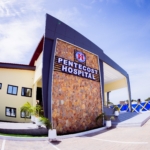
Ultramodern Pentecost Hospital opens in Bolgatanga

Ultramodern Pentecost Hospital opens in Bolgatanga

Residents of Bolgatanga, the capital of Ghana’s Upper East Region, and surrounding communities have heaved a sigh of relief following the inauguration of the ultra-modern Pentecost Hospital at Kumbagre, a suburb of Bolgatanga.

The 35-bed, AI-powered facility, an initiative of The Church of Pentecost, arrives at a critical time, as the region continues to grapple with limited access to quality healthcare. According to the 2022 Ghana Demographic and Health Survey, only 60% of births in the region were attended by skilled health personnel, and antenatal care coverage remains below national targets.

The new Pentecost Hospital is expected to ease the burden on existing health infrastructure and improve health outcomes, particularly in maternal and child health, in a region where healthcare access has long been a challenge.

The facility was commissioned and dedicated by the Chairman of The Church of Pentecost and President of the Ghana Pentecostal and Charismatic Council, Apostle Eric Nyamekye, assisted by traditional leaders, officials of the Ghana Health Servicew, government functionaries and top security offiicals in the region.

The AI Hospital Advantage

Beyond its impressive physical infrastructure, the Pentecost Hospital stands out as an ‘AI hospital.’ This designation signifies its integration of artificial intelligence technologies aimed at enhancing diagnostics, improving clinical decision-making, and streamlining patient management.

In a region facing workforce challenges, AI can augment the capabilities of healthcare providers, assist in early disease detection through medical imaging analysis, and potentially facilitate remote consultations, thus expanding reach to underserved communities. This aligns with Ghana’s national AI strategy, which seeks to leverage technology for improved public health delivery.

The 35-bed facility is equipped with advanced medical technologies and will offer a comprehensive range of services, including general outpatient and inpatient care, emergency services, maternity care, and various specialised clinics.

How the journey began

The journey to this significant milestone began in 2017, ignited by a harrowing car accident involving a pastor of the Church and his family. The subsequent 16-hour ordeal to transfer the critically injured to distant hospitals underscored the dire need for accessible, quality healthcare in Bolgatanga. This spurred the Church’s Bolgatanga Area Executive Committee, then led by Apostle Wilberforce Nkrumah Agyeman (current Area Head for Teshie-Nungua), to envision a local clinic, a vision that rapidly expanded under the Church’s broader societal transformation agenda (Vision 2028).

Bridging the Healthcare Gap

The Upper East Region currently grapples with significant healthcare challenges, including a severe shortage of medical professionals (one doctor for every 24,124 patients, one nurse for every 313 patients), inadequate infrastructure, and limited access to essential medical supplies, particularly in rural areas. High attrition rates among health professionals further exacerbate these issues. The Pentecost Hospital arrives as a critical intervention.

‘This region has long struggled with access to quality healthcare,’ stated a local health official, adding, ‘The arrival of a facility of this caliber is truly transformative.’

A Lasting Legacy

As the doors of Pentecost Hospital opens, it is poised to significantly alleviate healthcare burdens in the Upper East Region, serve the broader Northern regions of Ghana, and potentially extend its impact to neighbouring countries like Burkina Faso. It stands as a powerful testament to The Church of Pentecost’s commitment to compassionate healthcare, promising to be a place where lives are saved, health is restored, and dignity is upheld, marking a new era of hope and healing for the people.