Beauty standards are destroying the skin- Dr Brifo warns
By Prinscilla Bulu Founder of Skin Foundation Africa, Dr Kofi Ansah Brifo, has raised the alarm over skin bleaching, describing...


By Prinscilla Bulu Founder of Skin Foundation Africa, Dr Kofi Ansah Brifo, has raised the alarm over skin bleaching, describing...
By Jennifer Nerkie Kenney Skin bleaching in Ghana is no longer just a cosmetic choice but a growing public health...
For years, scientists have warned that bird flu – better known as H5N1 – could one day make the dangerous...
By Love Wilhelmina Abanonave A dermatologist and Founder of the Skin Africa Foundation, Dr Kofi Ansah Brifo, has revealed that...
The Executive Director of the Joint United Nations Programme on HIV/AIDS (UNAIDS), Winnie Byanyima, has warned that Africa is falling...
The Leukaemia Project Foundation (LPF) has reaffirmed its commitment to ending preventable deaths from blood disorders as it joins the global community to commemorate Leukaemia Month this September.
Since its establishment in 2006, LPF has been at the forefront of advocacy, patient support, and healthcare development for leukaemia and related conditions in Ghana.
In partnership with the Korle-Bu Teaching Hospital (KBTH), the foundation is spearheading the construction of Ghana’s first-ever Centre for Haematology and Clinical Genetics.
The facility, upon completion, will offer advanced treatment, diagnostic services, and professional training opportunities, thereby reducing the need for patients to seek treatment abroad.
“Leukaemia Month reminds us of the urgent need for improved healthcare access for blood disorder patients in Ghana,” said Gerard Hillary Osei Boakye, President of LPF.
“With the continued support of our partners and sponsors, we are confident this vision of a world-class treatment and research centre at KBTH will become a reality, saving countless lives.”
LPF acknowledged the contributions of its founding benefactors, including Ecobank Ghana, Stanbic Bank, Rana Motors, Agricultural Development Bank, Vanguard Assurance, Engineers and Planners, and several others, whose support has sustained the organisation’s mission.
It also praised the Edward Osei Boakye Trust Fund and its Trustees for hosting and managing the foundation, providing vital administrative and technical support.
As part of efforts to raise awareness and funds for the upcoming centre, the foundation has lined up key events, including the Captain’s Cup Polo Tournament from September 3–7, 2025, in collaboration with the Accra Polo Club, and an Operatic and Choral Concert in November 2025.
Founded in 2006, LPF is a registered non-profit organisation dedicated to advocacy, education, healthcare, and research, with the ultimate goal of ensuring that no Ghanaian leukaemia patient is denied care due to limited facilities.
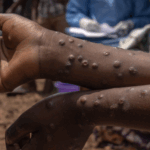
The Nkwanta North District in Oti Region has confirmed its first case of mpox, a viral disease that has raised global health concerns.
This confirmation comes as the world continues to grapple with a surge in cases.
District Health Director for Nkwanta North, Eric Kojo Agboka, made the announcement during a press briefing with Adom News, aimed at keeping the public informed and addressing potential fears surrounding the outbreak.
He explained that mpox, previously known as monkeypox, is a zoonotic viral infection that can be transmitted from animals to humans and spread between humans.
Symptoms typically include fever, rash, and swollen lymph nodes, which can lead to serious health complications in some cases.
The confirmed case involves an individual who traveled from the Accra Konkomba market and exhibited symptoms consistent with the virus, prompting immediate medical attention.
After a thorough assessment and testing, health officials verified the diagnosis of mpox.
The District Health Director emphasized the importance of public awareness regarding the transmission and symptoms of mpox, encouraging individuals to seek medical attention if they experience any unusual symptoms.
Isaiah Dordoe, the District Chief Executive (DCE) for Nkwanta North, stressed the need for community awareness and cooperation in managing the outbreak.
He urged residents to remain vigilant and to report any unusual symptoms to health authorities promptly.
“We are working closely with the health department to ensure that all necessary measures are in place to prevent further spread of the virus,” Dordoe stated.
The DCE disclosed that health officials have initiated contact tracing for individuals who may have been in close contact with the confirmed case.
They are also conducting public health education campaigns to inform the community about the symptoms of mpox and the importance of hygiene practices to reduce transmission risks.
The Nkwanta North District Health Directorate is committed to monitoring the situation closely and providing regular updates to the public.
As global health challenges persist, local authorities urge residents to stay informed and proactive in safeguarding their health.

The Ministry of Health has vigorously defended the thoroughness and integrity of its investigation into the alleged assault of nurse Rejoice Tsotso Bortei at the Greater Accra Regional Hospital, commonly known as Ridge Hospital.
This comes in response to criticisms from the Ghana Registered Nurses and Midwives Association (GRNMA), which claimed that the inquiry was incomplete and lacked credibility.
In an interview on Channel One TV on Saturday, August 30, Tony Goodman, the Head of Communications at the Ministry, addressed the allegations, asserting that the investigation was comprehensive and included interviews with all relevant personnel involved in the incident.
“We spoke to every professional—nurse, medical officer, consultant, specialist, Head of Department—on that said day. We spoke to all of them, including the said doctor,” Mr Goodman stated emphatically.
The incident, which has sparked significant concern within the nursing community and beyond, revolves around claims of physical assault against the nurse while on duty.
The GRNMA has voiced its dissatisfaction with the investigation process, urging for greater transparency and accountability.
Mr Goodman countered these claims by emphasising the meticulous approach taken by the investigative committee, led by Dr. Lawrence Ofori-Boadu.
He highlighted that the committee did not overlook any key individuals, stating, “We spoke to the doctor who saw the lady. The day we were doing that, we spoke to the two of them. We asked questions in their presence. The doctor would say, ‘It’s true, right?’ and the lady didn’t deny. Disregard anybody who says we did not talk to them.”
The Ministry’s defence comes amidst heightened scrutiny of workplace safety conditions for healthcare workers in Ghana.
According to recent statistics from the Ghana Health Service, incidents of violence against healthcare workers have increased by 25% over the past two years, prompting calls for better protection and support for medical staff.
As the investigation unfolds, the Ministry remains committed to ensuring a safe working environment for its healthcare professionals. Goodman reassured the public that the ministry would continue to prioritise the welfare of healthcare workers and take necessary actions based on the findings of the investigation.
In light of the ongoing discourse, the GRNMA has reiterated its commitment to advocating for the rights and safety of nurses and midwives across the country.
The association has called for a collective effort to address the increasing violence against healthcare personnel, emphasising the need for systematic changes within the healthcare system.
As the community awaits further developments, the focus remains on fostering a culture of respect and safety within Ghana’s healthcare institutions, ensuring that all medical staff can perform their duties without fear of harm.

The recent incident at the Greater Accra Regional Hospital, popularly known as Ridge Hospital, has brought to light deep-seated systemic failures within Ghana’s healthcare system, former Vice President of the Ghana Medical Association (GMA), Dr. Justice Yankson, has said.
Dr. Yankson, who was a guest on JoyNews’ Newsfile on Saturday, August 30, said the incident, where an individual allegedly assaulted a medical professional, was not an isolated event but a symptom of a larger problem.
He noted that while the committee set up to investigate the matter found no delay in attending to the patient, it did highlight a number of systemic failures that led to a delay in diagnosis and treatment.
“The committee has established clearly that there was no delay [in attending to the patient],” Dr. Yankson said, adding that the assault was “unfounded.”
He explained that the real issue lay with the challenges within the facility, which were beyond the control of the frontline healthcare workers.
Dr. Yankson pointed to the committee’s findings, which revealed a lack of functional equipment and other broken-down diagnostic tools at the hospital.
He argued that if the flagship facility of the Ghana Health Service is grappling with such basic challenges, one can only imagine the state of healthcare in district and sub-district facilities.
The former GMA official lamented the country’s poor “culture of maintenance”, stating that equipment purchased with public funds is often left to deteriorate.
He expressed concern that this lack of adequate facilities often results in patients and their relatives redirecting their frustration onto healthcare workers, who are trying their best to provide care under difficult circumstances.
Dr. Yankson’s comments underscore the urgent need for a comprehensive review of Ghana’s healthcare infrastructure and a renewed commitment to addressing the systemic challenges that continue to compromise patient care and endanger the lives of healthcare professionals.
In an enlightening public lecture held on Friday, August 29, Professor Ivy Ekem, a distinguished medical professional and Head of the Department of Haematology at the University of Cape Coast, delivered a compelling presentation titled “Translating Research into Care: 50 Years of Sickle Cell Excellence.”
This event marked the 50th anniversary of the Ghana Institute of Clinical Genetics, spotlighting significant advancements in sickle cell management and care in Ghana.
The auditorium was filled with healthcare professionals, students, and members of the community, all eager to hear Prof. Ekem’s insights on sickle cell disease, a condition that affects approximately 2% of the Ghanaian population, with an estimated 10,000 new cases diagnosed each year.
Her lecture underscored the importance of shifting perceptions and language surrounding sickle cell, starting with the terminology used to describe those living with the condition.
“There is a term that we have been talking about that we should stop using: the term ‘sickler,'” Prof. Ekem stated, urging the audience to reconsider how language shapes our understanding of individuals.
“Why it’s called a sickle is that there is an implement used to weed, and that’s the shape. If you look at it, it’s about the same as this one. So that’s why it’s called the sickle cell. It’s not referring to the whole individual. You might as well call it a C-cell, something like that. So please, from today, just note that sickle refers to the cell, not the patient.”
Her remarks resonated deeply, as she emphasised that individuals with sickle cell disease are not defined by their condition; instead, they are vibrant members of society deserving of dignity and respect.
This call for a change in language reflects a broader movement towards enhancing the quality of care and life for those affected by sickle cell in Ghana.
Prof. Ekem also outlined the milestones achieved in sickle cell research and treatment over the past five decades in Ghana.
The Ghana Institute of Clinical Genetics has been at the forefront of these developments, advocating for better diagnosis, treatment, and education around sickle cell disease.
She highlighted that early diagnosis through newborn screening programs has drastically improved outcomes, enabling children with sickle cell to live healthier, fuller lives.
Statistics reveal that with appropriate medical care, including regular health check-ups and pain management, individuals with sickle cell can live beyond 50 years, a significant improvement compared to previous decades.
Prof. Ekem noted that community education initiatives play a crucial role in dispelling myths about sickle cell disease, which is often surrounded by stigma and misunderstanding.
In her lecture, she also introduced the audience to innovative treatments and ongoing research aimed at improving the lives of those with sickle cell. These include advancements in gene therapy and new drug therapies that have shown promise in preventing complications associated with the disease.
As the lecture concluded, Prof. Ekem called for continued collaboration between healthcare providers, researchers, and community organizations to ensure that the progress made over the past 50 years continues to flourish.
“Translating research into care is not just a slogan; it’s a commitment to the well-being of our people. Let us work together to ensure that every individual with sickle cell receives the care and respect they deserve,” she urged.
The event was not only a celebration of past achievements but also a rallying call for the future, inspiring a new generation of healthcare professionals to champion the cause of sickle cell awareness and excellence in care.
With the support of the community and ongoing research, there is hope that those affected by sickle cell in Ghana will continue to thrive.