Ghana has paid $24.5 million to GAVI to secure a regular supply of vaccines, Mr Kwabena Mintah Akandoh, the Health Minister, has disclosed.
He said the Government had demonstrated a steadfast commitment to the health and well-being of its children.
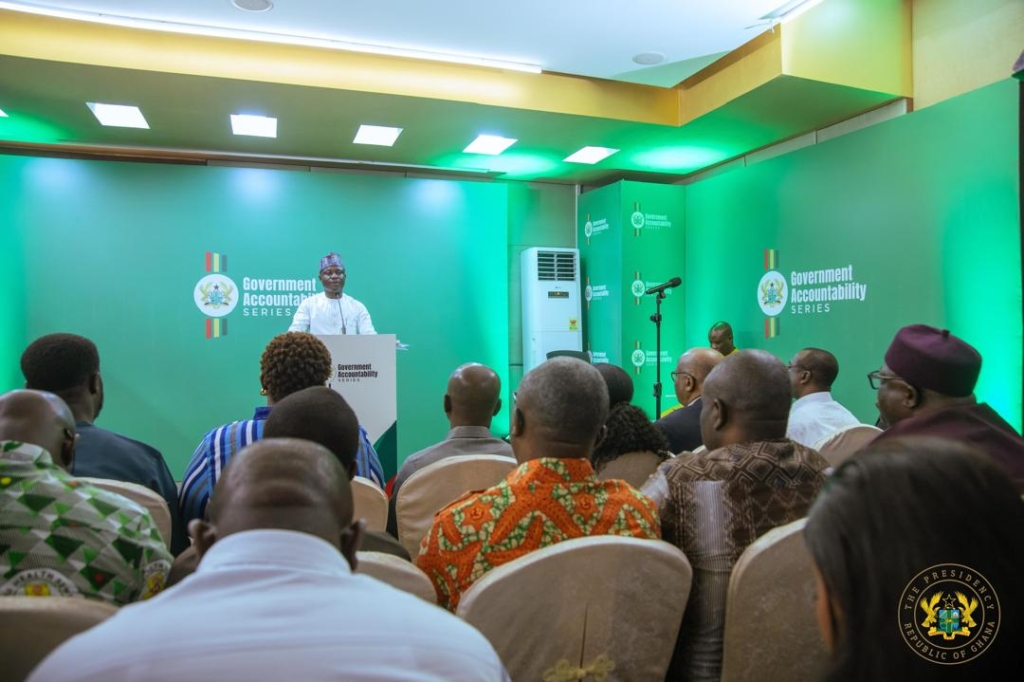
“This year, we increased the budget for vaccines by 46 per cent. As of today, we have fully paid the country’s $24.5 million to GAVI,” Mr Akandoh stated in his half-year report on the health sector presented at a press conference during the Government Accountability Series at the Presidency in Accra.
“This prompt payment will help ensure we avoid recurring shortages of critical vaccines, which can lead to outbreaks,” he said.
The Minister reiterated that by August, Ghana would receive hundreds of thousands of vaccine doses ready to reach every community across the nation.
“As we say, investing in our children’s health today is securing Ghana’s
tomorrow,” he stated, adding that, “we are not resting on our achievements. The government will continue to prioritise and invest in immunisation to protect every child and build a healthier nation for generations to come.”
With regards to Vaccine Manufacturing, Mr Akandoh said the government had pledged and remains dedicated to making Ghana a centre for vaccine manufacturing.
He said in this regard, the National Vaccine Institute was collaborating with the
regulatory authority and pharmaceutical industry stakeholders to bring this plan to reality.
Mr Akandoh announced that one of their private sector partners had obtained market authorisation from Ghana’s
Food and Drugs Authority (FDA) to produce Snake Anti-Venom Serum on a commercial scale, marking the next step in their goal to shift Ghana from a consumer to a producer.
The Lancet One Health Commission (LOHC) has released its report, hammering home that global health resilience will depend on systemic, cross-sectoral reform that acknowledges the interconnectedness of humans, animals, and the shared environment.
Launched in 2019 with 24 commissioners from different institutions and countries, the LOHC has evolved over the years, mobilizing high-level thought leadership across disciplines to tackle challenges including pandemics, antimicrobial resistance, climate change, and food insecurity.
Co-chaired by Dr. John Amuasi, Head of the Department of Global Health, KNUST and Lead of the Global Health and Infectious Diseases Research Group at the Kumasi Center for Collaborative Research in Tropical Medicine and the Bernhard Nocht Institute of Tropical Medicine in Germany, and Prof. Andrea Winkler, Director of the Centre for Global Health at the Technical University of Munich, the Commission has spent the past six years weaving together a narrative that shows how human well-being is inextricably interconnected with the health of animals, and the shared environment.
“The days of thinking in silos are over. Our report shows that health for all depends on breaking disciplinary boundaries and investing in One Health-informed systems that are robust, equitable, and future-ready,” said Dr. Amuasi.
“Health is not an isolated medical issue. It arises within complex ecosystems,” added Professor Jürgen May, Chair of the Board and Head of the Department of Infectious Disease Epidemiology at BNITM, and a member of the Commission. “If we keep thinking in silos, we risk pandemics, drug-resistant pathogens, and the collapse of food systems.”
The Commission’s work has unfolded alongside major global health crises, from the COVID-19 pandemic and Ebola outbreaks to growing climate-related disasters, revealing that fragmented responses are no match for increasingly complex health threats. Its report, titled “Harnessing Our Interconnectedness for Equitable, Sustainable, and Healthy Socioecological Systems,” presents both a diagnosis and a prescription.
The report was published on Thursday, July 17, and formally introduced to the public during a digital launch event later that day. The global event attracted over 1,100 registrants and was viewed by 615 unique participants, including researchers, policymakers, students, and civil society leaders from across the globe.
Panelists at the launch explored the report’s implications for education, governance, and implementation. They stressed practical pathways to embed One Health at various levels, including local, national, and global systems, and answered questions regarding cross-sectoral financing, surveillance, and local adaptation.
“We are proposing a shift from reactive policy to anticipatory governance,” said Dr. Amuasi. “That means investing in integrated early warning systems, building cross-sectoral capacity, and creating a society-wide One Health-literate citizenry – from school children to heads of states.”
Woven through the report is a silver thread: One Health is the ideal framework for collaboration and a necessary lens through which to imagine and create a sustainable future. The Commission outlines concrete recommendations, including curriculum reform, funding realignment, regulatory harmonization, and infrastructure development that bridges human, animal, and environmental health sectors.
The LOHC also calls for the integration of socio-anthropological research and indigenous knowledge systems into global health governance, warning that poorly informed technical solutions will fail at solving politically and culturally complex problems.
Zoonotic spillovers, antimicrobial resistance, and climate-induced migration continue to threaten global health stability, making the LOHC’s report feel like a manifesto for the future.
The Minister of Health, Kwabena Mintah Akandoh, has openly highlighted the pressing challenges facing Ghana’s health system, while pledging the government’s unwavering commitment to resolving them and driving transformational change.
Speaking at the Government Accountability Series held at the Jubilee House on Friday, Minister Akandoh said, “We have challenges, no doubt:
Qualified health workers are waiting for jobs.
Industrial actions that threaten services.
Infrastructure gaps, especially in regional hospitals.
Poor maintenance culture in our facilities and institutions.”
Despite these hurdles, the Minister emphasized proactive measures underway: “Ladies and gentlemen, as you can see, we are tackling these head-on, planning and investing prudently.”
Looking forward, he expressed confidence in the sector’s bright future saying “Ghana’s health sector is poised for a remarkable transformation. We are fully committed to making free primary health care a reality for every Ghanaian, breaking down barriers to essential services.”
The Health Minister, Kwabena Mintah Akandoh, says that over 13 countries have expressed formal interest in recruiting Ghanaian health workers.
According to him, the government is developing a policy framework to manage the growing international demand while protecting the country’s health sector.
Speaking at the Government Accountability Series at the Jubilee House on Friday, July 18, Mr Akandoh described the development as a “managed migration opportunity” and stressed that Ghana’s approach will ensure that any overseas recruitment directly benefits both the national health system and the professionals involved.
“We are formulating policies to ensure these benefits are fairly distributed to both our health system and our professionals,” the minister said.
He noted that while the demand for Ghanaian health workers continues to rise abroad, the government is simultaneously investing in their professional development and welfare at home.
Mr Akandoh further highlighted several domestic measures aimed at strengthening Ghana’s health workforce, including clearing salary arrears for 321 pharmacist house officers who completed training in 2024, and prioritising the recruitment of 1,621 qualified pharmacists still awaiting permanent employment.
“This is just one example of our broader commitment to clearing the backlog across all health worker cadres,” he said.
“We want every qualified professional to have the chance to serve and strengthen Ghana’s health system.”
As part of long-term reforms, the minister announced that the government has signed Conditions of Service agreements with health unions and is revising curricula in training institutions to align with national health priorities.
He said specialist nursing programs are being expanded, and general nursing schools are being converted into specialised training centers.
“These steps are crucial to ensuring a motivated and skilled workforce capable of meeting the changing health needs of our population,” Mr Akandoh added.
Health Minister Kwabena Minta Akandoh has stated that the government will prioritise the completion of health infrastructure projects under the Agenda 111 initiative that are over 70% complete.
He emphasised that this approach is aimed at delivering tangible outcomes while ensuring no community is left behind in the quest for equitable access to quality healthcare.
“For the Agenda 111 initiative, we will prioritise the completion of projects that are more than 80% complete,” he said at the Government’s Accountability Series on Friday, July 18.
“Our government’s resolve is clear: to leave no community behind in the journey to excellent health infrastructure,” he added.
The Agenda 111 initiative, launched under the previous government, aimed to construct 111 healthcare facilities across the country.
This included 101 district hospitals, seven regional hospitals, two psychiatric hospitals, and the redevelopment of the Accra Psychiatric Hospital. The programme was designed to bridge the healthcare access gap in underserved areas and improve the overall resilience of the national health system.
The once-famous project hit a stumbling block due to a lack of sustainable funding. Many of the projects have been abandoned at various stages across the country.
The Minister of Health and Member of Parliament for Juaboso, Kwabena Mintah Akandoh, has revealed that the National Health Insurance Scheme (NHIS) now covers 15.67 million Ghanaians — an increase of over 670,000 from the previous year.
This milestone marks a significant expansion in health insurance coverage, enabling more Ghanaians to access vital healthcare services.
Speaking at the Government Accountability Series held at Jubilee House on Friday, July 18, the Minister said, “Today, 15.67 million Ghanaians are enrolled in the NHIS an increase of over 670,000 from last year. What this means is that 670,000 more Ghanaians are now benefiting from health insurance coverage.”
He highlighted the government’s swift response to challenges facing the health sector, especially the funding shortfall resulting from the exit and budget cuts of development partners. Following directives from President Mahama, the government prioritized funds to bridge these gaps.
“Still on financing, we continue to collaborate with private partners to invest in healthcare infrastructure through PPP arrangements. Currently, we have identified a partner conducting a nationwide assessment that will underpin our retooling agenda for health facilities.”
The Minister underscored the government’s firm commitment to sustainable health financing: “One of our main commitments is to guarantee sustainable funding for the health sector. Thanks to the visionary decision to uncap the National Health Insurance Levy, the NHIA’s revenue for 2025 has soared to an unprecedented 9.76 billion Ghana cedis compared to the previous capped budgetary allocation of 6.52 billion Ghana cedis in 2024 — a massive increase of 3.26 billion Ghana cedis. This additional funding is a game-changer, enabling the NHIS to expand coverage, enhance benefits, and strengthen Ghana’s progress towards achieving universal health coverage. This is the government fulfilling its promise to prioritise the health of every citizen.”
With increased resources, the NHIS has also improved its capacity to settle claims: “Furthermore, with the increased funding to the NHIS, we have increased allocations for claims payments from 56.2% in 2024 to 65% in 2025, and plan to increase to 75% by 2026. As the fund grows, we ensure that every cedi reaches frontline services, providing quality care to all Ghanaians” he said.
The Minister also expressed pride in the government’s commitment to timely payments: “Not only have we uncapped the levy, but we have also been committed to releasing funds swiftly. I am proud to announce that all NHIS claims arrears totalling GHS 603 million as of December 2024 have been fully settled. This milestone demonstrates our government’s steadfast dedication to timely payments and fulfilling our obligations to healthcare providers.”
He added that the NHIA disbursed over GHS 1.38 billion to healthcare providers in the first half of 2025 alone, reflecting a stronger, more responsive, and more reliable system. “This turnaround demonstrates that we are developing a health insurance scheme that benefits all Ghanaians.”
Ghana’s Vice President, Professor Jane Naana Opoku-Agyemang, and Minister of Health, Kwabena Mintah Akandoh, have endorsed the bold vision of the Entrance University of Health Sciences (EUHS), describing it as a timely initiative to help address the country’s healthcare training needs.
Speaking at the official launch of the university in Accra, the Vice President commended the institution’s commitment to building a future-ready healthcare workforce capable of meeting Ghana’s growing demand for medical services.
“I commend you and also encourage you to ensure that there are an appreciable number of students clinically trained to meet the huge patient healthcare services demand,” Professor Opoku-Agyemang said.
Health Minister Kwabena Mintah Akandoh also praised the establishment of EUHS, noting its potential to help close critical gaps in the healthcare system.
“The creation of schools, alongside the investment in clinical infrastructure, demonstrates foresight, commitment, and a strong sense of national responsibility,” the Minister stated.
“Despite the progress made, many communities still lack access to essential medical, nursing, and dental services due to human resource shortages.”
Regional Support and Visionary Leadership
EUHS, affiliated with the Tobinco Group, aims to become a hub for healthcare education and innovation in Ghana and the broader West African region. The university will offer degree programmes in medicine, nursing, dentistry, and pharmacy, alongside hands-on clinical training at the soon-to-be-operational Entrance Dental Hospital.
The launch event attracted 32 top officials from 13 African countries, including ministers, health leaders, and policymakers, signalling significant regional interest in Ghana’s healthcare education sector.
Nana Samuel Amo Tobbin, Chancellor of EUHS and Chairman of the Tobinco Group, described the initiative as more than just an academic enterprise.
“Entrance University of Health Sciences is more than a school; it is a movement to revolutionise healthcare in Africa by training highly skilled healthcare professionals who will drive innovation, compassionate care, and community development,” he said.
Strengthening Healthcare and Boosting Local Capacity
Nana Tobbin outlined the university’s core objectives as:
Strengthening Africa’s healthcare workforce
Advancing research to tackle the continent’s unique health challenges
Promoting community-based healthcare outreach
Creating jobs and supporting local pharmaceutical production
He also appealed to the government and development partners to offer scholarships and financial aid, especially for students from underserved communities.
World-Class Training Facilities
EUHS is equipped with advanced teaching and training infrastructure, including:
Dental simulation labs with phantom heads and modern chairs
Specialist laboratories for microbiology, histology, physiology, pharmacology, and dissection
A cadaver lab, a computer lab, and a state-of-the-art medical simulation centre
Interactive lecture halls and a fully equipped morgue for anatomy and pathology training
Aligning with Ghana’s Development Agenda
According to Nana Tobbin, the establishment of EUHS aligns directly with President John Mahama’s 24-hour economy and Big Push agenda, positioning Ghana as a regional hub for medical education, research, and healthcare investment.
“This inauguration serves as a platform for regional leaders, investors, and stakeholders to explore collaborations that will benefit Ghana and the broader African region,” he concluded.
Vision for Accelerated Sustainable Development (VAST-Ghana) has thrown its full support behind the Chief Executive Officer of the National Youth Authority (NYA), Osman Ayariga, for calling on government to ban e-cigarettes, shisha, and other tobacco products targeting the youth.
In a statement released on Tuesday, July 15, VAST-Ghana described Mr Ayariga’s appeal as a bold and timely move. “This timely initiative aligns with our mission to safeguard the health, well-being, and future of Ghana’s children and young people, who are increasingly vulnerable to the deceptive allure of these harmful substances,” the organisation stated.
The group called on policymakers and stakeholders to join the effort, warning that the rise in youth tobacco use is becoming a health emergency. “The surge in e-cigarette, flavoured vapes, shisha and other emerging tobacco products use among Ghanaian youth is a public health emergency,” it warned.
Citing data from the 2023 Ghana STEP Survey, VAST-Ghana noted that shisha use among young people now stands at 7.8%, with women and youth being disproportionately affected.
The organisation also pointed to findings from the 2024 Investment Case for Tobacco Control in Ghana, which revealed that over 6,700 lives are lost annually to tobacco use. Of these, 66% of deaths occur before age 70, and 18% result from secondhand smoke exposure. The economic toll is estimated at GHC 668 million each year.
VAST-Ghana stressed the severe health effects of tobacco in all its forms. “Whether smoked through cigarettes or waterpipes, or consumed as smokeless variants, tobacco products are saturated with more than 7,000 chemicals of which at least 250 are known to be toxic and over 70 are confirmed carcinogens,” the group stated.
Referencing guidance from the World Health Organization (WHO), the group highlighted that a single shisha session can expose users to as much smoke as 100 cigarettes. E-cigarettes, while often marketed as safer alternatives, still deliver nicotine “a highly addictive substance that affects cardiovascular health, impairs brain development in adolescents, and contributes to anxiety, depression, and other mental health issues,” the statement added.
The group also criticised how easily young people can access these products. “E-cigarettes and shisha are readily available in shops, kiosks, and markets, often near schools,” it said, citing recent seizures by the Food and Drugs Authority (FDA). “Priced affordably and packaged attractively, these products are designed to ensnare young people to become addicts.”
Despite existing legislation such as the Public Health Act 2012 (Act 851) and the Tobacco Control Regulations, 2016 (L.I. 2247), VAST-Ghana said enforcement remains weak and industries are exploiting loopholes to continue targeting the youth.
To address the crisis, VAST-Ghana called for a nationwide ban on the importation, sale, distribution, and marketing of e-cigarettes, shisha, and flavoured tobacco products. The group stated that the Public Health Act and L.I. 2247 already provide a legal foundation to expand restrictions and cover these emerging products.
They also urged the NYA CEO to work closely with the Food and Drugs Authority, law enforcement, and civil society organisations to tackle illicit trade and ensure strict compliance with advertising and sales restrictions. This partnership, they said, is key to enforcing the law effectively and protecting the youth.
VAST-Ghana further recommended raising taxes on tobacco, alcohol, and sugary beverages, in line with World Health Organization advice, to reduce their affordability and accessibility, particularly to young people.
The group also called for a total ban on online advertising, promotion, sponsorship, and sale of such harmful products, especially on digital platforms frequently accessed by the youth. They believe the internet has become a critical space where harmful products are marketed to young people in misleading ways.
Additionally, they proposed launching nationwide awareness campaigns, building on the FDA’s “Daabi – Say No to Drug Abuse” initiative, to educate the public about the dangers of e-cigarettes and shisha. They urged the use of schools, media, and community forums to counter false claims and challenge the industry’s efforts to glamourise harmful habits.
“Our youth are not just the leaders of tomorrow they are the heart of today’s Ghana. Yet their potential is being sabotaged by products and industries that prioritise profit over lives,” the organisation said.
VAST-Ghana pledged continued support for collaborative efforts with government agencies, schools, families, and young people to create a healthier, smoke-free Ghana. “Let us rise together to protect our youth, reclaim our public spaces, and build a resilient Ghana where every young person has the chance to thrive in health, dignity, and hope.”
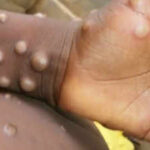
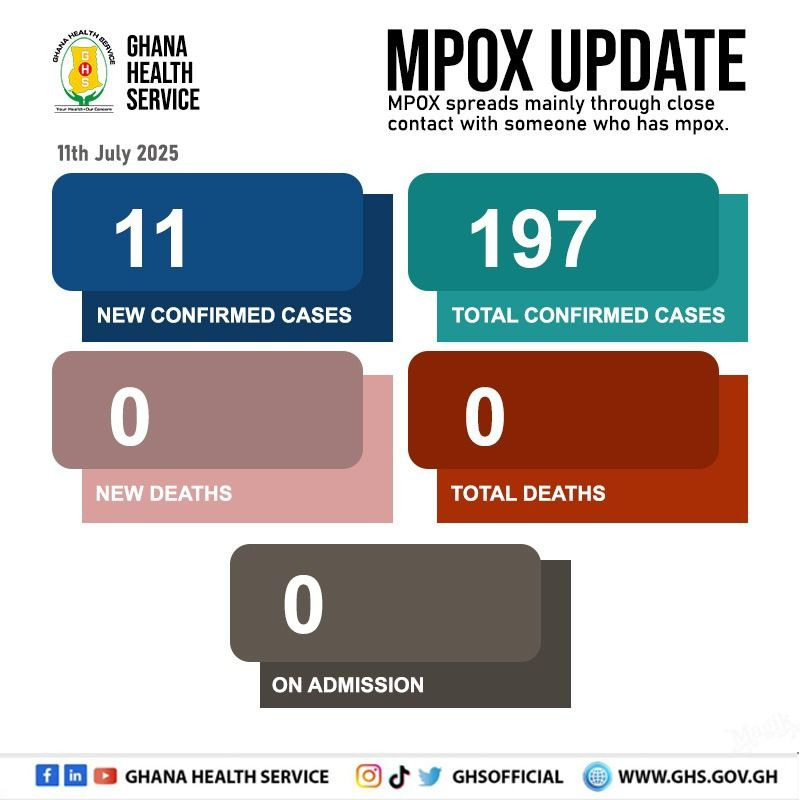
Ghana has recorded 11 new Mpox cases as of July 11, bringing the total confirmed cases to 197. The Ghana Health Service (GHS) states that the numbers indicate a steady but manageable rise, underscoring the need for continued vigilance nationwide.
Since seven cases were recorded on June 6, the infection rate has gradually increased, though health officials stress that the situation remains stable. Importantly, no new hospitalisations or deaths have been reported.
Mpox, once known as monkeypox, is a viral disease spread mainly through close physical contact. Symptoms often include fever, fatigue, swollen lymph nodes, and a distinctive rash. While many patients experience mild symptoms, early treatment is essential to prevent complications.
In response, the GHS is intensifying public awareness campaigns to ensure everyone stays informed and cautious.
Key preventive steps include avoiding close contact with anyone showing symptoms, practising thorough hand hygiene, and seeking medical attention promptly at the first sign of illness.
Health authorities highlight that quick detection and reporting are crucial to stopping the spread of Mpox. Surveillance teams, rapid response units, and community outreach programmes are working tirelessly to keep the outbreak under control.
The GHS urges all Ghanaians to remain alert, strictly follow safety protocols, and actively participate in efforts to protect communities and halt further transmission.